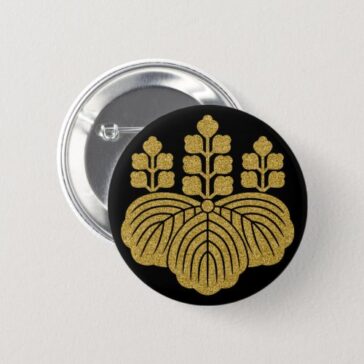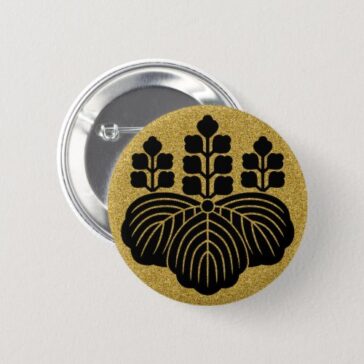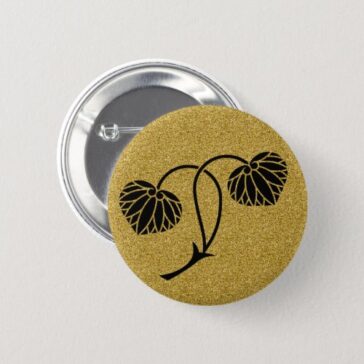

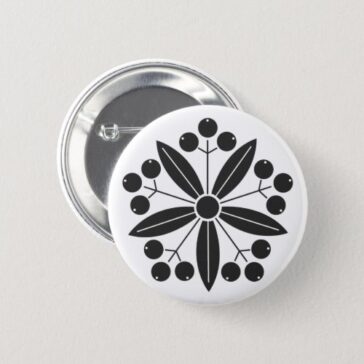
[Familienwappen] Nandina wie ein Rad Anstecknadel
|

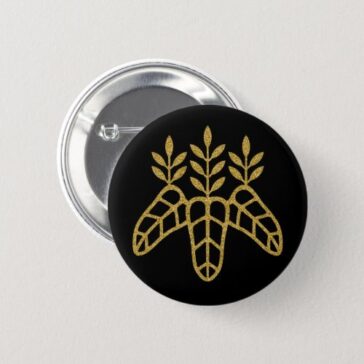
Nandina like a wheels for Kamon. Nature plants symbol and graphics at old age for Japanese family. note. Nandina domestica : It was treated as an auspicious plant, familiar with the word “rolling through difficulties”. It also has the meaning of “auspicious” and “apotropaic magic”, and was often used for celebrations. [Family Crests] Nandina … Read More
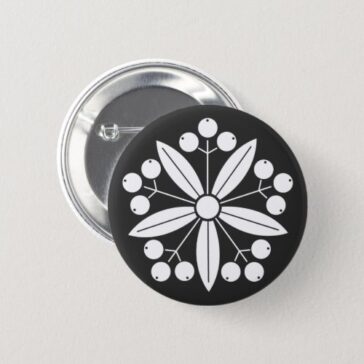
[Family Crests] Nandina like a wheels Round Button
|

Nandina like a wheels for Kamon. Nature plants symbol and graphics at old age for Japanese family. note. Nandina domestica : It was treated as an auspicious plant, familiar with the word “rolling through difficulties”. It also has the meaning of “auspicious” and “apotropaic magic”, and was often used for celebrations. It’s negative positive … Read More

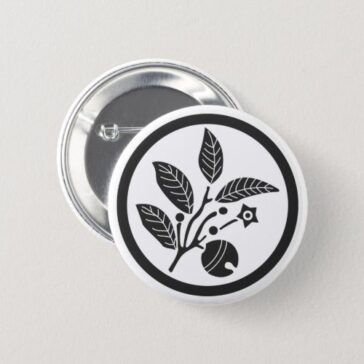
[Family Crests] A circle inside Cleyera japonica and a bell Pinback Button
|

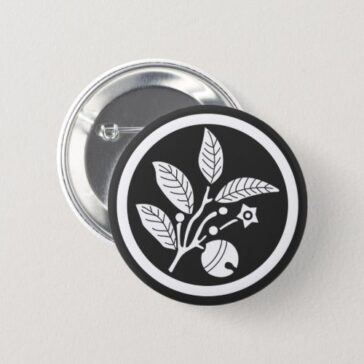
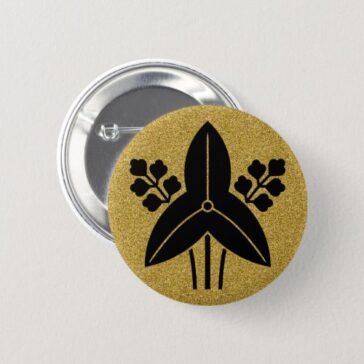
A circle inside Cleyera japonica and a bell for Kamon. Nature plants symbol and graphics at old age for Japanese family. note. Cleyera japonica and a bell : Once upon a time, when Amaterasu Omikami hid in Amano-Iwato, Ame-no-Uzume danced in front of Iwato, holding Sakaki and the bell of Mt. Sakaki and bells … Read More

[Family Crests] A circle inside Cleyera japonica and a bell Round Button
|

[Family Crests] A circle inside Cleyera japonica and a bell Round Button A circle inside Cleyera japonica and a bell for Kamon. Nature plants symbol and graphics at old age for Japanese family. It’s negative positive inversion. note. Cleyera japonica and a bell : Once upon a time, when Amaterasu Omikami hid in Amano-Iwato, … Read More

[Kanji] extremely (very, much) Button
|

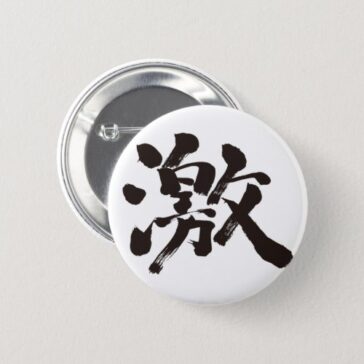
japanese said “Geki”. It is mean very or much include strength. [Kanji] extremely (very, much) Button

[Kanji] Love Giant Coffee Mug
|

[Kanji] Love Giant Coffee Mug japanese said “Ai”.

[Kanji] Shinobi-Knopf
|

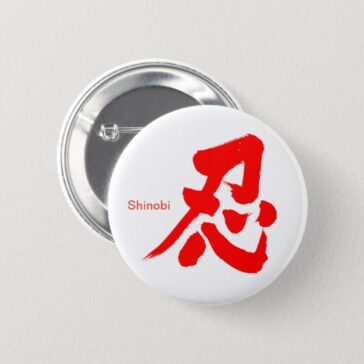
[Kanji] Shinobi Button ein professioneller Spion (im feudalen Japan), der in Heimlichkeit und Geheimhaltung hoch ausgebildet ist.

[Family Crests] Oda Mokko and Chinese flower pinback Button
|

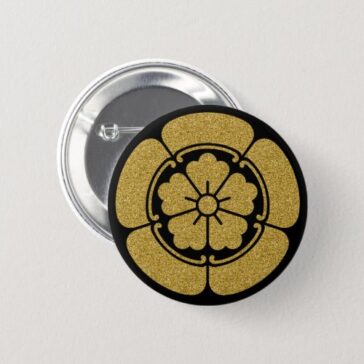
This is Oda Nobunaga’s famous family crest. Five-sided Mokko inside Karahana flower for Kamon. Nature plants symbol and graphics at old age for Japanese family. note: Mokko is designed a bird’s nest. the bird’s nest is the thought of prosperity of descendants is put in, and it is said to be a happy crest. … Read More

[Family Crests] Paulownia Flowers and leaf Round Button
|

It is the family crest that you have the most chance to see in Japan. The paulownia flower crest was regarded as a sub-crest of the emperor’s family. In addition, this paulownia flower crest was sometimes given to a vassal who had a merit in the Emperor’s family. These are Takauji Ashikaga, Nobunaga Oda, … Read More

[Family Crests] Paulownia Flowers and leaf button
|

[Family Crests] Paulownia Flowers and leaf button It is the family crest that you have the most chance to see in Japan. The paulownia flower crest was regarded as a sub-crest of the emperor’s family. In addition, this paulownia flower crest was sometimes given to a vassal who had a merit in the Emperor’s … Read More

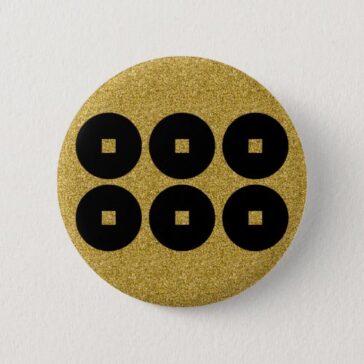
[Family Crests] Sanada’s 6 coins Button
|

This is also a famous family crest. There are various theories, but at that time, it was said that the “Sanzu River” was flowing between the world and the world, and that the ferry to cross the river required “Rokumonsen (current monetary value of about 300 yen)”. I am. The family crest also shows … Read More

[Family Crests] sparrows and bamboo leaves Button
|

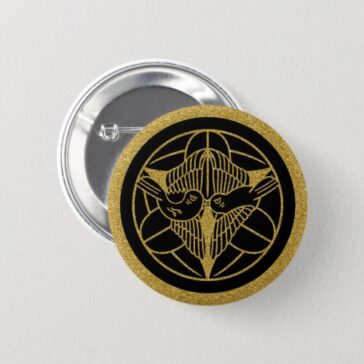
It is a family crest that the Uesugi family gave to the Date family as a “proof of marriage”. The combination with bamboo leaves is popular. note. The sparrow has long been a familiar bird to the Japanese. In Shikoku and Wakayama prefectures, sparrows are also called “itakura” and mean small birds (kura) that … Read More

[Family Crests] Sparrows and bamboo leaves Round Button
|

[Family Crests] Sparrows and bamboo leaves Round Button It is a family crest that the Uesugi family gave to the Date family as a “proof of marriage”. The combination with bamboo leaves is popular. note. The sparrow has long been a familiar bird to the Japanese. In Shikoku and Wakayama prefectures, sparrows are also … Read More

[Family Crests] Swallowtail butterfly Button
|

It is a crest used by “Taira no Kiyomori”, the lord of the Heike clan. Nobunaga Oda began to use the “swallowtail butterfly crest” in honor of Taira’s descendants from a certain time in order to replace Seiwa Genji’s Muromachi Shogunate. note. Butterflies are creatures that grow while transforming from larvae to pupae to … Read More

[Family Crests] Swallowtail butterfly Round Button
|

[Family Crests] Swallowtail butterfly Round Button It is a crest used by “Taira no Kiyomori”, the lord of the Heike clan. Nobunaga Oda began to use the “swallowtail butterfly crest” in honor of Taira’s descendants from a certain time in order to replace Seiwa Genji’s Muromachi Shogunate. note. Butterflies are creatures that grow while … Read More

[Familienwappen] Nichts in Kanji-Zeichen Knopf
|

One character of nothing is drawn. Nothing means “innocence”, which is a psychological state freed from all anxieties based on the idea of ​​Zen Buddhism. However, no evidence of Oda Nobunaga’s use of this family crest has ever been confirmed, and it is only described in the “Kansei Choshu Shokafu”. [Family Crests] Nothing in … Read More

[Familienwappen] Nichts in Kanji-Zeichen Knopf
|

[Family Crests] Nothing in Kanji letter Button One character of nothing is drawn. Nothing means “innocence”, which is a psychological state freed from all anxieties based on the idea of ​​Zen Buddhism. However, no evidence of Oda Nobunaga’s use of this family crest has ever been confirmed, and it is only described in the … Read More

[Family Crests] Taiko Paulownia Button
|

The family crest used by Toyotomi Hideyoshi when he was inaugurated as Taiko. It is said that he created it himself. Hideyoshi Toyotomi, who gave many paulownia crests to the military commanders who became subordinates in the process of controlling various parts of the country, began to use the taiko paulownia crests, which was … Read More

[Family Crests] Eiraku coin button
|

Nobunaga Oda used the Eiraku coin (Eiraku Tsuho) design that was in circulation as a family crest as a symbol of economic power. He used it as a flag. [Family Crests] Eiraku coin button

[Family Crests] 2 hollyhock leaves Round Button
|

[Family Crests] 2 hollyhock leaves Round Button The crest of Kamigamo Shrine in Kyoto. The 3 Hollyhock(Aoi) crest used by Ieyasu Tokugawa is said to be derived from it. note: Hollyhock(Aoi) is a perennial plant that grows naturally in forests all over the country and is a common plant. It is said that the … Read More

[Familienwappen] Runder Knopf aus Taiko-Paulownia
|

[Familienwappen] Runder Knopf aus Paulownienholz der Taiko. Das Familienwappen, das Toyotomi Hideyoshi bei seiner Amtseinführung als Taiko trug. Es heißt, er habe es selbst entworfen. Hideyoshi Toyotomi, der im Zuge der Herrschaft über verschiedene Landesteile zahlreiche Wappen aus Paulownienholz an die ihm unterstellten Militärkommandanten verlieh, begann … Weiterlesen

[Familienwappen] Dreiblättriger Pfeilspitzenknopf
|

Als Toyotomi Hideyoshi sich noch „Kinoshita Tokichiro“ nannte, verwendete er das Wappen der Familie Sagittaria trifolia (Omodaka), bis ihm Nobunaga Oda das Wappen der Paulownie (5-3) verlieh. Anmerkung: Omogata ist eines der zehn wichtigsten Familienwappen, die in Japan weit verbreitet sind. Sagittaria trifolia ist eine Wasserpflanze, deren Blätter pfeilspitzenähnlich sind. … Weiterlesen

[Kanji] congratulations Pin
|

congratulations button representing longevity Kanji

[Kanji] Glückwunsch Pinback Buttons
|

Symbol für Langlebigkeit (Kanji). In Japan heißt es Kotobuki oder Ju. Glückwunschknopf

[Family Crests] 2 hollyhock leaves Button
|

The crest of Kamigamo Shrine in Kyoto. The 3 Hollyhock(Aoi) crest used by Ieyasu Tokugawa is said to be derived from it. note: Hollyhock(Aoi) is a perennial plant that grows naturally in forests all over the country and is a common plant. It is said that the development of the house was likened to … Read More

[Katakana] Samurai rote Ansteckknöpfe
|

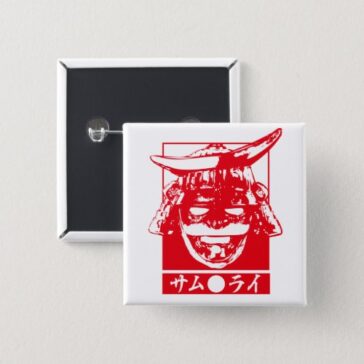
[Katakana] Samurai roter Knopf. Ein japanischer Krieger. Heute gibt es keine Samurai mehr in Japan.

[Kanji] Shinobi-Knöpfe
|

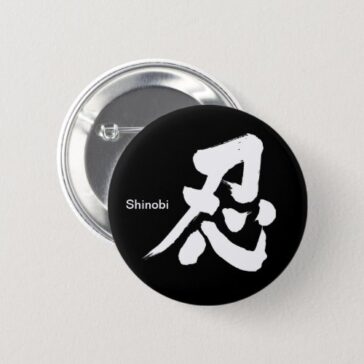
Ein professioneller Spion (im feudalen Japan), der in Tarnung und Geheimhaltung bestens ausgebildet ist. [Kanji] Shinobi-Knopf

[Kanji] Matsumoto Ansteckknopf
|

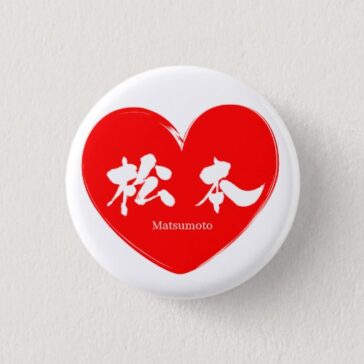
[Kanji] Matsumoto Anstecknadel 1. Matsumoto ist eine Stadt in der Präfektur Nagano, Japan. 2. Es ist ein beliebter Vorname in Japan. Es gibt etwa 600.000 Japaner mit diesem Namen.

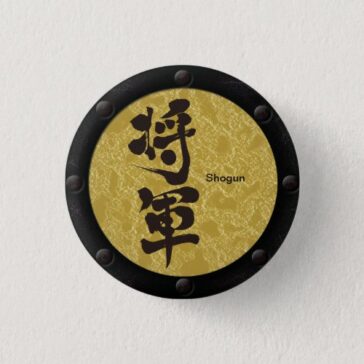
[Kanji] Knopf im Shogun-Yoroi-Stil
|

[Kanji] Shogun Yoroi-Stil Button Ein General, der eine Armee befehligt und auszieht. Ein General in Japan.

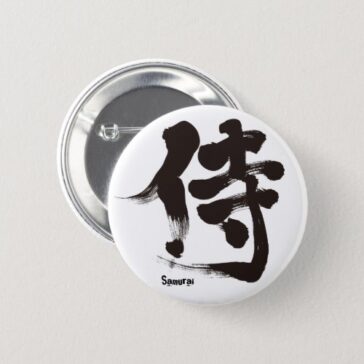
[Kanji] Samurai schwarzer Buchstabe Knopf
|

Ein japanischer Krieger. Heute gibt es in Japan keine Samurai mehr. Doch die Japaner besitzen einen ritterlichen Geist wie die Samurai. [Kanji] Samurai (schwarze Schriftzeichen) Knopf

1 3 4 5 6 7