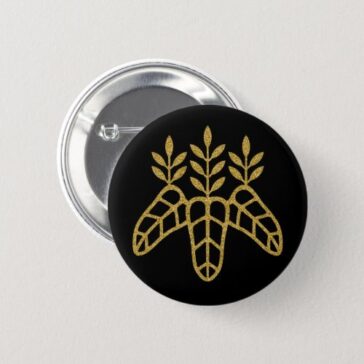


[Family Crests] Counterclockwise rice ears Round Sticker
|

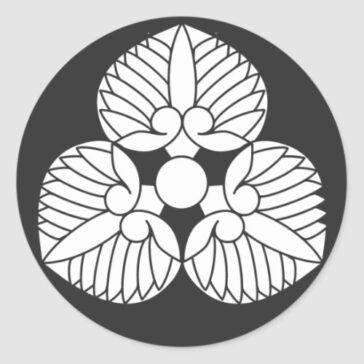
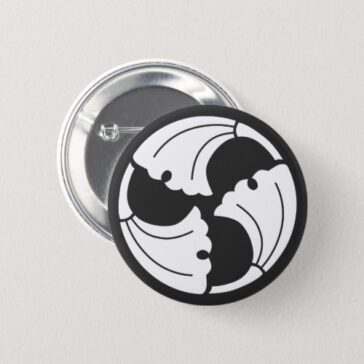
Counterclockwise rice ears for Kamon. Nature plants symbol and graphics at old age for Japanese family. It’s negative positive inversion. note. Rice has been cultivated as a staple food in Japan since ancient times, the rice crest is regarded as a “symbol of gratitude to God.” [Family Crests] Counterclockwise rice ears Round Sticker
[Family Crests] Reverse sides oxalis corniculata Round Button
|

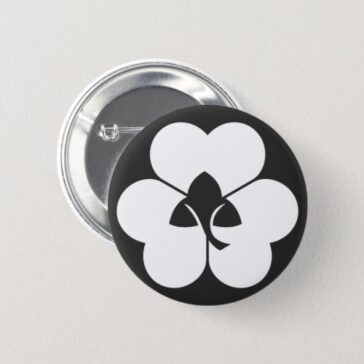
[Family Crests] Reverse sides oxalis corniculata Round Button Reverse sides oxalis corniculata for Kamon. Nature plants symbol and graphics at old age for Japanese family. It’s negative positive inversion.

[Family Crests] Divided into 3 Ginkgo leaves Round Button
|

[Family Crests] Divided into 3 Ginkgo leaves Round Button Divided into three Ginkgo leaves for Kamon. Nature plants symbol and graphics at old age for Japanese family. It’s negative positive inversion.

[Familienwappen] Pfingstrosenknöpfe
|

[Familienwappen] Pfingstrosenknöpfe. Eine Pfingstrose als Symbol für Kamon (Familienwappen). Familienwappen (Kamon) – Symbol und Grafik im Alter.

[Family Crests] a circle inside Oxalis corniculata with swords Round Button
|

[Family Crests] a circle inside Oxalis corniculata with swords Round Button a circle inside Oxalis corniculata with swords for Kamon. Nature plants symbol and graphics at old age for Japanese family. It’s negative positive inversion.

[Family Crests] Takeda rhombus Pinback button
|

Es handelt sich um das berühmte Familienwappen von Takeda Shingen. Shingen Takeda war ein Daimyo während der Sengoku-Zeit. Auch das „Furinkazan“, das angeblich auf der Sashimono (Militärflagge) eingraviert war, ist berühmt. Anmerkung: Hishimon (Raute) soll eine stilisierte Darstellung der Japanischen Staudenfrucht (Trapa japonica) sein … Weiterlesen

[Family Crests] Nandina like a wheels Round Button
|

Nandina like a wheels for Kamon. Nature plants symbol and graphics at old age for Japanese family. note. Nandina domestica : It was treated as an auspicious plant, familiar with the word “rolling through difficulties”. It also has the meaning of “auspicious” and “apotropaic magic”, and was often used for celebrations. It’s negative positive … Read More

[Family Crests] A circle inside Cleyera japonica and a bell Round Button
|

[Family Crests] A circle inside Cleyera japonica and a bell Round Button A circle inside Cleyera japonica and a bell for Kamon. Nature plants symbol and graphics at old age for Japanese family. It’s negative positive inversion. note. Cleyera japonica and a bell : Once upon a time, when Amaterasu Omikami hid in Amano-Iwato, … Read More

[Family Crests] Oda Mokko and Chinese flower pinback Button
|

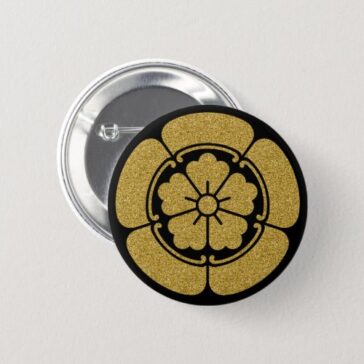
This is Oda Nobunaga’s famous family crest. Five-sided Mokko inside Karahana flower for Kamon. Nature plants symbol and graphics at old age for Japanese family. note: Mokko is designed a bird’s nest. the bird’s nest is the thought of prosperity of descendants is put in, and it is said to be a happy crest. … Read More

[Family Crests] Paulownia Flowers and leaf Round Button
|

It is the family crest that you have the most chance to see in Japan. The paulownia flower crest was regarded as a sub-crest of the emperor’s family. In addition, this paulownia flower crest was sometimes given to a vassal who had a merit in the Emperor’s family. These are Takauji Ashikaga, Nobunaga Oda, … Read More

[Family Crests] Sanada’s 6 coins Pinback button
|

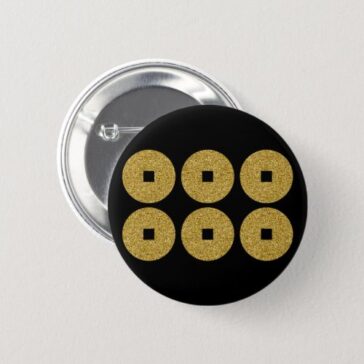
[Family Crests] Sanada’s 6 coins Pinback button This is also a famous family crest. There are various theories, but at that time, it was said that the “Sanzu River” was flowing between the world and the world, and that the ferry to cross the river required “Rokumonsen (current monetary value of about 300 yen)”. … Read More

[Family Crests] Eiraku coin Round Button
|

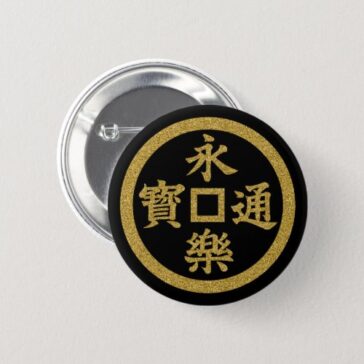
[Family Crests] Eiraku coin Round Button Nobunaga Oda used the Eiraku coin (Eiraku Tsuho) design that was in circulation as a family crest as a symbol of economic power. He used it as a flag.

[Family Crests] Sparrows and bamboo leaves Round Button
|

[Family Crests] Sparrows and bamboo leaves Round Button It is a family crest that the Uesugi family gave to the Date family as a “proof of marriage”. The combination with bamboo leaves is popular. note. The sparrow has long been a familiar bird to the Japanese. In Shikoku and Wakayama prefectures, sparrows are also … Read More

[Family Crests] Swallowtail butterfly Round Button
|

[Family Crests] Swallowtail butterfly Round Button It is a crest used by “Taira no Kiyomori”, the lord of the Heike clan. Nobunaga Oda began to use the “swallowtail butterfly crest” in honor of Taira’s descendants from a certain time in order to replace Seiwa Genji’s Muromachi Shogunate. note. Butterflies are creatures that grow while … Read More

[Familienwappen] Nichts in Kanji-Zeichen Knopf
|

[Family Crests] Nothing in Kanji letter Button One character of nothing is drawn. Nothing means “innocence”, which is a psychological state freed from all anxieties based on the idea of ​​Zen Buddhism. However, no evidence of Oda Nobunaga’s use of this family crest has ever been confirmed, and it is only described in the … Read More

[Familienwappen] Ryoma Sakamotos runder Glockenblumenknopf
|

[Familienwappen] Ryoma Sakamotos Glockenblumen-Kamon (Kikyo-Kamon) mit gekreuzten Linien innerhalb der Kikyo-Ballonblume (Glockenblume). Es wurde von Ryoma Sakamoto verwendet, der am Ende der Edo-Zeit die Nachfolge des Taisei Hokan antrat. Anmerkung: Die Kikyo-Ballonblume (Glockenblume) gehört zu den Sieben Herbstkräutern. Früher wurde eine Glockenblume einem bestimmten Menschen gewidmet … Weiterlesen

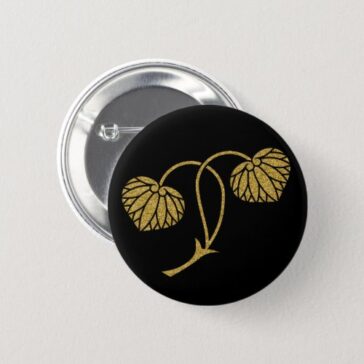
[Family Crests] 2 hollyhock leaves Round Button
|

[Family Crests] 2 hollyhock leaves Round Button The crest of Kamigamo Shrine in Kyoto. The 3 Hollyhock(Aoi) crest used by Ieyasu Tokugawa is said to be derived from it. note: Hollyhock(Aoi) is a perennial plant that grows naturally in forests all over the country and is a common plant. It is said that the … Read More

[Familienwappen] Runder Knopf aus Taiko-Paulownia
|

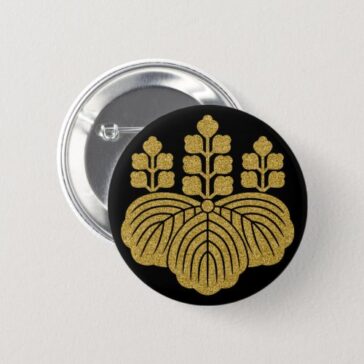
[Familienwappen] Runder Knopf aus Paulownienholz der Taiko. Das Familienwappen, das Toyotomi Hideyoshi bei seiner Amtseinführung als Taiko trug. Es heißt, er habe es selbst entworfen. Hideyoshi Toyotomi, der im Zuge der Herrschaft über verschiedene Landesteile zahlreiche Wappen aus Paulownienholz an die ihm unterstellten Militärkommandanten verlieh, begann … Weiterlesen

[Family Crests] Karahana flower inside Four-sided Mokko Pattern Round sticker
|

Karahana flower inside Four-sided Mokko for Kamon. Nature plants symbol and graphics at old age for Japanese family. note. Karahana flower is a pattern that came from China and does not refer to a specific flower, but to a “Karahana-flower-style plant pattern”. mokko is said to have originated from being used as a pattern … Read More

[Familienwappen] Kaji-Blatt mit Kreisaufkleber
|

Kaji-Blatt-Aufkleber mit Kreis. Dieses Familienwappen zeigt einen Kreis, der ein Muster aus Kaji-Blättern umgibt. Kaji-Bäume gelten als heilig, da ihre Blätter als Gefäße für Opfergaben an die Götter verwendet wurden und schließlich als göttliche Wappen dienten. Weitere Informationen finden Sie hier: … Weiterlesen

[Family Crests] 3 ginkgo leaves inside a circle Round Sticker
|

[Family Crests] 3 ginkgo leaves inside a circle Round Sticker 3 ginkgo leaves inside a circle for Kamon. Nature plants symbol and graphics at old age for Japanese family. It’s negative positive inversion. note. Some ginkgo trees have a long life and are over 1000 years old. It is resistant to fire and has … Read More

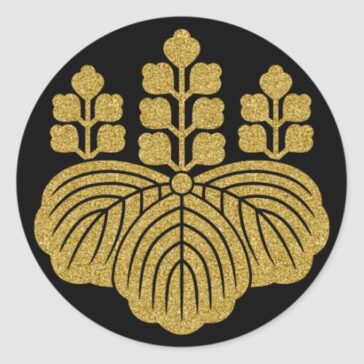
[Family Crests] Paulownia 5-7kiri Sticker (reverted color)
|

[Family Crests] Paulownia 5-7kiri Sticker It is the family crest that you have the most chance to see in Japan. The paulownia flower crest was regarded as a sub-crest of the emperor’s family. In addition, this paulownia flower crest was sometimes given to a vassal who had a merit in the Emperor’s family. These … Read More

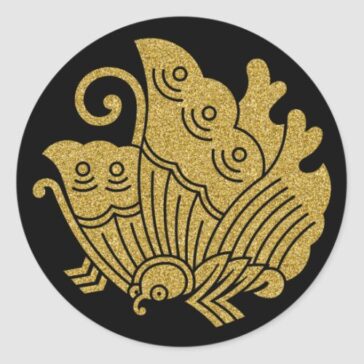
[Family Crests] Swallowtail butterfly Sticker
|

[Family Crests] Swallowtail butterfly Sticker It is a crest used by “Taira no Kiyomori”, the lord of the Heike clan. Nobunaga Oda began to use the “swallowtail butterfly crest” in honor of Taira’s descendants from a certain time in order to replace Seiwa Genji’s Muromachi Shogunate. note. Butterflies are creatures that grow while transforming … Read More

[Family Crests] 3 hollyhocks end alignment Round sticker
|

3 hollyhocks end alignment for Kamon. Nature plants symbol and graphics at old age for Japanese family. note. A crest with the motif of the leaves of a plant called Aoi(Hollyhock). The Aoi used at Kamo Shrine has been treated as a sacred plant. [Family Crests] 3 hollyhocks end alignment Sticker

[Familienwappen] Paulownia-Blüten mit kreisförmigem Ansteckknopf
|

Familienwappen (Kamon) – Symbol und Grafik im Alter. Ein markanter Kreis innerhalb eines Paulownienblattes und Blüten für Kamon. [Familienwappen] Paulownienblüten mit kreisförmigem Ansteckknopf

[Familienwappen] Doppelte Glockenblumen in Linienform dargestellt Knopf
|

Familienwappen (Kamon) – Symbole und Grafiken im Alter. Dieses Familienwappen zeigt gefüllte Glockenblumen (Kikyo-Blume) in kräftigen Linien. [Familienwappen] Gefüllte Glockenblumen in Linienform. Klicken Sie auf die Schaltfläche unten, um die invertierte Schwarz-Weiß-Version dieses Familienwappens anzuzeigen. Gefüllte Glockenblumen in Linienform (invertiert). Familiennamen, die vererbt wurden … Weiterlesen

[Familienwappen] Zwei Trauben, runder Knopf
|

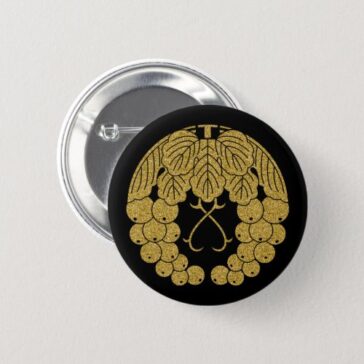
[Familienwappen] Zwei Trauben als Knopf. Das Traubenwappen ist ein sehr seltenes Muster, das vom Kontinent stammt. Hinweis: Traubenwappen tragen viele Früchte und sind von Weinreben umwunden. Daher gelten sie als Glücksbringer für den Wohlstand der Nachkommen, die Ehe und den Geschäftserfolg.

[Familienwappen] Naoe Kanetsugu Liebes-Rundknopf
|

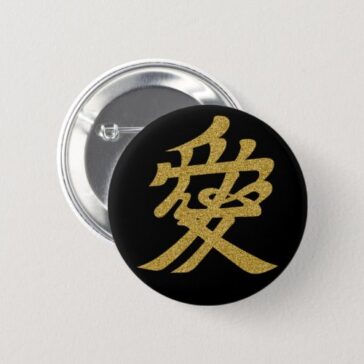
[Familienwappen] Naoe Kanetsugu Liebes-Rundknopf. Der frontale „Ai (Liebe)“-Knopf zierte den Helm, den Kanetsugu Naoe während der Zeit der Streitenden Reiche trug. Es gibt die Theorie, dass es sich um ein Akronym für den Kriegsbuddha Atago Gongen handelt. Atago Gongen ist ein Buddha, der gemeinsam mit Bishamonten gegen den Feind kämpft.

[Familienwappen] Ishida Mitsunari Kanji-Symbol auf Militärflagge Runder Knopf
|

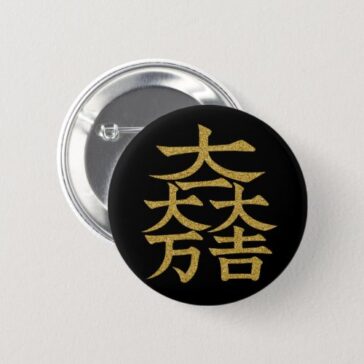
[Familienwappen] Ishida Mitsunari Kanji-Symbol auf Militärflagge (Runder Knopf) Dieses Kanji-Symbol wurde während der Zeit der Streitenden Reiche von dem Militärkommandanten Mitsunari Ishida als Kriegsflagge verwendet. Es bedeutet: „Wenn einer für alle und alle für einen tun, können die Menschen der Welt …“ Weiterlesen

[Familienwappen] Runder Aufkleber mit verzierten Pflaumenblüten
|

Decorated Plum Flowers Round Sticker This family crest features lines drawn along the outer edge of the petals of the ‘Plum Blossom Crest’. It can be found by clicking the button above. The white family crest is hidden. Click the “Edit this design” button to display the white crest, hide the black crest, and … Read More

1 2 3