
Home » Places & Landmark » Japan » Akita in Kanji, Katakana and Hiragana as written vertically

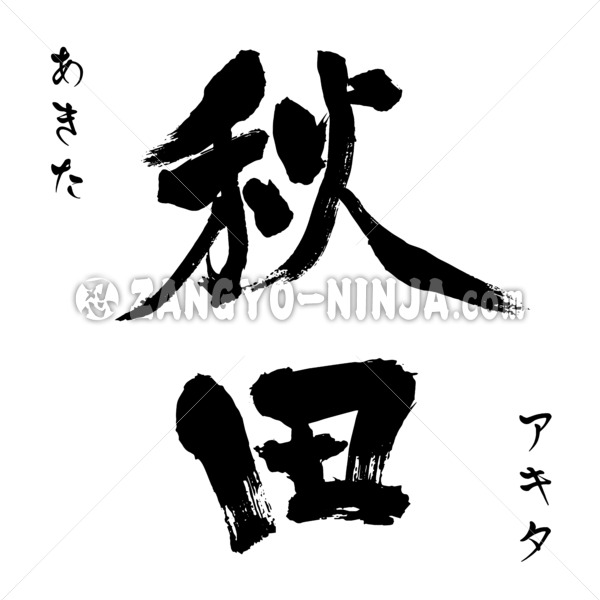
Akita in Kanji, Katakana and Hiragana as written vertically

erstellt von Designer

$0.00$1,490.00

600x600
$0.00
1920x1920
$4.80
6000x6000
$9.80
Voll
$19.80
Voll
$980.00
Voll
$1,490.00

The Etymology of Akita

The name derives from the ancient term “Agita.” It is the place visited by Abe no Hirafu, who appears in the *Nihon Shoki* (Chronicles of Japan). The prevailing theory is that the name originates from Ainu or ancient Japanese words meaning “a high place” or “a piece of land jutting out” (age-ta). Later, the Chinese characters for “Akita” were assigned to this name.
This is widely accepted as the etymology of the current Tohoku region of Japan, specifically Akita Prefecture.

One of the Japanese Surnames

This is a lineage of samurai and noble families that took the name from the place name “Akita” in Dewa Province (present-day Akita Prefecture) or from the official title “Akita-no-shōsuke” held by the Andō clan, who governed the region. There are also theories that it derives from “Akita” (飽田), referring to rice crops in low-lying wetlands, or that the characters for ‘Akita’ were applied to a place name meaning “high ground.”
There are approximately 37,000 people with this surname nationwide.

Hachiko’s breed is the Akita Inu (dog)

Hachiko, the dog from Shibuya who became famous through a Hollywood movie, is an Akita Inu. This relatively large breed is most commonly red in color, followed by brindle and white, and is characterized by a tail that curls upward. This breed is also named “Akita.”

Erläuterung dieser Kalligrafie

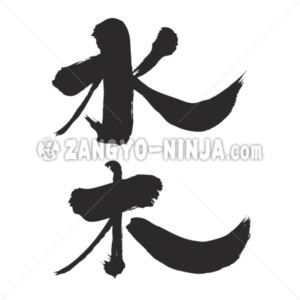
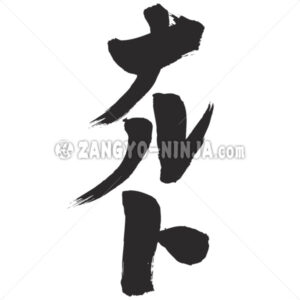
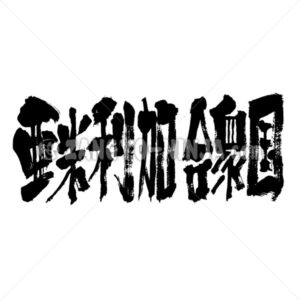
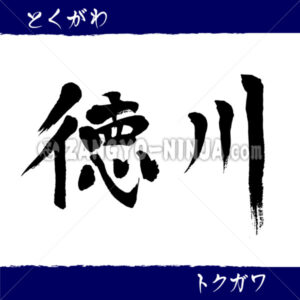
The left side is written vertically in hiragana, the center consists of two kanji characters, and the right side is written vertically in katakana.
The kanji character “秋” (Aki) represents “autumn” in the four seasons of Japan (“spring, summer, autumn, winter”), and “田” (Ta) means “rice paddy.”
Technische Details AI Vector, 183.62 KB
, ,

People also views for about Akita

   
Mizuki im Nachnamen Kanji - Zangyo-Ninja

Mizuki im Nachnamen Kanji

Hallo, Herr Mizuki. Dies ist eine Erklärung des oder [...]
Vektor
GRATIS~ Details anzeigen
Tanaka in Kanji - Zangyo-Ninja

Tanaka in Kanji

Hallo, Herr Tanaka. Dies ist eine Erklärung des oder [...]
Vektor
GRATIS~ Details anzeigen
USA (Vereinigte Staaten von Amerika) in Kanji - Zangyo-Ninja

USA (Vereinigte Staaten von Amerika) in Kanji

Die Vereinigten Staaten von Amerika (USA), allgemein bezeichnet als [...]
Vektor
GRATIS~ Details anzeigen
Berg Takao in Kanji, Katakana und Hiragana – Zangyo-Ninja

Der Berg Takao in Kanji, Katakana und Hiragana

Ein mit drei Michelin-Sternen ausgezeichneter Berg, der Berg Takao [...]
Vektor
GRATIS~ Details anzeigen

Vom Schöpfer Aokage empfohlene Werke

Kaffee in Kanji

Es ist eines der beliebtesten Getränke der Welt [...]
Vektor
GRATIS~ Details anzeigen
exzentrisch, beispiellos in Kanji - Zangyo-Ninja

exzentrisch, in Kanji beispiellos

Dinge tun, die noch nie jemand getan hat. Grenzen sprengen [...]
Vektor
GRATIS~ Details anzeigen
Morita in Kanji, Hiragana und Katakana – Zangyo-Ninja

Morita in Kanji, Hiragana und Katakana

Hallo, Herr Morita. Dies ist eine Erklärung des oder [...]
Vektor
GRATIS~ Details anzeigen
Ichiban, zuerst in Kanji – Zangyo-Ninja

Ichiban, zuerst in Kanji

Das japanische Wort für „oben“ kann auf verschiedene Weisen geschrieben werden, [...]
Vektor
GRATIS~ Details anzeigen
Shomon Raifuku in Kanji, das Sprichwort in Hiragana. 笑門来福 - Zangyo-Ninja

Shomon Raifuku in Kanji, das Sprichwort in Hiragana. 笑門来福

Glück stellt sich ganz natürlich in Häusern ein, die mit Lachen erfüllt sind [...]
Vektor
GRATIS~ Details anzeigen
Starker Trinker in Kanji – Zangyo-Ninja

Starker Trinker in Kanji

Ein starker Trinker ist jemand, der seinen Alkoholkonsum gut verträgt [...]
Vektor
GRATIS~ Details anzeigen
Shinobi in Kanji - Zangyo-Ninja

Shinobi auf Kanji

Japanische Kanji für Nin, Shinobu und Shinobi, die [...]
Vektor
GRATIS~ Details anzeigen
AOKAGE
1031

Aokage

Er gewann mehrere Gold- und Silbermedaillen in japanischer Kalligrafie (Shodo). Er liebt Sushi und Sashimi. Da er seit seiner Kindheit Kalligrafie praktizierte, war sein Vater ein ausgebildeter Lehrer. Aokage (青景) leitet sich von der blauen Landschaft ab, die an das Meer und den klaren blauen Himmel erinnert, sowie vom blauen Schatten. Schatten symbolisiert einen Ninja.

Gute Menschen wie Sie schauen sich das auch an