Home » Places & Landmark » America » Brazil in Kanji, Katakana and Hiragana

Brazil in Kanji, Katakana and Hiragana

erstellt von Designer

$0.00$1,490.00

600x599
$0.00
1920x1918
$4.80
6000x5993
$9.80
Voll
$19.80
Voll
$980.00
Voll
$1,490.00

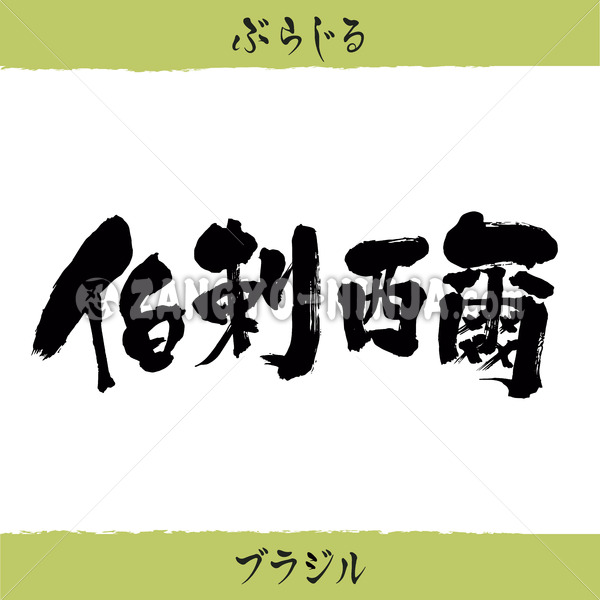
The Federative Republic of Brazil. Brazil is the largest country in Central and South America. It is the fifth largest country in the world by land area, following Russia, Canada, China, and the United States.

About Brazil

Within the South American continent, only Ecuador and Chile do not share a border with Brazil. It borders ten countries: French Guiana, Suriname, Guyana, Venezuela, and Colombia to the north; Uruguay and Argentina to the south; and Paraguay, Bolivia, and Peru to the west.
While Spanish is the official language in most South American countries, Brazil alone uses Portuguese as its official language.
Though nearly 90% of its territory, represented by the Amazon River basin, is tropical and covered by jungles and forests—earning it the nickname “the lungs of the world”—over 60% of its population lives in regions with a warm climate influenced by topography, sea breezes, and the Antarctic.
Brazil is synonymous with soccer, cheerful people, the Rio Carnival, Copacabana Beach, Iguazu Falls, the Amazon River, and churrasco. It is globally renowned as the “Kingdom of Soccer” and is also famous for its vibrant music scenes, including samba and bossa nova. Furthermore, it is a captivating country characterized by vast natural landscapes and a rich blend of diverse cultures.

A Country with Deep Ties to Japan

Since the arrival of the first immigrant ship, the Kasato Maru, at Santos Port in 1908, approximately 250,000 Japanese people immigrated to Brazil, spanning both pre-war and post-war periods. Today, around 1.9 million Japanese Brazilians reside there, reflecting the long-standing relationship between the two nations.

Brazilian Agriculture

Brazil is one of the world’s leading agricultural powers. It boasts the world’s largest coffee bean production, primarily cultivated in the highlands. Soybeans and sugarcane production are increasing annually. These crops are exported worldwide.

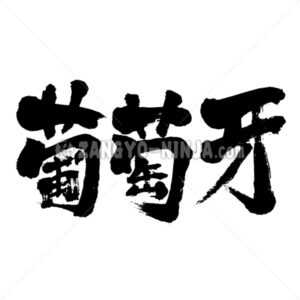
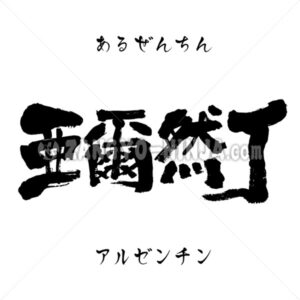
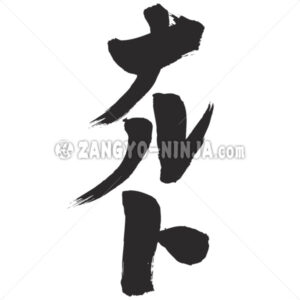
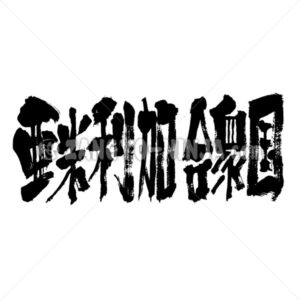
Explanation of this Calligraphy

The top row is in hiragana, the middle row in kanji, and the bottom row in katakana.
The kanji appears to be phonetic spelling. Even among Japanese people, few can immediately recognize it.
Technische Details EPS Vector, 1.95 MB
, , , ,

People also views for about Brazil

   
USA (Vereinigte Staaten von Amerika) in Kanji - Zangyo-Ninja

USA (Vereinigte Staaten von Amerika) in Kanji

Die Vereinigten Staaten von Amerika (USA), allgemein bezeichnet als [...]
Vektor
GRATIS~ Details anzeigen
Berg Takao in Kanji, Katakana und Hiragana – Zangyo-Ninja

Der Berg Takao in Kanji, Katakana und Hiragana

Ein mit drei Michelin-Sternen ausgezeichneter Berg, der Berg Takao [...]
Vektor
GRATIS~ Details anzeigen

Vom Schöpfer Aokage empfohlene Werke

Tanaka in Kanji - Zangyo-Ninja

Tanaka in Kanji

Hallo, Herr Tanaka. Dies ist eine Erklärung des oder [...]
Vektor
GRATIS~ Details anzeigen

Kaffee in Kanji

Es ist eines der beliebtesten Getränke der Welt [...]
Vektor
GRATIS~ Details anzeigen
exzentrisch, beispiellos in Kanji - Zangyo-Ninja

exzentrisch, in Kanji beispiellos

Dinge tun, die noch nie jemand getan hat. Grenzen sprengen [...]
Vektor
GRATIS~ Details anzeigen
Morita in Kanji, Hiragana und Katakana – Zangyo-Ninja

Morita in Kanji, Hiragana und Katakana

Hallo, Herr Morita. Dies ist eine Erklärung des oder [...]
Vektor
GRATIS~ Details anzeigen
Mizuki im Nachnamen Kanji - Zangyo-Ninja

Mizuki im Nachnamen Kanji

Hallo, Herr Mizuki. Dies ist eine Erklärung des oder [...]
Vektor
GRATIS~ Details anzeigen
Ichiban, zuerst in Kanji – Zangyo-Ninja

Ichiban, zuerst in Kanji

Das japanische Wort für „oben“ kann auf verschiedene Weisen geschrieben werden, [...]
Vektor
GRATIS~ Details anzeigen
AOKAGE
1031

Aokage

Er gewann mehrere Gold- und Silbermedaillen in japanischer Kalligrafie (Shodo). Er liebt Sushi und Sashimi. Da er seit seiner Kindheit Kalligrafie praktizierte, war sein Vater ein ausgebildeter Lehrer. Aokage (青景) leitet sich von der blauen Landschaft ab, die an das Meer und den klaren blauen Himmel erinnert, sowie vom blauen Schatten. Schatten symbolisiert einen Ninja.

Menschen, die so fröhlich sind wie du, schauen sich auch Folgendes an: