

Explanation of Gold
Element with atomic number 79. Periodic Table Group 11 transition elements. Atomic weight 196.96655 (2). Stable isotopes with a mass number of 197 (100%) and radioactive isotopes ranging from 169 to 205 are known.
Gold is the oldest metal used by humankind, and gold instruments have been found in Egyptian ruins in B.C. 5000. The world’s largest gold nugget was discovered in 1869 in Victoria, Australia, at 2520 ounces (about 71 kg), resulting in 2280 ounces of pure gold.
Gold exists mostly as natural gold and is produced as gold dust with the weathering of quartz in the host rock. Natural gold contains silver as an impurity. It is also contained in copper ore, lead ore, and pyrite.
It is chemically extremely stable, dissolves in aqua regia to gold chloride acid, and combines with mercury to form amalgam, but it does not react with air, water, oxygen, sulfur, etc., and is not exposed to ordinary acids and alkalis. It is heavy, soft, spreadable, and highly expandable, so it is suitable for various crafts, and is especially prized among precious metals, and is used as coins and ornaments.
It is considered to be a pure metal.
It is believed that humans cannot produce gold through science and technology, and because it is a rare metal, its value remains high. However, recently, a technology was discovered that uses plasma effects to remove molecules from mercury and produce something equivalent to gold. However, the amount produced is only a tiny amount at the ion level. Furthermore, the cost of production is thousands or tens of thousands of times higher than the current value of gold.
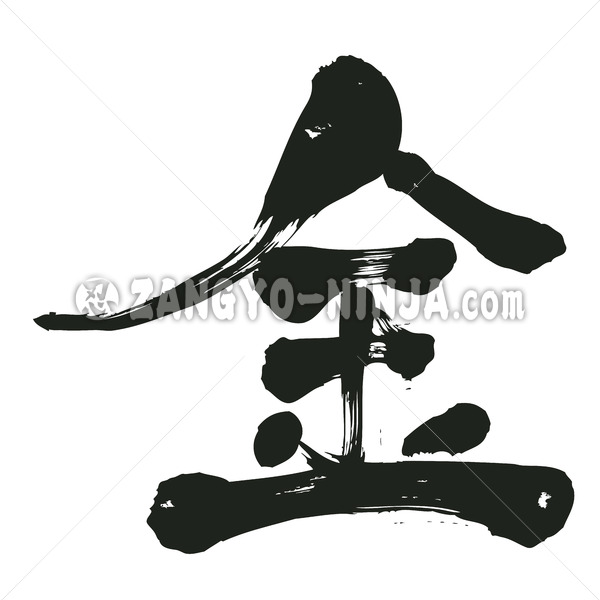
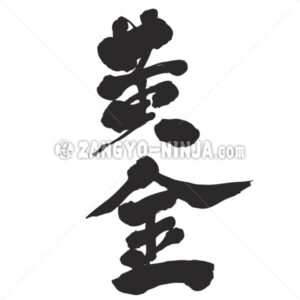
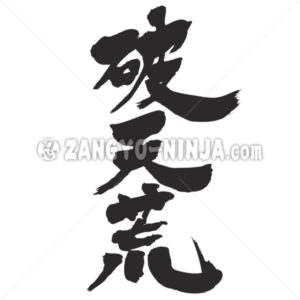
In Japanese, the single character “kin” refers to the metal gold, while “kane” refers to money. Therefore, to accurately convey the meaning of the metal gold, it is easier to use the term “ohgon”.





![[Kanji] Goldgolden おうごん 漢字 T-Shirt](https://www.zangyo-ninja.com/wp-content/uploads/kanji_gold_t_shirt_jgsdi_1024-150x150.jpg)