Home » Food & Drink » Sake in Kanji and Katakana as written Ichiban style

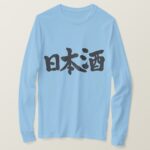
Sake in Kanji and Katakana as written Ichiban style

erstellt von Designer

$0.00$1,490.00

600x600
$0.00
1920x1920
$4.80
6000x6000
$9.80
Voll
$19.80
Voll
$980.00
Voll
$1,490.00
Kategorie:

About Sake

An alcoholic beverage made by fermenting rice. Japanese sake. In ancient times, cloudy sake was predominant, but clear sake began to be produced around the Muromachi period. Today, it primarily refers to clear sake.
Made from rice, rice koji (malted rice), and water, fermented and then filtered. Secondary ingredients such as glucose, starch syrup, succinic acid, citric acid, lactic acid, and amino acid salts (monosodium glutamate) are permitted for use under certain restrictions. Alcohol content ranges from 12% to 20%. A quintessential traditional Japanese alcoholic beverage, it possesses a well-balanced blend of the five tastes (sweet, sour, spicy, bitter, astringent) and a distinctive flavor profile.
In Japan, it is also called “Nihonshu,” but in that case, the kanji for “Japan” (日本) precedes this term in this work.

Generally refers to beverages containing ethyl alcohol.

Broadly categorized by production method into fermented beverages, distilled spirits, and blended beverages. Numerous varieties exist worldwide based on raw materials.

Fermented Beverages

Sake, beer, wine, etc. Produced by fermenting saccharified mash or sugar-containing substances from starch-containing grains, either as the unfiltered mash or after filtration.

Distilled Spirits

Shochu, whiskey, brandy, vodka, gin, etc. These are high-alcohol beverages produced by distilling fermented mash to separate and concentrate the alcohol content.

Blended Alcoholic Beverages

Liqueurs, synthetic sake, flavored liqueurs, etc. These are beverages made by blending fermented or distilled alcohol, or moderately diluted alcohol, with flavorings, sweeteners, fragrances, herbs, roots, bark, etc.

Was ist der Ichiban-Stil?

Das Werk mit dem Titel „ Ichiban “ wurde von „Aokage“, dem Administrator dieser Website, und „Aokimono“, einem Mitarbeiter, verfasst. Es zeichnete sich erstmals durch einen kühnen, gehaltvollen und zugleich spielerischen Schreibstil aus. Wir haben diesen Stil vorläufig „Ichiban-Stil“ genannt.
Technische Details AI Vector, 100.4 KB
, , , ,

People also views for about Sake

   
unrefined sake in Hiragana - Zangyo-Ninja

unrefined sake in Hiragana

It is sake made by self-brewing, and it is basicall [...]
Vektor
GRATIS~ Details anzeigen
Lachs in Kanji - Zangyo-Ninja

Lachs in Kanji

Salmonidenfisch. Er erreicht eine Gesamtlänge von etwa 1 [...]
Vektor
GRATIS~ Details anzeigen
Starker Trinker in Kanji – Zangyo-Ninja

Starker Trinker in Kanji

Ein starker Trinker ist jemand, der seinen Alkoholkonsum gut verträgt [...]
Vektor
GRATIS~ Details anzeigen

Kaffee in Kanji

Es ist eines der beliebtesten Getränke der Welt [...]
Vektor
GRATIS~ Details anzeigen

Vom Schöpfer Aokage empfohlene Werke

Tanaka in Kanji - Zangyo-Ninja

Tanaka in Kanji

Hallo, Herr Tanaka. Dies ist eine Erklärung des oder [...]
Vektor
GRATIS~ Details anzeigen
exzentrisch, beispiellos in Kanji - Zangyo-Ninja

exzentrisch, in Kanji beispiellos

Dinge tun, die noch nie jemand getan hat. Grenzen sprengen [...]
Vektor
GRATIS~ Details anzeigen
Morita in Kanji, Hiragana und Katakana – Zangyo-Ninja

Morita in Kanji, Hiragana und Katakana

Hallo, Herr Morita. Dies ist eine Erklärung des oder [...]
Vektor
GRATIS~ Details anzeigen
Mizuki im Nachnamen Kanji - Zangyo-Ninja

Mizuki im Nachnamen Kanji

Hallo, Herr Mizuki. Dies ist eine Erklärung des oder [...]
Vektor
GRATIS~ Details anzeigen
Shomon Raifuku in Kanji, das Sprichwort in Hiragana. 笑門来福 - Zangyo-Ninja

Shomon Raifuku in Kanji, das Sprichwort in Hiragana. 笑門来福

Glück stellt sich ganz natürlich in Häusern ein, die mit Lachen erfüllt sind [...]
Vektor
GRATIS~ Details anzeigen
AOKAGE
1031

Aokage

Er gewann mehrere Gold- und Silbermedaillen in japanischer Kalligrafie (Shodo). Er liebt Sushi und Sashimi. Da er seit seiner Kindheit Kalligrafie praktizierte, war sein Vater ein ausgebildeter Lehrer. Aokage (青景) leitet sich von der blauen Landschaft ab, die an das Meer und den klaren blauen Himmel erinnert, sowie vom blauen Schatten. Schatten symbolisiert einen Ninja.

Leute, die so klug sind wie du, schauen sich auch Folgendes an: