
Home » Blessing & Happiness » Shochikubai in Kanji (include pine tree, bamboo and plum flower in Kanji)

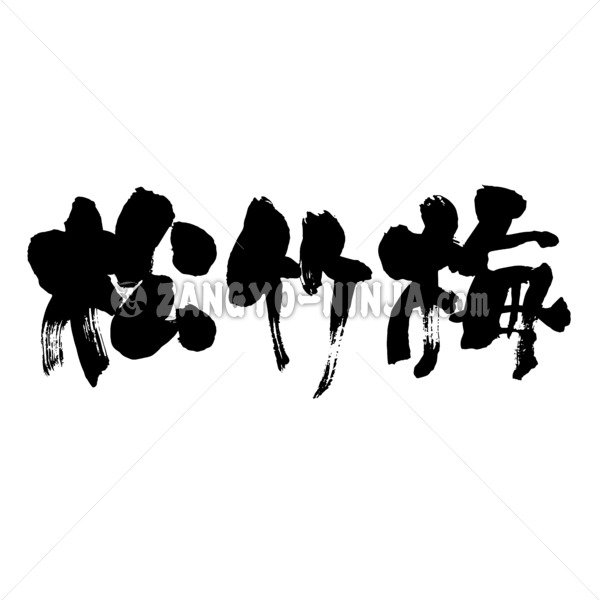
Shochikubai in Kanji (einschließlich Kiefer, Bambus und Pflaumenblüte in Kanji)

erstellt von Designer

$0.00$1,490.00

600x600
$0.00
1920x1920
$4.80
6000x6000
$9.80
Voll
$19.80
Voll
$980.00
Voll
$1,490.00

charms and is said to be auspicious along with the crane turtle. Since all three can withstand the cold, they are called Three Friends of Winter and are used for ceremonies as congratulations. A word used in place of each grade when goods and seats are divided into three grades.

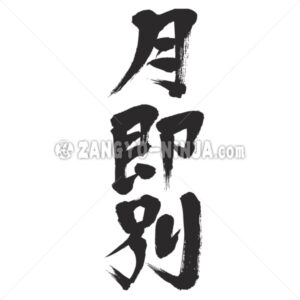
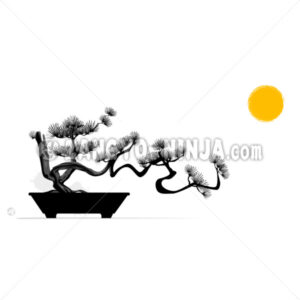
Pine, bamboo, and plum are (Shochikubai is) symbols of auspiciousness in Japan.

Pine trees have been a symbol of auspiciousness since the Heian period, as they are evergreen and lead to perpetual youth and longevity. Bamboo has been used for the same reason as pine trees since the Muromachi period, and plum blossoms have been known to bloom in winter since the Edo period.

Shochikubai came to indicate the grade of things.

Originally, “Shochikubai” was not used to indicate the rank of items, but it is easier to order “Ume (Plum)” than “normal”, and it is more beautiful to replace it with the name of the plant, so “Shochikubai” came to be used as a grade at sushi restaurants.
There is no particular order of rank, and although pine, bamboo, and plum originally had no hierarchical relationship, it came to be that pine was the highest rank, bamboo was the highest rank, and plum was the average rank.
This order is said to be the chronological order that became a symbol of auspiciousness, but since the three types of pine, bamboo, and plum are called “Shochikubai”, it would be safer to think of it as that order.
Technische Details AI Vector, 126.42 KB
, , , , , , ,

People also views for about Shochikubai


Kaffee in Kanji

Es ist eines der beliebtesten Getränke der Welt [...]
Vektor
GRATIS~ Details anzeigen
Ichiban, zuerst in Kanji – Zangyo-Ninja

Ichiban, zuerst in Kanji

Das japanische Wort für „oben“ kann auf verschiedene Weisen geschrieben werden, [...]
Vektor
GRATIS~ Details anzeigen
Shomon Raifuku in Kanji, das Sprichwort in Hiragana. 笑門来福 - Zangyo-Ninja

Shomon Raifuku in Kanji, das Sprichwort in Hiragana. 笑門来福

Glück stellt sich ganz natürlich in Häusern ein, die mit Lachen erfüllt sind [...]
Vektor
GRATIS~ Details anzeigen

Vom Schöpfer Aokage empfohlene Werke

Tanaka in Kanji - Zangyo-Ninja

Tanaka in Kanji

Hallo, Herr Tanaka. Dies ist eine Erklärung des oder [...]
Vektor
GRATIS~ Details anzeigen
exzentrisch, beispiellos in Kanji - Zangyo-Ninja

exzentrisch, in Kanji beispiellos

Dinge tun, die noch nie jemand getan hat. Grenzen sprengen [...]
Vektor
GRATIS~ Details anzeigen
Morita in Kanji, Hiragana und Katakana – Zangyo-Ninja

Morita in Kanji, Hiragana und Katakana

Hallo, Herr Morita. Dies ist eine Erklärung des oder [...]
Vektor
GRATIS~ Details anzeigen
Mizuki im Nachnamen Kanji - Zangyo-Ninja

Mizuki im Nachnamen Kanji

Hallo, Herr Mizuki. Dies ist eine Erklärung des oder [...]
Vektor
GRATIS~ Details anzeigen
AOKAGE
1031

Aokage

Er gewann mehrere Gold- und Silbermedaillen in japanischer Kalligrafie (Shodo). Er liebt Sushi und Sashimi. Da er seit seiner Kindheit Kalligrafie praktizierte, war sein Vater ein ausgebildeter Lehrer. Aokage (青景) leitet sich von der blauen Landschaft ab, die an das Meer und den klaren blauen Himmel erinnert, sowie vom blauen Schatten. Schatten symbolisiert einen Ninja.

Leute, die so klug sind wie du, schauen sich auch Folgendes an: