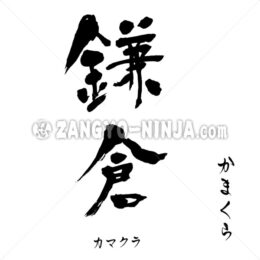
Kamakura in Kanji, Katakana and Hiragana [in Stock]

|

The most representative example is Kamakura in Kanagawa Prefecture. Kamakura is the location in Kamakura City, Kanagawa Prefecture, where Minamoto no Yoritomo established the Kamakura Shogunate, the center of Japan’s first samurai government. The number of tourists visiting Kamakura exceeds approximately 20 million annually. It is a temple and shrine tourist destination on par … Read More

Vektor
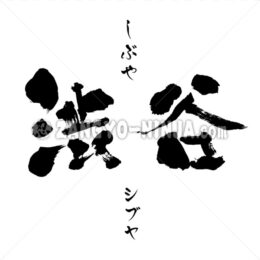
Shibuya in Kanji, Katakana and Hiragana [in Stock]

|

Shibuya exists both as a place name and as a surname. Shibuya as a place name (Tokyo) A ward located in the southwest of Tokyo’s 23 wards. In 1932 (Showa 7), the three towns of Shibuya, Sendagaya, and Yoyohata in Toyotama District merged to form Shibuya Ward. Regarding the station itself, in March 2013, … Read More

Vektor
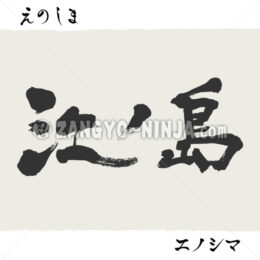
Enoshima in Kanji, Katakana and Hiragana [in Stock]

|

What is Enoshima? An island located in the northeastern part of Sagami Bay in Kanagawa Prefecture. It is connected to Katase on the opposite shore by the Benten Bridge and Enoshima Bridge, and is home to Enoshima Shrine (Enoshima Benten), which has been a place of deep religious devotion since the Kamakura period. The … Read More

Vektor
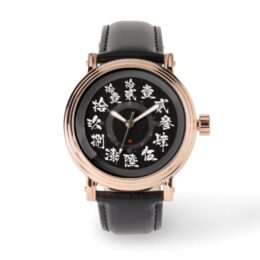
Japan hat die alten Kanji-Ziffern mit Rundungen verziert (BK Watch)

| |

Japan brushed difficult old Kanji numeral with rounds (black face) Watch Did you know? Even in ancient times, these Kanji numerals weren’t used on clocks. Kanji numerals existed in the past and still exist today. This is a fact based on historical records. However, there is no record of them ever being used on … Read More

Japanische gebürstete Kanji-Ziffern mit runden schwarzen Uhren

| |

This watch is made of black Japanese paper with Kanji character written within a double circle. All stains within the inner circle indicate the position of the minute hand. Because the background texture is Japanese paper, the text is blotchy in places, making atmosphere more important than functionality. Did you know? Even in ancient … Read More

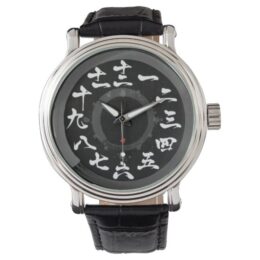
Japanische Kanji-Zahlen im MANGA-Stil (BK Typ 2) Uhr

| |

Manga ist weltbekannt geworden. Diese Armbanduhr hat ein Zifferblatt mit chinesischen Ziffern im Manga-Stil. Sie wirkt lässiger als die Armbanduhr mit Kanji-Ziffern. Sie ist ideal für Manga-Fans, aber auch für Japanischlernende und alle, die japanische Freunde haben. Heben Sie sich mit dieser Uhr von der Masse ab … Weiterlesen

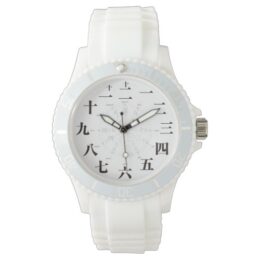
Japanische Kanji-Ziffern im MANGA-Stil WH-Uhr

| |

Did you know? Even in ancient times, these Kanji numerals weren’t used on clocks. Kanji numerals existed in the past and still exist today. This is a fact based on historical records. However, there is no record of them ever being used on clocks. During the Warring States and Edo periods featuring samurai and … Read More

Armbanduhr im alten japanischen Kanji-Ziffernstil (schwarzes Zifferblatt)

| |

Japanische Armbanduhr im alten Kanji-Stil (schwarzes Zifferblatt). Das Zifferblatt zeigt alte Kanji-Ziffern. Aussprachesymbole sind angegeben. Die Minutenangabe ist ebenfalls in Kanji in der Mitte geschrieben. Selbst in Japan gibt es nur sehr wenige Armbanduhren mit Kanji-Ziffern, daher ist sie ein seltenes Stück. Weiterlesen

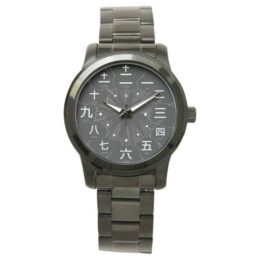
Armbanduhr im japanischen Kanji-Ziffernstil (schwarzes Zifferblatt)

| |

Japanische Armbanduhr im Kanji-Stil [schwarzes Zifferblatt]. Es handelt sich um eine Armbanduhr mit Kanji-Zeichen. Die Aussprachesymbole sind angegeben. Das Zifferblatt zeigt japanische Kanji-Ziffern, die in Japan weit verbreitet sind. Die Minutenangabe ist ebenfalls in Kanji in der Mitte dargestellt. Selbst in Japan gibt es nur sehr wenige Armbanduhren mit Kanji-Ziffern, daher … Weiterlesen

Secretly in Kanji [in Stock]

|

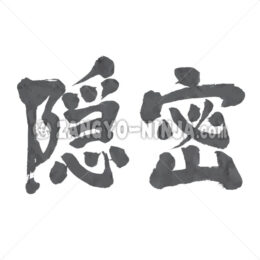
Description for Secretly A low-ranking samurai who engaged in exploration under secret orders from his lord. Generic term for detectives in the Edo period. It’s also called Shinobi no mono, Ninja, and spies. At first, Iga and Koga people were used for covert activities by the shogunate, but the 8th shogun Tokugawa Yoshimune reorganized … Read More

Vektor
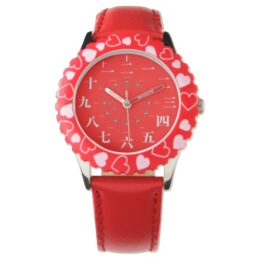
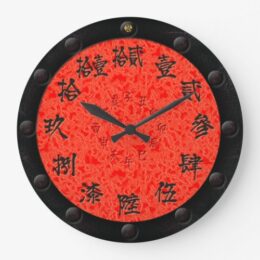
Japanische Kanji-Ziffernuhr (rotes Zifferblatt)

| |

Did you know? Even in ancient times, these Kanji numerals weren’t used on clocks. Kanji numerals existed in the past and still exist today. This is a fact based on historical records. However, there is no record of them ever being used on clocks. During the Warring States and Edo periods featuring samurai and … Read More

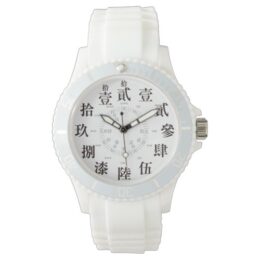
Japanische Uhr im alten, komplexen Kanji-Stil (weißes Zifferblatt)

| |

Es handelt sich um ein Zifferblatt mit einer alten, schwierigen und komplexen Kanji-Ziffer. Aussprachesymbole sind angegeben. Die Minutenangabe ist ebenfalls in Kanji in der Mitte geschrieben. Selbst in Japan gibt es nur sehr wenige Armbanduhren mit Kanji-Ziffern, daher ist sie ein seltenes Stück. Neben der abgebildeten Uhr … Weiterlesen

Armbanduhr im Stil japanischer Kanji-Ziffern (weißes Zifferblatt)

| |

Es handelt sich um eine Armbanduhr mit Kanji-Zeichen. Die Aussprachesymbole sind angegeben. Das Zifferblatt zeigt japanische Kanji-Ziffern, die in Japan weit verbreitet sind. Die Minutenangabe ist ebenfalls in Kanji in der Mitte eingraviert. Selbst in Japan gibt es nur sehr wenige Armbanduhren mit Kanji-Ziffern, daher ist sie eine Rarität. Japanische Kanji … Weiterlesen

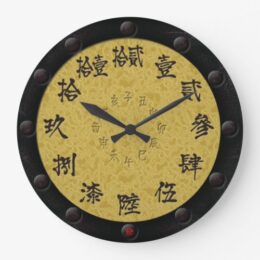
Gold moon – Old complex Kanji numeral and numbers like Yoroi armor Clock

| |

It’s hand written old difficult numbers in Japanese Kanji. And the Kanji of the zodiac is written on the inside. It is a work written on a design like worn-out golden armor(Samurai’s Yoroi). It was Aokimono who used the numbers as a reference and collaborated. Gold moon – Old complex numbers of Kanji like … Read More

RED SUN – Old complex Kanji numeral and numbers as Yoroi armor Clock

| |

Red sun – Old complex numbers of Kanji like Yoroi Large Clock It’s hand written old difficult numbers in Japanese Kanji. And the Kanji of the zodiac is written on the inside. It is a work written on a design like worn-out red armor(Samurai’s Yoroi). It was “Aokimono.” who used the numbers as a … Read More

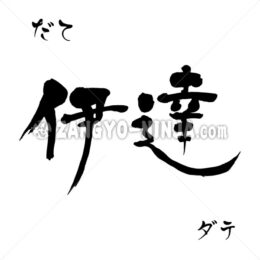
Date in Kanji, Katakana and Hiragana [in Stock]

|

This is not about the date indicating a specific time and date, but rather an explanation of the Japanese word “Date.” The meaning of this word as “Date” To flaunt one’s spirit or chivalry. Also, the manner of doing so. To wear flashy clothing or behave ostentatiously to attract attention. To put on airs. … Read More

Vektor
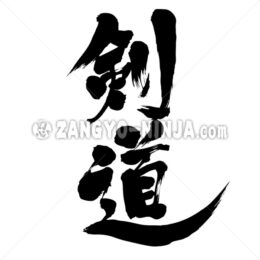
Kendo in Kanji [in Stock]

|

A type of martial arts where competitors wearing armor face each other and compete for victory or defeat by hitting the part specified by bamboo swords. In the Edo period, it became a samurai table art, and further merged with Bushido to have a spiritual content, but entered the Meiji period and declined with … Read More

Vektor
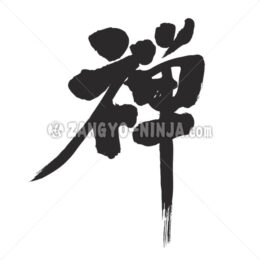
Zen in Kanji [in Stock]

|

Zen, das im 7. Jahrhundert aus China nach Japan gelangte, bezeichnete ursprünglich die Lehren und Praktiken der Zen-Schule, eines Zweigs des Buddhismus, der sich in Japan entwickelte. Heute versteht man Zen als eine Philosophie der Meditation und Achtsamkeit. Geschichte des Zen: Zen ist ein Begriff, der die Lehren und die Philosophie des Zen-Buddhismus umfasst … Weiterlesen

Vektor

knight in Kanji [in Stock]

|

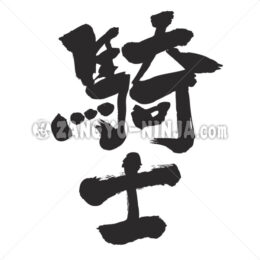
About real knights A knight refers to a social class in medieval Europe that was obligated to fight as cavalry in exchange for guaranteed control of manors. In modern times, cavalry itself disappeared, and knighthood became a title of nobility or a mere honorary position. Etymologically, the English word “knight” derives from the Old … Read More

Vektor
Shogun in Kanji [in Stock]

|

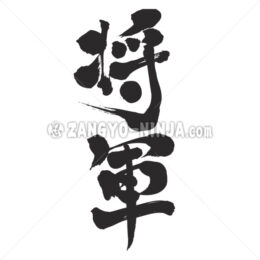
Dies sind vertikal geschriebene Kanji. Ihre Bedeutungen lassen sich im Allgemeinen in zwei Hauptkategorien unterteilen: 1. Eine Person, die für die Führung oder das Kommando über eine Armee verantwortlich ist. Dies ist eine der offiziellen Positionen und Titel für das Kommando über eine große Armee. Es ist seit Langem einer der Titel von Militärkommandanten in Ostasien. … Weiterlesen

Vektor

Akihabara in Kanji [in Stock]

|

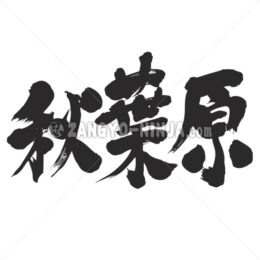
Description for Akihabara town Akihabara is an area name that refers to the area around JR Akihabara Station in Chiyoda-ku, Tokyo. It is known as one of the largest electric towns in Japan. History and etymology of Akihabara (Akiba) During the Edo period, it was the area where lower samurai lived. As it was … Read More

Vektor
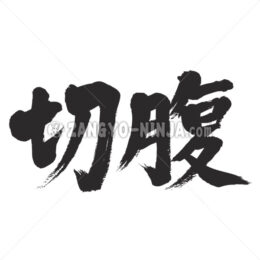
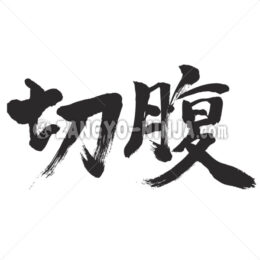
Harakiri in Kanji [in Stock]

|

Description for Harakiri (read as Seppuku) 1. Use your own sword to cut your stomach and die. 2. One of the punishments imposed on samurai during the Edo period. The lightest of the death penalty. In front of the autopsy, a kaishakunin shot down his neck from behind as he cut his belly. Japan … Read More

Vektor
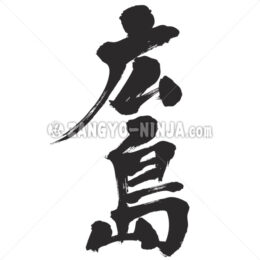
Hiroshima in Kanji [in Stock]

|

Description for Hiroshima Abbreviation for Hiroshima Prefecture or its prefectural capital, Hiroshima City. History of Hiroshima City During the Edo period, Hiroshima developed as a castle town of the Asano clan with an income of 426,500 koku. Since the Meiji period, it has had a strong character as a military city, and during the … Read More

Vektor
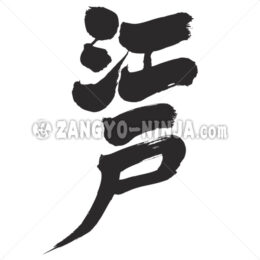
Edo in Kanji [in Stock]

|

Description for period of Edo in Japan The predecessor of Tokyo, now one of the largest cities in the world and the center of Japan’s politics, economy, and culture, was Edo. Edo was the seat of the Tokugawa clan for 279 years, from 1590 to 1868, and was the political center of the Edo … Read More

Vektor

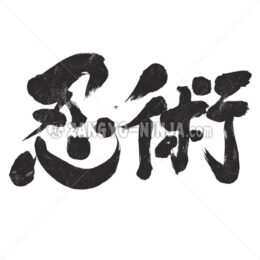
Ninjutsu wrote horizontally in Kanji [in Stock]

|

Special techniques used in military strategy during the samurai era. These techniques were used for purposes such as espionage, information gathering, plotting, and assassination, and involved disguises, invisibility, and trickery to take advantage of people’s weaknesses and act boldly and swiftly. The origins of these techniques can be found in China’s Sun Tzu’s Art … Read More

Vektor

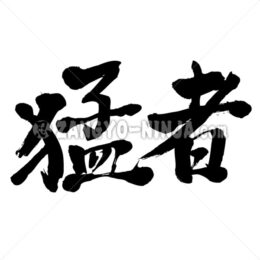
tough guy in Kanji [in Stock]

|

The kanji character “猛者” can be roughly translated as “tough guy”. ‘猛者’ is read as “mosa”. “mosa” refers to a person of exceptional strength and ability. It denotes not only physical strength but also experience, skill, and mental fortitude. In the Warring States period, it referred to brave samurai and soldiers who distinguished themselves … Read More

harakiri in Kanji [in Stock]

|

Ritual suicide by self-disembowelment on a sword. A form of ritual suicide by disembowelment using a blade, practiced by Japanese samurai, especially to rid oneself of shame, as a means of protest or, formerly, as a method of capital punishment. Japanese says Seppuku.

Vektor

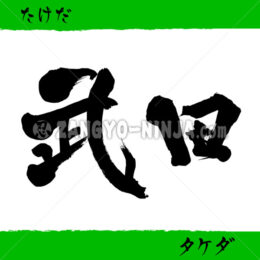
Takeda in Kanji, Hiragana and Katakana [in Stock]

|

The surname of a warlord who ruled the area around present-day Yamanashi Prefecture during the Warring States period. A renowned general known as the “Tiger of Kai.” Takeda Shingen was the surname of a warlord who governed Kai Province (present-day Yamanashi Prefecture) during the Warring States period (1467–1615). Not only for his military prowess, … Read More

Vektor

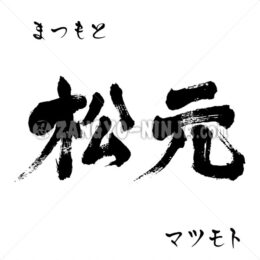
Matsumoto in Kanji, Katakana and Hiragana [in Stock]

|

This surname is commonly found in western Japan, particularly prevalent from the Kinki region to Kyushu. It likely originates from place names There were places named Matsumoto in various areas of Kagoshima and Miyazaki Prefectures, such as Ichinari Matsumoto in Kagoshima Prefecture’s Kagoshima City, Kiboku Town. Records also indicate samurai bearing the Matsumoto surname … Read More

Vektor

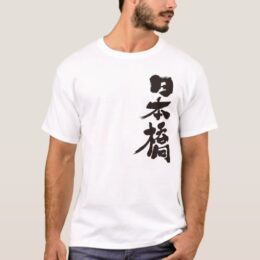
[Kanji] Nihonbashi T-Shirt

| |

[Kanji] Nihonbashi T-Shirt Nihonbashi as a wide-area place name refers to the entire former Nihonbashi Ward in the northern part of Chuo Ward, Tokyo. Since the Edo period, Yamate has been lined with samurai residences, but it has been a representative area of ​​the underground shopping center of the townspeople’s culture.

1 2 3 4 5