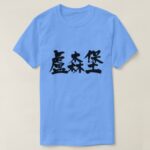

A constitutional monarchy in northwestern Europe. It is bordered by the Netherlands to the north, Germany to the east, Luxembourg to the southeast, France to the south, and the North Sea to the west, forming a 65.5 km coastline against Great Britain.
Nature in Belgium
Topographically and geologically, the country is divided into three main areas.
Northern Lowlands
On the 65-kilometer-long coast facing the North Sea, sand dunes have developed, and inside the dunes, there is a coastal plain up to 5 meters above sea level, which is a polder (reclaimed land) area. Further inland, the sandy Flemish plain stretches from 5 to 50 meters above sea level. This plain extends from northern France to the south of the Netherlands and is part of the Schelde River system, which originates in northern France. In the eastern part of the plain is the Kempen Plateau, 50 to 80 meters above sea level, and the southern part of the plateau is the Kempen coal field.
Central Low Plateau
This is a wavy, undulating, loess fertile area 50 to 200 meters above sea level that is connected to the southern part of the Flemish Plain. The Sambre and Meuse (Maas) rivers emanating from northeastern France cut this plateau in a straight line from east to west, and in this river valley there is a coal seam that extends from northern France to Aachen, Germany. South of the river valley is a hilly area 200-350 meters above sea level, composed of loess and sandy soil.
Ardennes Plateau
This is an uplifted quasi-plain of schistose, archaic mountainous terrain of the Hercinian Mountains at elevations of 500 meters or higher. Botrange in the east is the highest point in the country at 694 meters. Lorraine, a Belgian territory to the south of the plateau, is 300-400 meters above sea level.
Belgian Industry and Economy
Since the Middle Ages, Belgium has been a major producer of woolen and linen fabrics, and remains one of the centers of the textile industry in Western Europe. With an abundance of coal, Belgium is also active in the steel, machinery, chemical, glass, and metallurgical industries, and has made remarkable progress in the petrochemical and electronics industries. About 50% of the land is agricultural land, producing wheat, barley, sugar beets, etc., but the main livestock are cattle, sheep, and pigs, and a large portion of the country’s food is imported. Because of its geographical location, the country is one of the centers of trade in the EU and other countries, and relay trade is flourishing. The social security system is well developed.
Origin of the Kanji Spelling of Belgium
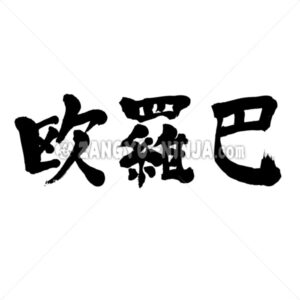
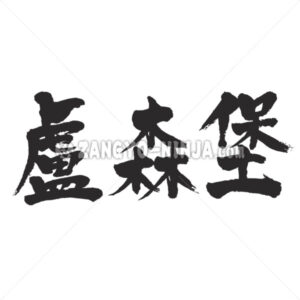
The origin of Belgium is derived from the Dutch word Belgie. It is commonly believed that Dutch merchants who came to Japan during the Edo period (1603-1867) called Belgium “Belhieu” in Dutch, which was then applied to the Chinese characters.
The name of the country of Belgium is said to be derived from “Belgiga,” meaning “the country of the Belgae,” but there are various theories as to the origin of the word. There are several theories as to the origin of the word, including the Gaulish word “belgoe” (warrior) and the Celtic words “bol” (swamp) and “gai” (forest).
Gaulish belongs to the Celtic language group, also called Gaulish because it was spoken in northern Italy and French Gaul, and is thought to have died out around the 5th century with the dominance of Latin.
Celtic is a member of the Indo-European language family and was spoken throughout Europe. Like Gaulish, it is believed to have been absorbed by Latin and disappeared around the 5th century.