

Explanation of the Nile river
It is said to be the world’s longest river with a length of about 6,650 kilometers that flows north to south on the African continent. Due to its length, it passes through various countries and finally passes through Egypt before emptying into the Mediterranean Sea. The number of countries facing is a total of 10 countries.
Burundi, Rwanda, Democratic Republic of the Congo, Tanzania, Kenya, Uganda, Ethiopia, South Sudan, Sudan and Egypt are 10 countries through which the Nile River passes.
The Nile divides into two tributaries, the Blue Nile and the White Nile. The Blue Nile rises from Lake Tana in Ethiopia and joins the White Nile at Khartoum, the capital of Sudan. The White Nile passes through Uganda, Sudan, Burundi, Tanzania, Rwanda, and South Sudan.
It is a large natural waterway that carries water recharged in the tropical mountains, where annual rainfall reaches 2,000 mm, to downstream arid regions where there is almost no rain throughout the year.
Egypt and the Nile
The kingdom of ancient Egypt changed its territory over time, but the original Egypt stretched from Aswan to the Mediterranean Sea. The Nile River here is 1,500 kilometers long. Herodotus’ famous saying, “Egypt is a gift of the Nile,” originally stated that the delta region was born from the quicksand of the Nile, but today it has been expanded to “Egyptian civilization. means Gift of the Nile”.
First, the Nile was the mother of production. There was a wealth of fish to feed on the Nile itself, a wealth of game and game to breed in the basin, and there was farmland dependent on the Nile. Whereas all other rivers weaken or dry up in the summer, the Nile floods with force in the summer. This flooding from July to October brought fertilizer to Egyptian farmland, removed salt and enriched the soil.
On the other hand, papyrus grew densely in the marshes of the delta. It first became a shipbuilding material, then a papermaking material, and the paper was an important basis for the development of Egyptian writing and painting. This flood prompted the Egyptians to develop the science and technology of flood control, geodesy, and astronomy, which was a force that united a wide range of disparate groups of basin inhabitants. Periodic flooding also played a role in producing Egyptian revival and eternal religious ideas.
After that, the Nile was a road and a transport road. Trade and travel, military action and transportation all depended on the Nile. Thus, naval architecture and navigation were developed.
The rocks of the Nile Basin are the resources that have most stimulated and blossomed the creativity of the Egyptians. Limestone, sandstone, granite, diorite, schist, peacock stone, alabaster, etc. are quarried to make pyramids, temples, obelisks, statues, as well as religious and daily items. Finished. At that time, in addition to faith, art and technology, organizational skills were displayed.
In this way, the Nile played a decisive role in the political, economic, cultural and religious spheres of the Egyptian people.
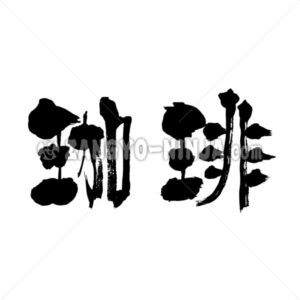
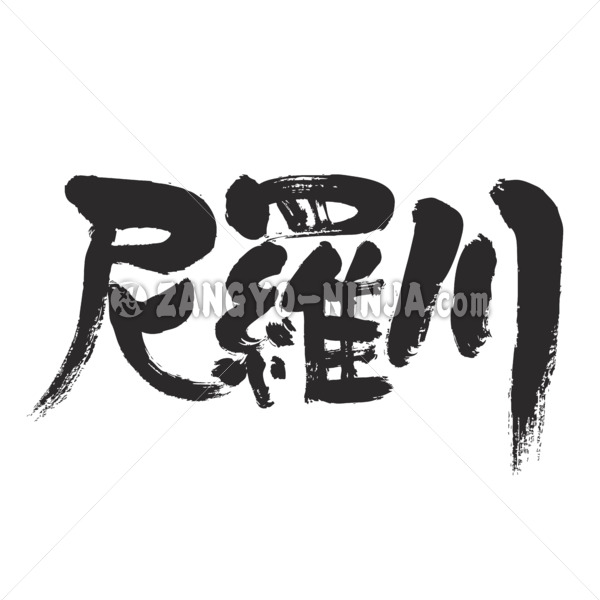
Origin of the Nile River in Kanji
This kanji is read as “Nairu gawa” in Japanese and is said to be a phonetic equivalent.