Home » Edo & Classic history » Ishida as surname in Kanji, Katakana and Hiragana

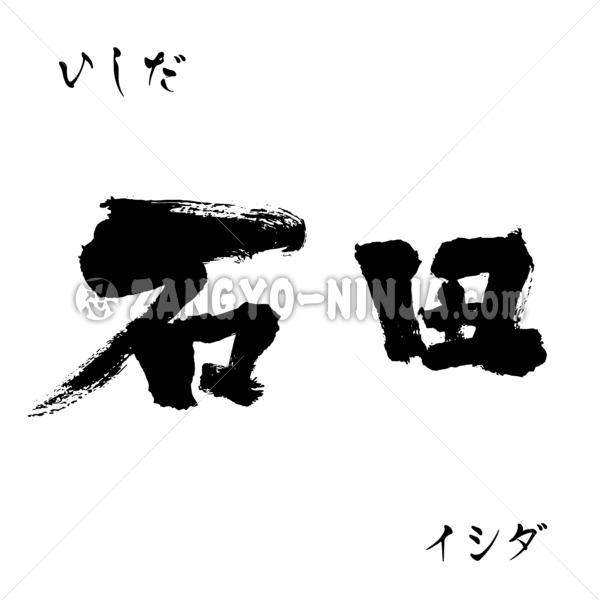
Ishida como apellido en kanji, katakana e hiragana

creado por diseñador

$0.00$1,490.00

600x600
$0.00
1920x1920
$4.80
6000x6000
$9.80
Lleno
$19.80
Lleno
$980.00
Lleno
$1,490.00

Hello, Mr. Ishida. This is an explanation of the origin of the surname Ishida, which is shared by your ancestors and friends.

This surname is relatively common, with 260,000 people bearing it nationwide.
Meaning of each character in this surname:
“石” (pronounced ishi) → stone
“田” (pronounced ta, da) → rice field
As basic background, rice farming was Japan’s primary agriculture.

Surnames originating from topography

This is a toponymic surname meaning “a field with many stones” or “a field with ground as hard as stone,” with roots found throughout the country. For example, places like Ishida Town in Nagahama City, Shiga Prefecture; Ishida in Isehara City, Kanagawa Prefecture; and Kamiishida and Shimoishida in Kofu City, Yamanashi Prefecture, are examples where the surname is derived from the place name.
It is also possible that the surname itself originated from such place names.

Surname of a Momoyama Period Military Commander

The clan of “Ishida Mitsunari” is well-known. He rose from being a local lord in Ōmi Province to become one of the Five Commissioners under the Toyotomi regime.
Mitsunari excelled in finance and administration, rising to become one of the Five Commissioners in the Toyotomi government. After Hideyoshi’s death in Keichō 5 (1600), Mitsunari raised arms against Tokugawa Ieyasu, one of the Five Elders. He supported Mōri Terumoto and Ukita Hideie, leading the Western Army at the Battle of Sekigahara. Defeated, he was executed.
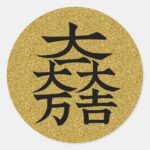
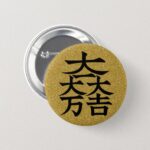
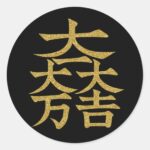
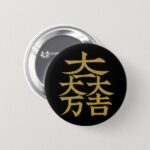
He is remembered for the banner he used at the time, bearing the phrase “大一大万大吉”(read as Daiichi Daiman Daikichi) This expressed the idealistic concept that “if one person serves all, and all serve one, the realm will achieve great peace (daikichi),” an ideal that resonates even today and parallels the rugby motto “One for all, all for one.”

Explicación de esta caligrafía

La fila superior está en hiragana, la fila central en kanji y la fila inferior en katakana, todo escrito horizontalmente.
Detalles técnicos AI Vector, 186.35 KB
, ,

People also views for about Ishida

   
Morita en Kanji, Hiragana y Katakana - Zangyo-Ninja

Morita en kanji, hiragana y katakana

Hola, Sr. Morita. Esta es una explicación de la o [...]
vector
GRATIS~ Ver detalles

Ninja en Katakana

Esta es una caligrafía escrita en katakana para Ninja F [...]
vector
GRATIS~ Ver detalles
Mizuki en apellido Kanji - Zangyo-Ninja

Mizuki en el apellido Kanji

Hola, Sr. Mizuki. Esta es una explicación de o [...]
vector
GRATIS~ Ver detalles
Tanaka en kanji - Zangyo-Ninja

Tanaka en kanji

Hola, Sr. Tanaka. Esta es una explicación de la o [...]
vector
GRATIS~ Ver detalles
Abel y Aibel en Kanji con escudo (fuente Maru-yose) - Zangyo-Ninja

Abel y Aibel en kanji con escudo (fuente Maru-yose)

Ambos son “abel” y “aibel”. Estas obras son fonéticas [...]
vector
GRATIS~ Ver detalles
Matsumoto en kanji - Zangyo-Ninja

matsumoto en kanji

1. Es una ciudad ubicada en la región central de Nag [...]
vector
GRATIS~ Ver detalles
Sasaki en Kanji - Zangyo-Ninja

Sasaki en kanji

La etimología es “pequeño saki” (protrudi [...]
vector
GRATIS~ Ver detalles

Obras recomendadas por el creador Aokage

Café en kanji

Es una de las bebidas más populares del mundo [...]
vector
GRATIS~ Ver detalles
Ichiban, primero en kanji - Zangyo-Ninja

Ichiban, primero en kanji

La palabra "top" en japonés tiene varias formas de escribirse, [...]
vector
GRATIS~ Ver detalles
Shomon Raifuku en kanji, el proverbio en hiragana. 笑門来福 - Zangyo-Ninja

Shomon Raifuku en kanji, el proverbio en hiragana. 笑門来福

La felicidad llega naturalmente a los hogares llenos de risas [...]
vector
GRATIS~ Ver detalles
Bebedor empedernido en Kanji - Zangyo-Ninja

Bebedor empedernido en kanji

Un bebedor empedernido es alguien que tolera bien el alcohol [...]
vector
GRATIS~ Ver detalles
AOKAGE
1031

Aokage

Ganó varios premios de oro y plata en caligrafía japonesa (Shodo). Le encanta el sushi y el sashimi. Habiendo practicado caligrafía desde niño, su padre era profesor titulado. Aokage (青景) proviene del paisaje azul como el mar, el cielo azul claro y la sombra azul. Sombra significa ninja.

Las personas que son alegres como tú también están mirando