Home » Sports » Judo in Kanji and Katakana

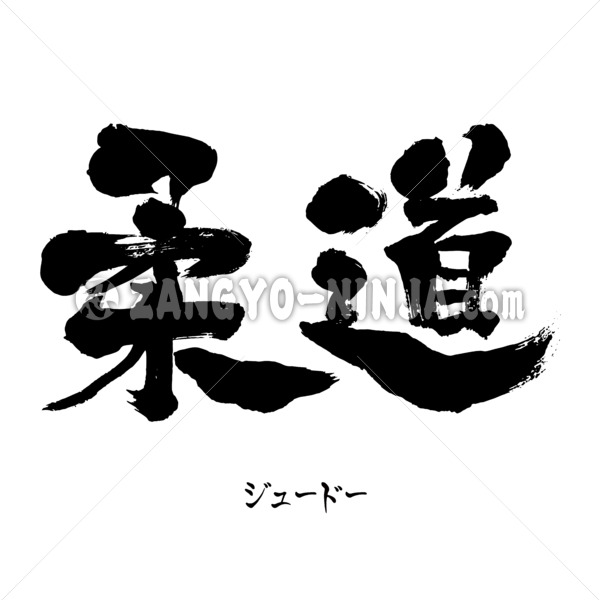
Judo en kanji y katakana

creado por diseñador

$0.00$1,490.00

600x600
$0.00
1920x1920
$4.80
6000x6000
$9.80
Lleno
$19.80
Lleno
$980.00
Lleno
$1,490.00
Category:

Description for Judo

A martial art founded by refining ancient jujutsu techniques. Jigoro Kano established Kodokan Judo from an educational perspective, aiming for physical training, mental discipline, and competition. It has since become one of the world’s most widely practiced sports.
It has been an official Olympic sport since the 1964 Tokyo Games, and a women’s event since the 1992 Barcelona Games.
“Gentleness overcomes force.” Utilize your opponent’s strength to control them. This allows even the smaller to defeat the larger. This is the fundamental principle of Judo.

Overview of Judo Techniques

Judo techniques consist of three categories: throwing techniques (standing techniques, sacrifice throws), holding techniques (pinning techniques, strangulation techniques, joint locks), and striking techniques (striking, punching, kicking). In randori (practice) and matches, dangerous techniques like striking are prohibited.

Competition Rules and Scoring

The official competition area is a 50-mat tatami space (approximately 9.1m square). Competitors wear a judogi. Matches are held in open weight or weight-class divisions and are single-point matches within a set time limit (3 to 20 minutes).
If no Ippon is scored, victory is determined by superiority based on criteria such as Waza-ari (advantage point), Keikoku (warning), Yuuko (effective point), and Chui (caution) (international rules add Kōka (effective action) and Shido (admonition)).
Dan ranks (10th Kyu to 1st Dan) and Kyu ranks (1st Kyu to 5th Kyu) are examined and certified by the Kodokan.

Explicación de esta caligrafía

The top section is in kanji, the bottom in katakana, all written horizontally.
The kanji “柔” (yawara) signifies softness and flexibility. “道” (dō) means ‘way’ or “path,” a character frequently used in Japanese sports and performing arts. It conveys the idea of walking a path forward. This path is not a single straight road; it sometimes branches or connects, sometimes ascends or descends, and can be easy to traverse or rugged.
Detalles técnicos AI Vector, 206.15 KB
, ,

People also views for about Judo

   
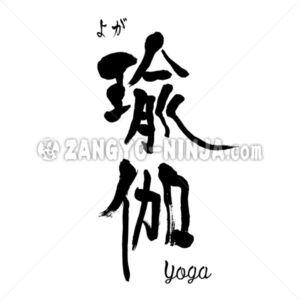
Yoga en hiragana y kanji, estilo relajado - Zangyo-Ninja

Yoga en hiragana y kanji, parece un estilo relajado

Introducción al yoga: A través de la meditación, uno calma el [...]
vector
GRATIS~ Ver detalles
Straight punch / Oi zuki in Kanji - Zangyo-Ninja

Straight punch / Oi zuki in Kanji

straight punch. a blow with the fist. Japaense says [...]
vector
GRATIS~ Ver detalles
Kung fu en kanji - Zangyo-Ninja

Kung-fu en kanji

A Chinese martial art similar to Karate. In other p [...]
vector
GRATIS~ Ver detalles
Sumo in Kanji - Zangyo-Ninja

Sumo in Kanji

A wrestling in which two players try on the ground [...]
vector
GRATIS~ Ver detalles
Dodgeball en kanji - Zangyo-Ninja

Balón prisionero en kanji

Description for Dodgeball as ball games A kind of b [...]
vector
GRATIS~ Ver detalles

karate en kanji

a traditional Japanese system of unarmed combat. An [...]
vector
GRATIS~ Ver detalles
swimming in Kanji - Zangyo-Ninja

swimming in Kanji

Swimming is exercise that swims on the surface of t [...]
vector
GRATIS~ Ver detalles

Obras recomendadas por el creador Aokage

Tanaka en kanji - Zangyo-Ninja

Tanaka en kanji

Hola, Sr. Tanaka. Esta es una explicación de la o [...]
vector
GRATIS~ Ver detalles

Café en kanji

Es una de las bebidas más populares del mundo [...]
vector
GRATIS~ Ver detalles
Mizuki en apellido Kanji - Zangyo-Ninja

Mizuki en el apellido Kanji

Hola, Sr. Mizuki. Esta es una explicación de o [...]
vector
GRATIS~ Ver detalles
Morita en Kanji, Hiragana y Katakana - Zangyo-Ninja

Morita en kanji, hiragana y katakana

Hola, Sr. Morita. Esta es una explicación de la o [...]
vector
GRATIS~ Ver detalles
Ichiban, primero en kanji - Zangyo-Ninja

Ichiban, primero en kanji

La palabra "top" en japonés tiene varias formas de escribirse, [...]
vector
GRATIS~ Ver detalles
AOKAGE
1032

Aokage

Ganó varios premios de oro y plata en caligrafía japonesa (Shodo). Le encanta el sushi y el sashimi. Habiendo practicado caligrafía desde niño, su padre era profesor titulado. Aokage (青景) proviene del paisaje azul como el mar, el cielo azul claro y la sombra azul. Sombra significa ninja.

Las personas tan inteligentes como tú también están mirando