
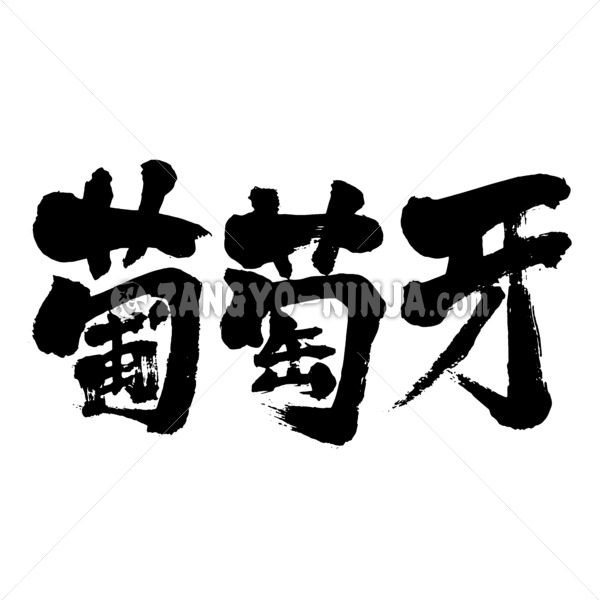
Description for Portuguese
The country’s name is said to have originated from the old name of Porto, “Portus Cale”.
About 1/4 of Japan’s land area is inhabited by 10 million people, most of whom are Catholics.
Surrounded by Spain and the Atlantic Ocean, it is the westernmost country in Europe.
Portugal’s history
The most important part of Portugal’s history is the Age of Discovery, which began in the 15th century. After recapturing territory from the Muslims, the Kingdom of Portugal reached East Asia via Africa, India, and Brazil, and reigned at the top of the world as a pioneer of the Age of Discovery. Portugal was the first European country to establish contact with Asia, and further expanded its power through trade in spices procured from Asia.
Portugal is currently a member of NATO, the United Nations and the European Union. Despite the current issue of fiscal reconstruction, it is showing its unique presence by producing its own citizens as president of the European Commission.
Portuguese culture
Much of Portuguese culture is influenced by its location on the Atlantic Ocean.
While being influenced by the Celts, Romans, and Arabs who once lived in the Iberian Peninsula, it has been nurtured by the Portuguese based on Catholicism. Politically and economically Portugal has been strongly influenced by England, but culturally it is more influenced by French culture than by British culture. Like neighboring Spain, it also has a culture of bullfighting. In addition, there is a word “Saudade” that expresses nostalgia in the words that symbolize the culture of Portugal and Brazil.
Portuguese food culture
Portuguese cuisine is characterized by the use of many ingredients native to Portugal’s former colonies, such as paprika, piri-piri (small, hot peppers), and vanilla.
Also, since the Arabs who ruled Portugal for hundreds of years used cinnamon and saffron in their cuisine, the southern part of Portugal has a growing food culture that uses cinnamon and saffron.
Olive oil is one of the cornerstones of Portuguese cuisine, both for cooking and seasoning, and onions, garlic, potatoes and tomatoes are widely used, along with herbs like Italian parsley and coriander (cilantro). The use of strong-smelling leaves like coriander in cooking is very rare in Western Europe.
In Portugal, fish dishes are very popular.
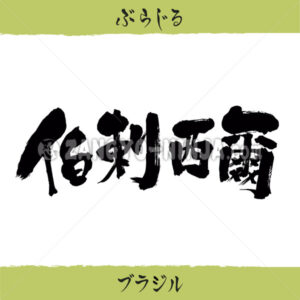
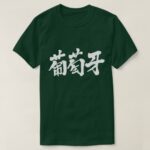
Origin and Meaning of Portugal in Kanji
The first two characters are Kanji characters for grapes, but it is not derived from the place where many grapes can be harvested, but is used in Japan by imitating Chinese.
This notation originated in southern China in the 19th century and spread to neighboring countries, including Japan.