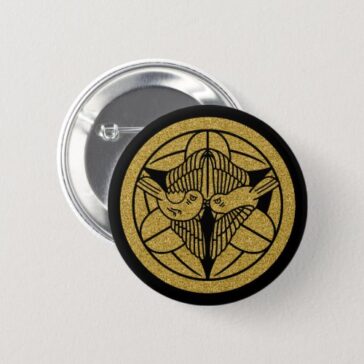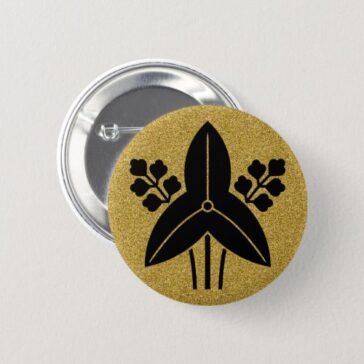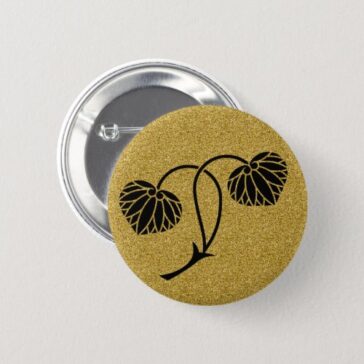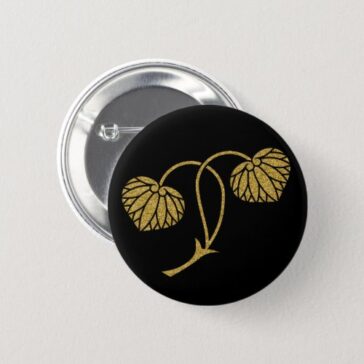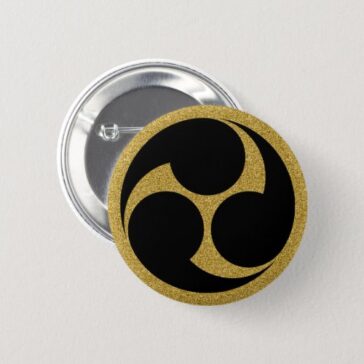

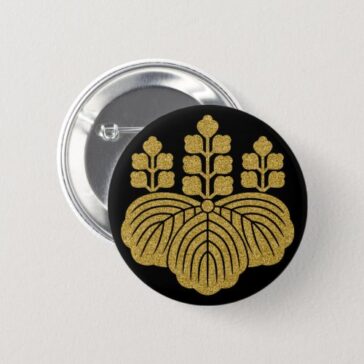
[Escudos familiares] Flores y hoja de paulownia Botón redondo
|

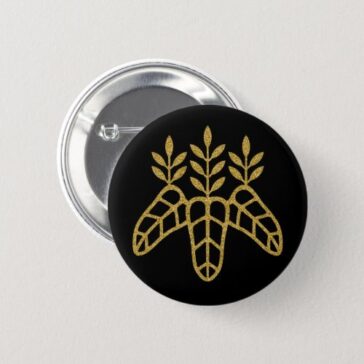
Es el escudo familiar que más probabilidades tienes de ver en Japón. El escudo de la flor de paulownia era considerado un subescudo de la familia imperial. Además, este escudo de la flor de paulownia a veces se otorgaba a un vasallo que había tenido algún mérito en la familia imperial. Entre ellos se encuentran Takauji Ashikaga, Nobunaga Oda, … Leer más
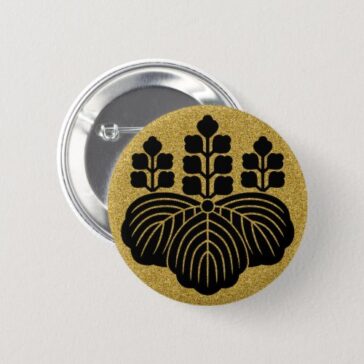
[Escudos familiares] Flores de paulownia y botón de hoja
|

[Family Crests] Paulownia Flowers and leaf button It is the family crest that you have the most chance to see in Japan. The paulownia flower crest was regarded as a sub-crest of the emperor’s family. In addition, this paulownia flower crest was sometimes given to a vassal who had a merit in the Emperor’s … Read More

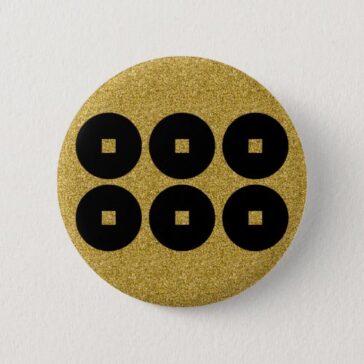
[Family Crests] Sanada’s 6 coins Button
|

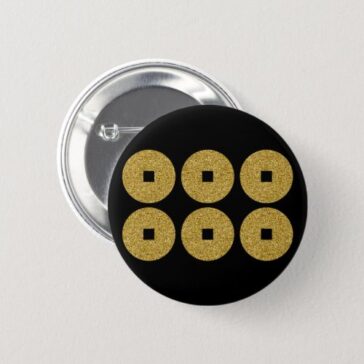
This is also a famous family crest. There are various theories, but at that time, it was said that the “Sanzu River” was flowing between the world and the world, and that the ferry to cross the river required “Rokumonsen (current monetary value of about 300 yen)”. I am. The family crest also shows … Read More

[Family Crests] Sanada’s 6 coins Pinback button
|

[Family Crests] Sanada’s 6 coins Pinback button This is also a famous family crest. There are various theories, but at that time, it was said that the “Sanzu River” was flowing between the world and the world, and that the ferry to cross the river required “Rokumonsen (current monetary value of about 300 yen)”. … Read More

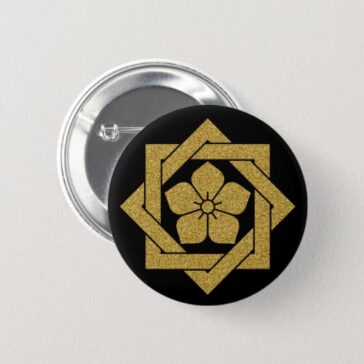
[Escudos familiares] Botón de campanilla de Ryoma Sakamoto
|

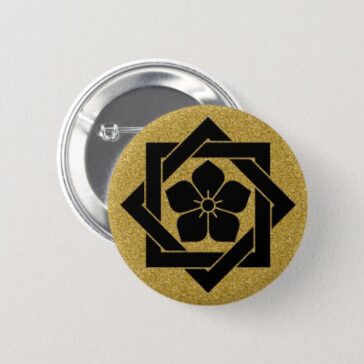
Líneas cruzadas dentro del Kamon de Kikyo (flor de globo, campanilla). Fue utilizado por Ryoma Sakamoto, quien sucedió en el Taisei Hokan al final del período Edo. Nota: Kikyo (flor de globo, campanilla) es una de las siete hierbas del otoño. Antiguamente, una flor de campanilla se dedicaba a los dioses y Budas para forjar el… Leer más

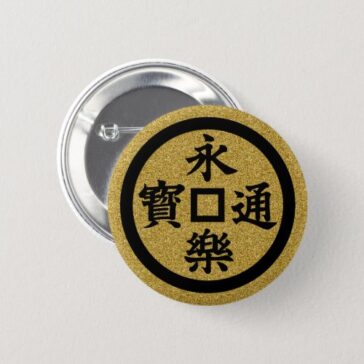
[Family Crests] Eiraku coin Round Button
|

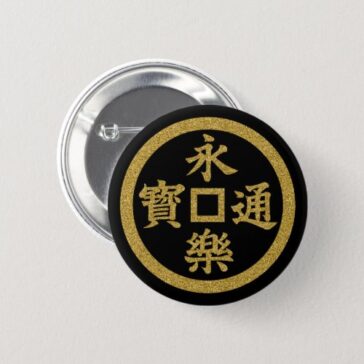
[Family Crests] Eiraku coin Round Button Nobunaga Oda used the Eiraku coin (Eiraku Tsuho) design that was in circulation as a family crest as a symbol of economic power. He used it as a flag.

[Family Crests] sparrows and bamboo leaves Button
|

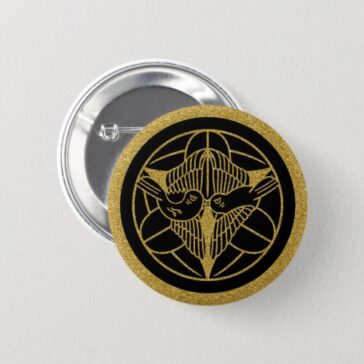
It is a family crest that the Uesugi family gave to the Date family as a “proof of marriage”. The combination with bamboo leaves is popular. note. The sparrow has long been a familiar bird to the Japanese. In Shikoku and Wakayama prefectures, sparrows are also called “itakura” and mean small birds (kura) that … Read More

[Family Crests] Sparrows and bamboo leaves Round Button
|

[Family Crests] Sparrows and bamboo leaves Round Button It is a family crest that the Uesugi family gave to the Date family as a “proof of marriage”. The combination with bamboo leaves is popular. note. The sparrow has long been a familiar bird to the Japanese. In Shikoku and Wakayama prefectures, sparrows are also … Read More

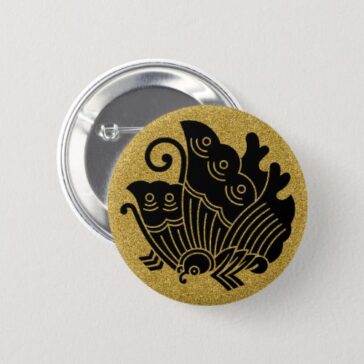
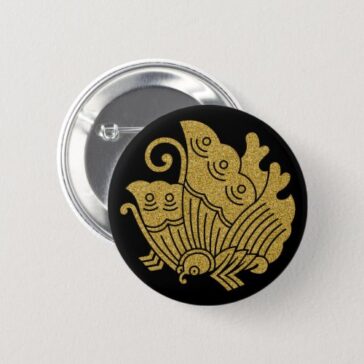
[Family Crests] Swallowtail butterfly Button
|

Es un escudo de armas utilizado por Taira no Kiyomori, el señor del clan Heike. Nobunaga Oda comenzó a usar el escudo de la mariposa cola de golondrina en honor a los descendientes de Taira en cierta época, con el fin de reemplazar el shogunato Muromachi de Genji Seiwa. Nota: Las mariposas son criaturas que crecen mientras se transforman de larvas a pupas y luego a... Leer más

[Family Crests] Swallowtail butterfly Round Button
|

[Family Crests] Swallowtail butterfly Round Button It is a crest used by “Taira no Kiyomori”, the lord of the Heike clan. Nobunaga Oda began to use the “swallowtail butterfly crest” in honor of Taira’s descendants from a certain time in order to replace Seiwa Genji’s Muromachi Shogunate. note. Butterflies are creatures that grow while … Read More

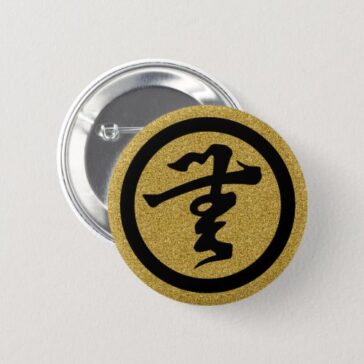
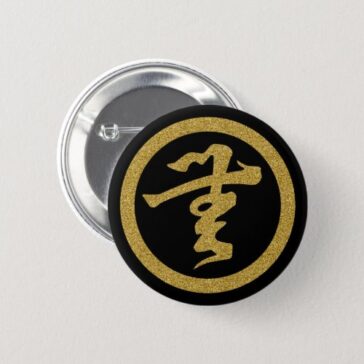
[Family Crests] Nothing in Kanji character Button
|

One character of nothing is drawn. Nothing means “innocence”, which is a psychological state freed from all anxieties based on the idea of ​​Zen Buddhism. However, no evidence of Oda Nobunaga’s use of this family crest has ever been confirmed, and it is only described in the “Kansei Choshu Shokafu”. [Family Crests] Nothing in … Read More

[Family Crests] Nothing in Kanji letter Button
|

[Family Crests] Nothing in Kanji letter Button One character of nothing is drawn. Nothing means “innocence”, which is a psychological state freed from all anxieties based on the idea of ​​Zen Buddhism. However, no evidence of Oda Nobunaga’s use of this family crest has ever been confirmed, and it is only described in the … Read More

[Escudos familiares] Botón de paulownia Taiko
|

The family crest used by Toyotomi Hideyoshi when he was inaugurated as Taiko. It is said that he created it himself. Hideyoshi Toyotomi, who gave many paulownia crests to the military commanders who became subordinates in the process of controlling various parts of the country, began to use the taiko paulownia crests, which was … Read More

[Escudos familiares] Botón redondo con forma de campanilla de Ryoma Sakamoto
|

[Escudos familiares] El Kamon redondo de campanilla de Ryoma Sakamoto con líneas cruzadas en el interior de Kikyo (campanilla). Fue utilizado por Ryoma Sakamoto, quien sucedió a Taisei Hokan al final del período Edo. Nota: Kikyo (campanilla) es una de las siete hierbas del otoño. Antiguamente, una flor de campanilla se dedicaba a… Leer más

[Family Crests] Eiraku coin button
|

Nobunaga Oda used the Eiraku coin (Eiraku Tsuho) design that was in circulation as a family crest as a symbol of economic power. He used it as a flag. [Family Crests] Eiraku coin button

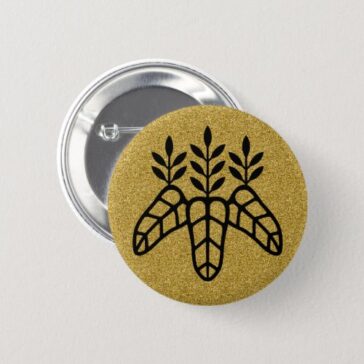
[Escudos familiares] Punta de flecha de tres hojas Botón
|

Cuando Toyotomi Hideyoshi se hacía llamar “Kinoshita Tokichiro”, usaba los emblemas de la familia Sagittaria trifolia (Omodaka) hasta que Nobunaga Oda le dio los emblemas de la paulownia 5-3. Nota: Omodaka es uno de los 10 emblemas familiares principales ampliamente utilizados en Japón. Sagittaria trifolia es un tipo de planta acuática cuyas hojas se asemejan a puntas de flecha. Es una… Leer más

[Family Crests] 2 hollyhock leaves Button
|

The crest of Kamigamo Shrine in Kyoto. The 3 Hollyhock(Aoi) crest used by Ieyasu Tokugawa is said to be derived from it. note: Hollyhock(Aoi) is a perennial plant that grows naturally in forests all over the country and is a common plant. It is said that the development of the house was likened to … Read More

[Family Crests] 2 hollyhock leaves Round Button
|

[Family Crests] 2 hollyhock leaves Round Button The crest of Kamigamo Shrine in Kyoto. The 3 Hollyhock(Aoi) crest used by Ieyasu Tokugawa is said to be derived from it. note: Hollyhock(Aoi) is a perennial plant that grows naturally in forests all over the country and is a common plant. It is said that the … Read More

[Escudos familiares] Botón Mitsudomoe giratorio a la izquierda
|

The origin is not clear, but it is often used as a god crest, and it started at Hachiman Shrine and then spread to other shrines. Since it has been a popular design since ancient times, it has been used for unspecified family crests. [Family Crests] Left-rotating Mitsudomoe Button The family name to which … Read More

[Family Crests] Taiko Paulownia Round Button
|

[Family Crests] Taiko Paulownia Round Button The family crest used by Toyotomi Hideyoshi when he was inaugurated as Taiko. It is said that he created it himself. Hideyoshi Toyotomi, who gave many paulownia crests to the military commanders who became subordinates in the process of controlling various parts of the country, began to use … Read More

[Escudos familiares] Símbolo kanji de Ishida Mitsunari en la bandera militar Botón
|

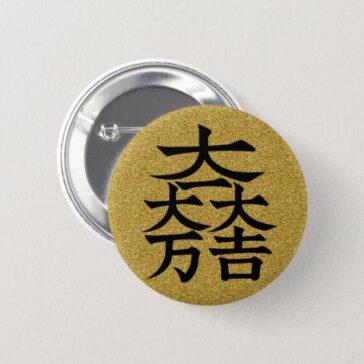
Es un símbolo kanji que fue izado como bandera de guerra por el comandante militar Mitsunari Ishida durante el período Sengoku (Período de los Estados Combatientes). Significa: «Si una persona trabaja por todos y todos trabajan por uno, la gente del mundo puede ser feliz». [Escudos familiares] Símbolo kanji de Ishida Mitsunari en la bandera militar Botón

[Escudos familiares] Triple Tomoe Flores de glicinia Botón
|

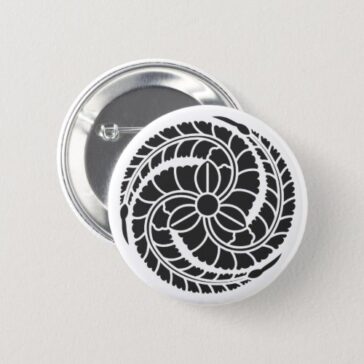
Wisteria flower Kamon. This family crest features three leaves at its center, with three clusters of wisteria flowers rotated clockwise around them. Triple Tomoe Wisteria flowers Button Click the button below to view the inverted black-and-white version of this family crest. Triple Tomoe Wisteria flowers Button (inverted) Family names that have inherited this crest … Read More

[Family Crests] Wisteria flower with circle Pin Button
|

Flowers symbol and graphics at old age. Circle with Wisteria Kamon. [Family Crests] Flowers Circle and Wisteria Pin Button Click the button below to view the inverted black-and-white version of this family crest. Wisteria Flowers Round Pin Button (inverted) Family names that have inherited this crest Amano, Fujikawa, Fujimori, Fujino, Fujiwara, Fukuo, Hoshimura, Ida, … Read More

[Family Crests] Paulownia Flowers with circle Pinback button
|

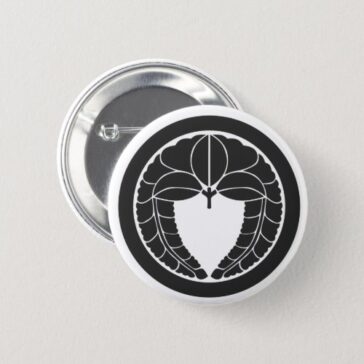
Family Crests(Kamon) symbol and graphics at old age. A bold Circle inside Paulownia leaf and Flowers for Kamon. [Family Crests] Paulownia Flowers with circle Pinback button

[Escudos familiares] Campanillas dobles representadas en líneas Botón
|

Escudos familiares (Kamon) Símbolo y gráficos en la vejez. Este escudo familiar representa campanillas de doble pétalo (flor Kikyo) dibujadas con líneas gruesas. [Escudos familiares] Campanillas dobles dibujadas con líneas Botón Haga clic en el botón de abajo para ver la versión invertida en blanco y negro de este escudo familiar. Campanillas dobles dibujadas con líneas Botón (invertido) Apellidos que han heredado… Leer más

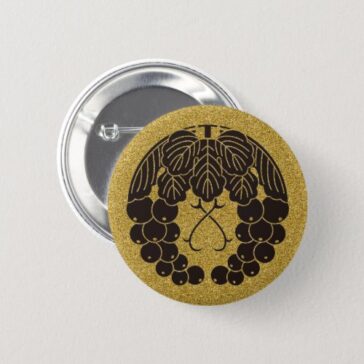
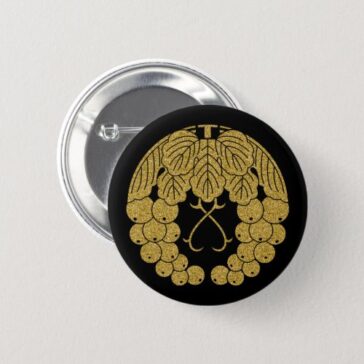
[Escudos familiares] Botón de dos uvas
|

El escudo de uvas es un diseño muy raro originario del continente. Nota: Los escudos de uvas tienen muchos frutos y vides que los envuelven, por lo que se utilizan como amuletos de la suerte para la prosperidad de los descendientes, el matrimonio y los negocios. [Escudos familiares] Botón de dos uvas

[Escudos familiares] Dos uvas Botón redondo
|

[Escudos familiares] Botón de dos uvas. El escudo de uvas es un diseño muy raro originario del continente. Nota: Los escudos de uvas tienen muchos frutos y vides que los envuelven, por lo que se utilizan como amuletos de la suerte para la prosperidad de los descendientes, el matrimonio y el éxito en los negocios.

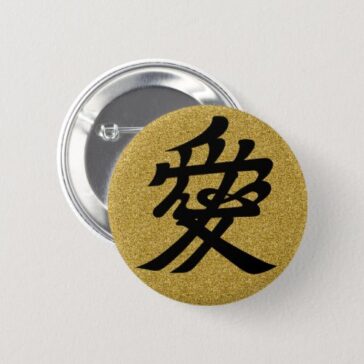
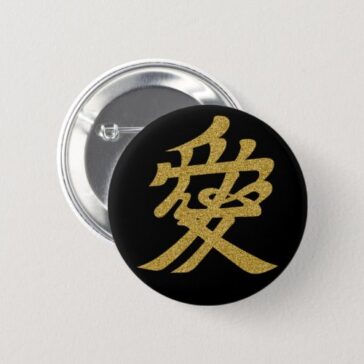
[Escudos familiares] Botón de amor de Naoe Kanetsugu
|

El emblema frontal “Ai (amor)” que llevaba Kanetsugu Naoe en el casco durante el período Sengoku. Existe la teoría de que es un acrónimo de Atago Gongen, el Buda de la Guerra. Atago Gongen es un Buda que lucha contra el enemigo con Bishamonten. [Escudos familiares] Botón de amor de Naoe Kanetsugu

[Escudos familiares] Botón redondo de amor de Naoe Kanetsugu
|

[Escudos familiares] Botón redondo de amor de Naoe Kanetsugu. El emblema frontal "Ai" (amor) que se adjuntaba al casco que usaba Kanetsugu Naoe durante el período de los Estados Combatientes. Existe la teoría de que se trata de un acrónimo de Atago Gongen, el Buda de la Guerra. Atago Gongen es un Buda que lucha contra el enemigo con Bishamonten.

[Family Crests] Genji carriage wheels round Button
|

Genji carriage wheel round Button A family crest inspired by the ancient imperial carriage. It became a family crest due to its aesthetic significance. Note that the imperial carriage is also known as the Genji carriage. It can be found by clicking the button above. The white family crest is hidden. Click the “Edit … Read More

1 2 3 4 5