
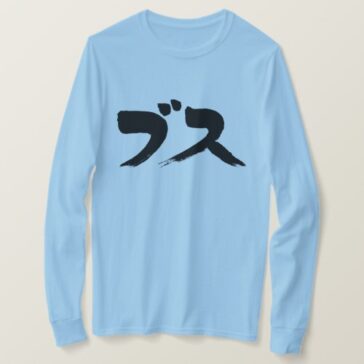
[Katakana] T-shirt à manches longues femme laide
|

[Katakana] ugly woman Long sleeves T-Shirt A derogatory Japanese slang term that refers to poor appearance. It is a term that refers to an ugly woman in particular, but it is also said to be a woman with a bad personality even if she does not look ugly. Japanese calls “Bu Su”.
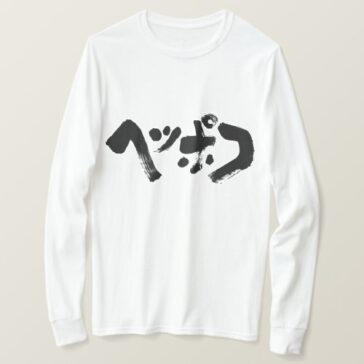
[Katakana] useless long sleeve T-Shirt
|

A word that makes a fool of something that is inferior in skill or useless. Sometimes used on top of nouns. japanese said “Heppoko”. [Katakana] useless long sleeve T-Shirt

[Blagues familiales] Bouton Fleurs de gentiane et herbes de bambou
|

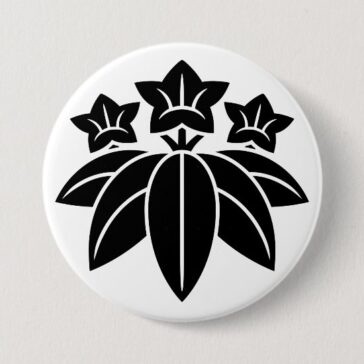
This family crest depicts five bamboo-like leaves spread downward, with three gentian flowers drawn above them. It can be found by clicking the button below. The white family crest is hidden. Click the “Edit this design” button to display the white crest, hide the black crest, and change the background color. Gentian Flowers and … Read More

[Family Crests] Reverse sides oxalis corniculata Pinback Button
|

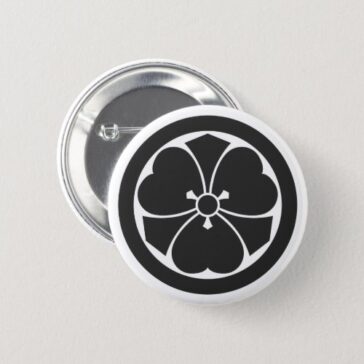
Reverse sides oxalis corniculata for Kamon. Nature plants symbol and graphics at old age for Japanese family. note. Oxalis leaves (Katabami) are heart-shaped. It has strong fertility and was favored by public and samurai families for its auspiciousness. [Family Crests] Reverse sides oxalis corniculata Pinback Button

[Blagues familiales] Bouton de fleur de chrysanthème à 16 pétales
|

Il s'agit d'un chrysanthème à seize pétales, symbole de longévité (Kamon). Les blasons familiaux (Kamon) désignent des symboles et des représentations de la vieillesse au Japon. Note : Chrysanthème : Dans la Chine ancienne, les chrysanthèmes étaient utilisés à des fins ornementales et comme remède pour la longévité. Ils étaient considérés comme les fleurs les plus énergisantes parmi les cent fleurs. Cette idée a été introduite… Lire la suite

[Blagues familiales] Fleurs de paulownia avec boutons circulaires
|

[Family Crests] Paulownia Flowers with circle Buttons Family Crests(Kamon) symbol and graphics at old age. A bold Circle inside Paulownia leaf and Flowers for Kamon.

[Family Crests] Reverse sides oxalis corniculata Round Button
|

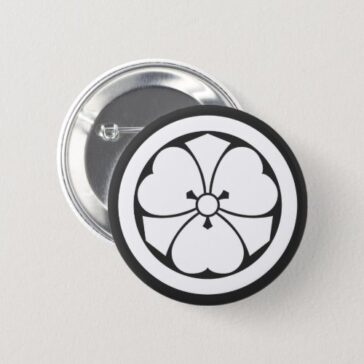
[Family Crests] Reverse sides oxalis corniculata Round Button Reverse sides oxalis corniculata for Kamon. Nature plants symbol and graphics at old age for Japanese family. It’s negative positive inversion.

[Family Crests] a circle inside Oxalis corniculata with swords Round Button
|

[Family Crests] a circle inside Oxalis corniculata with swords Round Button a circle inside Oxalis corniculata with swords for Kamon. Nature plants symbol and graphics at old age for Japanese family. It’s negative positive inversion.

[Blagues familiales] Bouton à épingle divisé en 3 feuilles de ginkgo
|

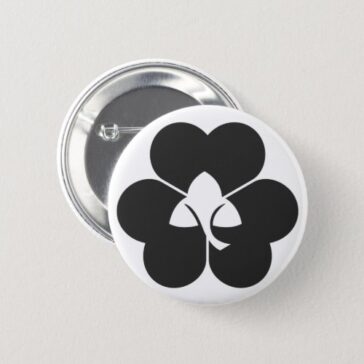
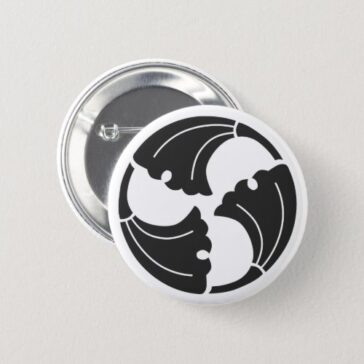
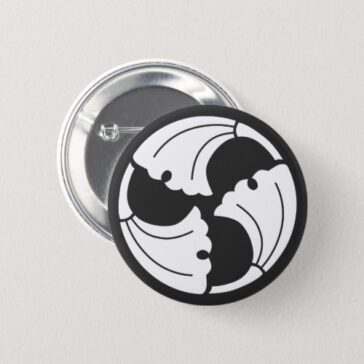
Divided into three Ginkgo leaves for Kamon. Nature plants symbol and graphics at old age for Japanese family. [Family Crests] Divided into 3 Ginkgo leaves Pinback Button

[Blagues familiales] Divisé en 3 feuilles de ginkgo bouton rond
|

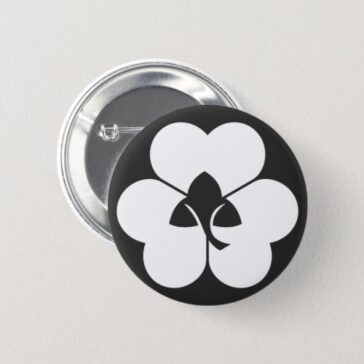
[Family Crests] Divided into 3 Ginkgo leaves Round Button Divided into three Ginkgo leaves for Kamon. Nature plants symbol and graphics at old age for Japanese family. It’s negative positive inversion.

[Blagues familiales] Un cercle à l'intérieur de 3 gourdes Bouton à épingle
|

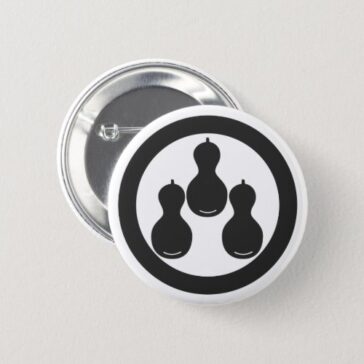
A circle inside three Gourds for Kamon. Nature plants symbol and graphics at old age for Japanese family. note. Gourd: It was used as a water bottle and a liquor bottle. It was also said to have an amulet effect. [Family Crests] a circle inside 3 Gourds Pinback Button Click the button below to … Read More

[Family Crests] a circle inside Oxalis corniculata with swords Pinback Button
|

a circle inside Oxalis corniculata with swords for Kamon. Nature plants symbol and graphics at old age for Japanese family. [Family Crests] a circle inside Oxalis corniculata with swords Pinback Button

[Blagues familiales] Boutons de pivoines
|

[Blagues familiales] Boutons de pivoines. Une pivoine pour Kamon. Symbole et graphisme des armoiries familiales (Kamon) à l'ancienne.

[Blagues familiales] Bouton en forme de losange Takeda
|

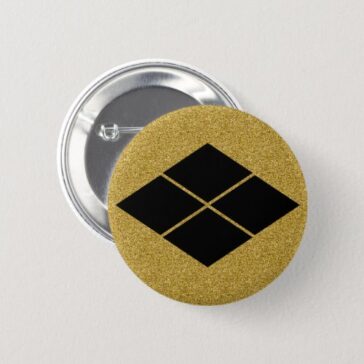
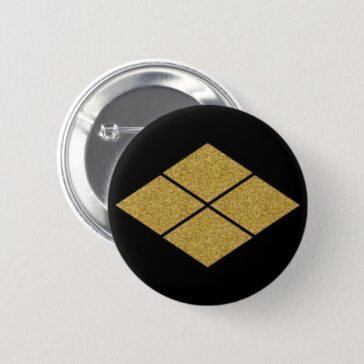
Il s'agit du célèbre blason de la famille Takeda Shingen. Shingen Takeda était un daimyo durant la période Sengoku. Le « Furinkazan », qui aurait figuré sur le sashimono (drapeau militaire), est également célèbre. Remarque : le hishimon (losange) serait une version stylisée du fruit du trapa japonica… Lire la suite

[Blagues familiales] Bouton à épingle en forme de losange Takeda
|

Il s'agit du célèbre blason de la famille Takeda Shingen. Shingen Takeda était un daimyo durant la période Sengoku. Le « Furinkazan », qui aurait figuré sur le sashimono (drapeau militaire), est également célèbre. Remarque : le hishimon (losange) serait une version stylisée du fruit du trapa japonica… Lire la suite

[Blagues familiales] Oda Mokko et Karahana Button
|

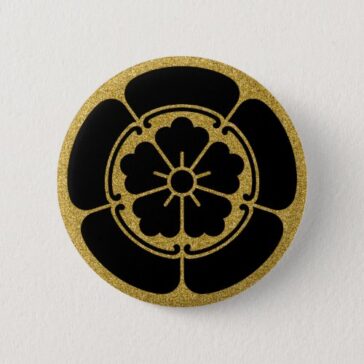
Voici le célèbre blason de la famille d'Oda Nobunaga. Un mokko à cinq branches est entouré d'une fleur de karahana, symbole de Kamon. Ce blason représente la nature, notamment des plantes, symbole de vieillesse pour une famille japonaise. Remarque : le mokko est dessiné comme un nid d'oiseau. Ce nid symbolise la prospérité des descendants et est considéré comme un blason de bon augure. … Lire la suite

[Blagues familiales] Plumes de faucon croisées Bouton
|

Un blason familial représentant des plumes de faucon se chevauchant en diagonale, la partie gauche pointant vers le haut. Ces motifs s'inspirent des plumes de flèche. Vous pouvez le découvrir en cliquant sur le bouton ci-dessous. Le blason blanc est masqué. Cliquez sur le bouton « Modifier ce motif » pour afficher le blason blanc, masquer le blason noir et modifier… Lire la suite

[Family Crests] Two symmetrical holly leaves pinback Button
|

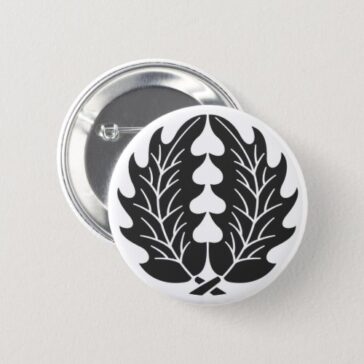
Two symmetrical holly leaves for Kamon. Nature plants symbol and graphics at old age for Japanese family. note. Holly leaves: It was used as an amulet in the Heian period because of its thorns on its leaves. There was a house that was used for the family crest in an attempt to make it … Read More

[Family Crests] Two symmetrical holly leaves w/ round Button
|

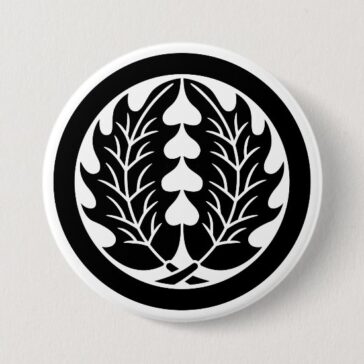
A family crest featuring two symmetrical holly leaves surrounded by a circle. Holly leaves are considered sacred trees that ward off demons, as seen in Setsubun rituals. They came to be used as family crests for their spiritual significance in ensuring household safety by repelling evil spirits and warding off misfortune. It can be … Read More

[Family Crests] Nandina like a wheels Pinback Button
|

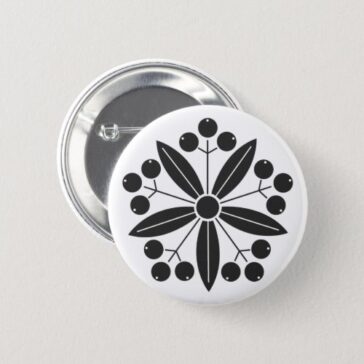
Le nandina, tel une roue pour Kamon. Symbole et représentation de la vieillesse dans la famille japonaise. Note : Nandina domestica : Considérée comme une plante de bon augure, elle est associée à l'expression « surmonter les difficultés ». Elle symbolise également la chance et les vertus apotropaïques, et était souvent utilisée lors des célébrations. [Blagues familiales] Nandina… Lire la suite

[Family Crests] Nandina like a wheels Round Button
|

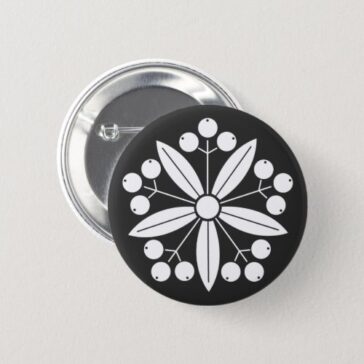
Nandina like a wheels for Kamon. Nature plants symbol and graphics at old age for Japanese family. note. Nandina domestica : It was treated as an auspicious plant, familiar with the word “rolling through difficulties”. It also has the meaning of “auspicious” and “apotropaic magic”, and was often used for celebrations. It’s negative positive … Read More

[Family Crests] A circle inside Cleyera japonica and a bell Pinback Button
|

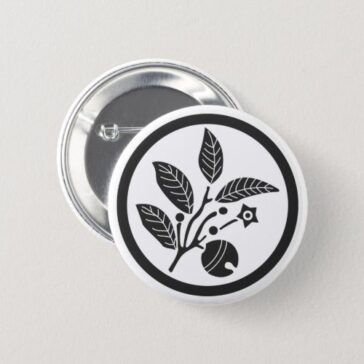
A circle inside Cleyera japonica and a bell for Kamon. Nature plants symbol and graphics at old age for Japanese family. note. Cleyera japonica and a bell : Once upon a time, when Amaterasu Omikami hid in Amano-Iwato, Ame-no-Uzume danced in front of Iwato, holding Sakaki and the bell of Mt. Sakaki and bells … Read More

[Family Crests] A circle inside Cleyera japonica and a bell Round Button
|

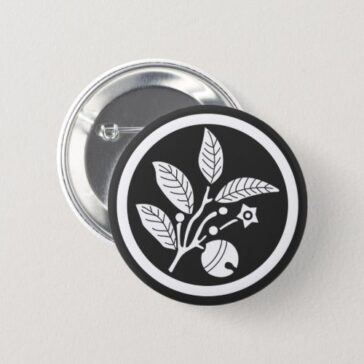
[Family Crests] A circle inside Cleyera japonica and a bell Round Button A circle inside Cleyera japonica and a bell for Kamon. Nature plants symbol and graphics at old age for Japanese family. It’s negative positive inversion. note. Cleyera japonica and a bell : Once upon a time, when Amaterasu Omikami hid in Amano-Iwato, … Read More

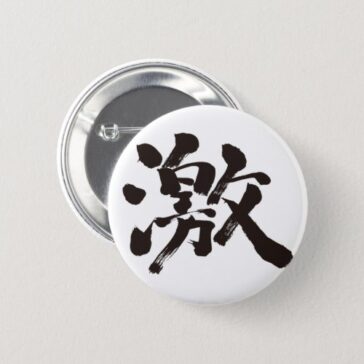
[Kanji] extremely (very, much) Button
|

japanese said “Geki”. It is mean very or much include strength. [Kanji] extremely (very, much) Button

[Kanji] Love Giant Coffee Mug
|

[Kanji] Love Giant Coffee Mug japanese said “Ai”.

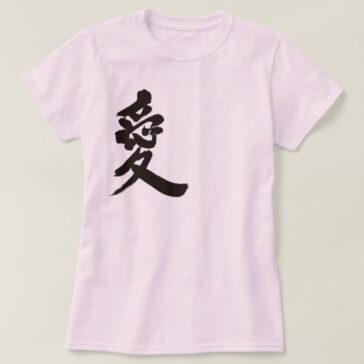
[Kanji] T-shirt Amour / Ai
|

I like it very much and love it. Feeling the beauty, I strongly like it. Show your favor as an action towards the other person. I admire you. I feel like I like it. I miss you. Japanese calls Ai, Mana, etc. [Kanji] Love / Ai T-Shirt

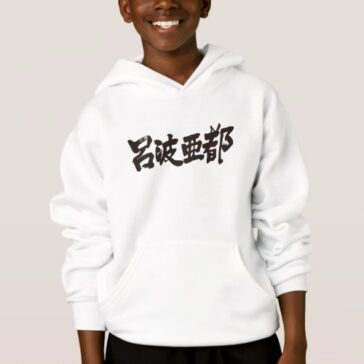
[Kanji] Are you Robert? Hoodie
|

[Kanji] Are you Robert? Hoodie translated name into kanji for Robert. Your (her/his) name became a Japanese Kanji. This used as a phonetic symbol rather than for its meaning.

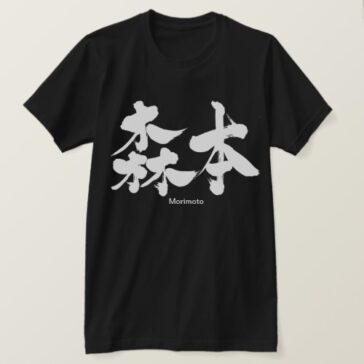
T-shirt Morimoto [Kanji]
|

[Kanji] T-shirt Morimoto Un célèbre joueur de football japonais.

[Kanji] Hello Jane! Toddler Hoodie
|

translated name into kanji for Jane. Your (her/his) name became a Japanese Kanji. This used as a phonetic symbol rather than for its meaning. [Kanji] Hello Jane! Toddler Hoodie

[Kanji] elegant men / women T-Shirt
|

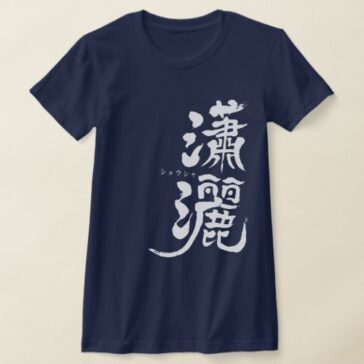
[Kanji] elegant men / women T-Shirt It seems that it is clearly missing. It looks like it’s not profane. japanese said “Sho-Sya”. It’s difficult Kanji who read few Japanese.

1 73 74 75 76 77 78 79 112