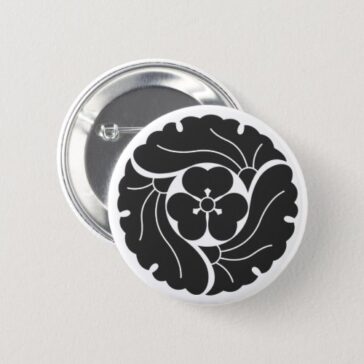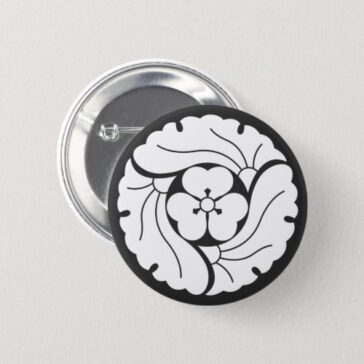

[Blagues familiales] Bouton rond Hagi enlacé
|

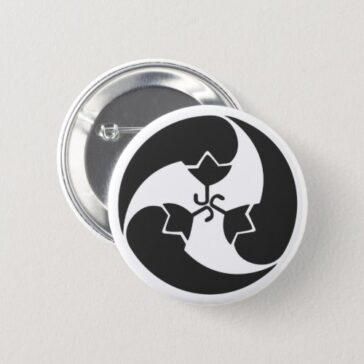
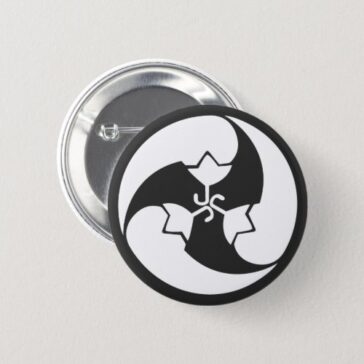
[Family Crests] Hugging Hagi Round Button Hugging Hagi for Kamon. Nature plants symbol and graphics at old age for Japanese family. It’s negative positive inversion. note. Hagi: A short deciduous shrub.It is counted as one of the seven autumn herbs and is one of the familiar plants for Japanese people.
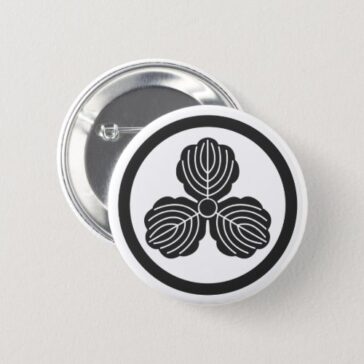
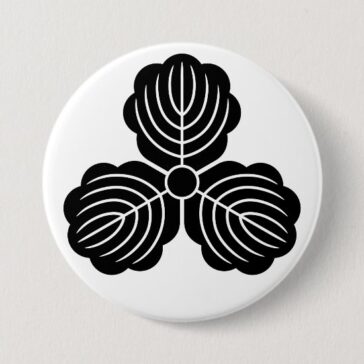
[Blagues familiales] Bouton à épingle circulaire avec 3 feuilles de chêne
|

3 oak leaves inside a circle for Kamon. Nature plants symbol and graphics at old age for Japanese family. note. Ork leaf (Kashiwa) is a deciduous tree of the family Fagaceae, and its large and thick leaves were used in ancient times for tableware for serving food, and were considered to be “sacred trees.” … Read More

[Blagues de famille] Bouton rond classique à trois feuilles de chêne
|

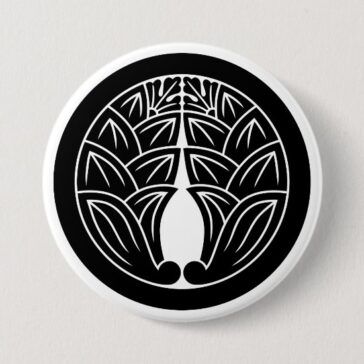
This family crest depicts three broad oak leaves spread out in three directions. Oak leaves were revered as sacred since ancient times, having been used as vessels for presenting offerings to the gods. It can be found by clicking the button below. The white family crest is hidden. Click the “Edit this design” button … Read More

[Family Crests] Tomoe designed chili peppers Pinback Button
|

Tomoe designed chili peppers for Kamon. Nature plants symbol and graphics at old age for Japanese family. note. Chili is native to Central and South America and is eaten as a vegetable and used as a spicy spice. It is said that he came to Japan during the Azuchi-Momoyama period when he conquered Korea. … Read More

[Blagues familiales] Bouton rond en forme de piment dessiné par Tomoe
|

[Family Crests] Tomoe designed chili peppers Round Button Tomoe designed chili peppers for Kamon. Nature plants symbol and graphics at old age for Japanese family. It’s negative positive inversion.

[Blagues familiales] 3 fleurs de cerisier, bouton
|

[Blagues familiales] Trois fleurs de cerisier. Bouton représentant des fleurs à un âge avancé. Trois fleurs de cerisier pour Kamon.

[Family Crests] Crossed Anchor likes Cherry blossoms Flower pins
|

Flowers symbol and graphics at old age. Crossed Anchor likes Cherry blossoms Flower for Kamon. [Family Crests] Crossed Anchor likes Cherry blossoms Flower pins

[Blagues familiales] Verso 16 pétales Bouton de chrysanthème
|

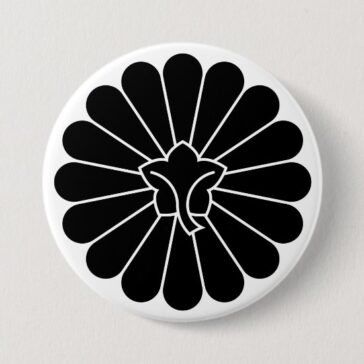
[Armoiries familiales] Bouton Chrysanthème à 16 pétales (verso) Cet blason familial représente un chrysanthème à seize pétales, vu du verso. Ce blason était à l'origine un emblème octroyé par la Maison impériale. Vous pouvez le découvrir en cliquant sur le bouton ci-dessus. Le blason blanc est masqué. Cliquez sur le bouton « Modifier ce motif »… Lire la suite

[Blagues familiales] Un cercle orné d'un bouton de fleur de Tachibana citronnée
|

Symbole et graphisme de fleurs âgées. Une fleur de Tachibana pour Kamon. Remarque : le Tachibana, terme générique désignant les agrumes, est considéré comme une plante de bon augure car c'est une plante à feuillage persistant. [Blagues familiales] Broches Fleurs de Tachibana. Noms de famille ayant hérité de ces armoiries : Akechi, Ando, ​​Asai, Asaka, Fukatsu, Fukuyama, Hasegawa… Lire la suite

[Family Crests] 2 symmetrical Jpn gingers with Round Button
|

Two symmetrical Japanese gingers with round for Kamon. note. Japanese ginger is one of the 10 major family crests, and is a family crest made from autumn flowers of the ginger family, which is considered to be a magical medicine for forgetfulness. It can be found by clicking the button below. The white family … Read More

[Blagues familiales] Shippo à l'intérieur du bouton Fleurs Hanabishi
|

Symbole et graphisme floraux à un âge avancé. Shippo à l'intérieur d'une fleur Hanabishi pour Kamon. [Blagues familiales] Bouton Shippo à l'intérieur de fleurs Hanabishi

[Kanji] Treasures Button
|

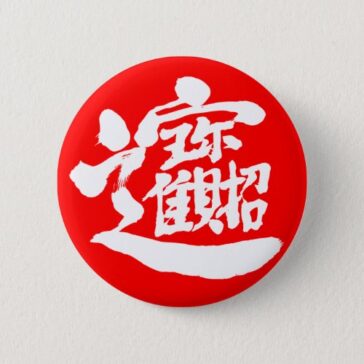
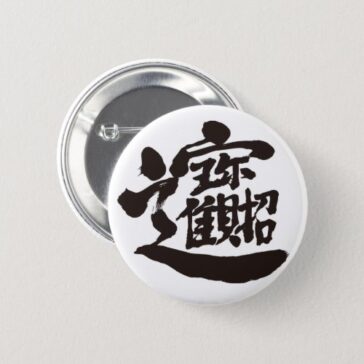
[Kanji] Treasures Button One of the few in the world, especially valuable. property. Especially important things that cannot be replaced with other things. Also, an irreplaceable person. Japanese says “Takara”. It’s old and difficult letter in Chinese.

[Kanji] Treasures Pin-back Button
|

Kanji Treasures Pin-back Button One of the few in the world, especially valuable. property. Especially important things that cannot be replaced with other things. Also, an irreplaceable person. It’s old and difficult letter in Chinese. Japanese says “Takara”.

(Kanji) Love (white letter) square pinback button
|

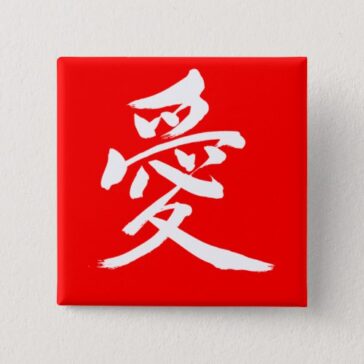
Japanese says “Ai”. (Kanji) Love (white letter) square pinback button

(Kanji) Love square pinback button
|

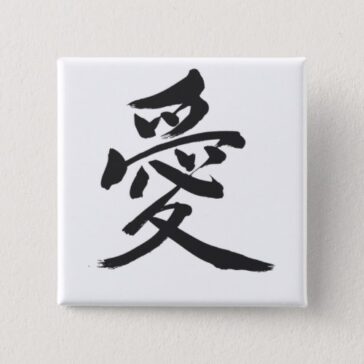
[Kanji] Love square pinback button Japanese says “Ai”.

[Blagues familiales] Bouton à épingle représentant 3 feuilles de ginkgo dans un cercle
|

Trois feuilles de ginkgo inscrites dans un cercle, symbole de Kamon. Ce symbole végétal japonais représente la vieillesse au sein de la famille. Remarque : certains ginkgos sont millénaires. Résistants au feu et d'une grande vitalité, leurs noix, comestibles, sont également utilisées comme… Lire la suite

[Blagues familiales] 3 feuilles de ginkgo dans un cercle Bouton rond
|

[Blagues familiales] Trois feuilles de ginkgo dans un cercle. Bouton rond. Trois feuilles de ginkgo dans un cercle pour Kamon. Symbole et représentation de la nature et de la vieillesse pour la famille japonaise. Remarque : Certains ginkgos sont très longévifs et vivent plus de 1000 ans. Résistants au feu et dotés d’une grande vitalité, ils sont utilisés depuis… Lire la suite

[Family Crests] Counterclockwise rice ears Pinback Button
|

Counterclockwise rice ears for Kamon. Nature plants symbol and graphics at old age for Japanese family. [Family Crests] Counterclockwise rice ears Pinback Button

[Family Crests] Counterclockwise rice ears Round Button
|

[Family Crests] Counterclockwise rice ears Round Button Counterclockwise rice ears for Kamon. Nature plants symbol and graphics at old age for Japanese family. It’s negative positive inversion.

[Family Crests] 3 chasing ginkgo leaves with Oxalis corniculata Pinback Button
|

3 chasing ginkgo leaves with Oxalis corniculata for Kamon. Nature plants symbol and graphics at old age for Japanese family. note. Oxalis leaves (Katabami) are heart-shaped. It has strong fertility and was favored by public and samurai families for its auspiciousness. [Family Crests] 3 chasing ginkgo leaves with Oxalis corniculata Pinback Button

[Family Crests] 3 chasing ginkgo leaves with Oxalis corniculata Round Button
|

[Family Crests] 3 chasing ginkgo leaves with Oxalis corniculata Round Button 3 chasing ginkgo leaves with Oxalis corniculata for Kamon. Nature plants symbol and graphics at old age for Japanese family. It’s negative positive inversion. note. Oxalis leaves (Katabami) are heart-shaped. It has strong fertility and was favored by public and samurai families for … Read More

[Family Crests] Crossed Anchor likes Cherry blossoms Flower Button
|

[Family Crests] Crossed Anchor likes Cherry blossoms Flower Button Flowers symbol and graphics at old age. Crossed Anchor likes Cherry blossoms Flower for Kamon.

[Blagues familiales] Pointe de flèche à trois feuilles avec bouton circulaire
|

Ce blason familial présente un cercle entourant un motif d'Omodaka (pointe de flèche à trois feuilles). Ce motif représente une feuille unique d'Omodaka, ornée de cinq fleurs de chaque côté de l'inflorescence, disposées en diagonale vers le haut. Vous pouvez le découvrir en cliquant sur le bouton ci-dessous. Le blason familial blanc est masqué. Cliquez sur… Lire la suite

[Blagues familiales] Bouton rond en forme de feuille Oni Kaji
|

Kaji leaf for Kamon. Oni kaji is a family crest design featuring exaggerated serrations on the kaji leaf, giving it a demon-like appearance. Kaji trees are considered sacred because their leaves are used as vessels for offerings before the gods, and they eventually came to be used as divine crests. It can be found … Read More

[Family Crests] Back modification Cherry blossoms Flowers Pins
|

Flowers symbol and graphics at old age. Modification Cherry blossoms Flower that back position for Kamon. [Family Crests] Back modification Cherry blossoms Flowers Pins

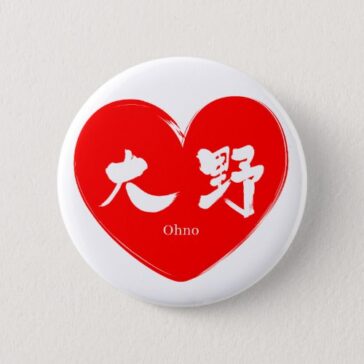
[Kanji] Ohno Button
|

[Kanji] Ohno Button it’s popular first name in Japan. The etymology is a big field. In the olden days, it also means “Base field”.

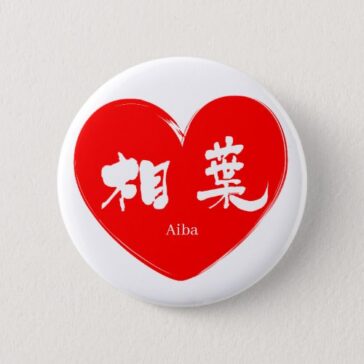
[Kanji] Bouton Aiba
|

it’s popular family name in Japan. [Kanji] Aiba Button

[Kanji] group leader Button
|

[Kanji] group leader Button A group leader is the head of an organizational unit called a group in an organization, a group, or a school. Position mainly used in companies, government offices, etc. Japanese says Han-Cyo.

Samurai white illustration square Buttons
|

Samurai Button man in attendance on a person of high standing.

[Kanji] Samurai Spirit Button
|

[Kanji] Samurai Spirit Button Jidaigeki with swordsmanship where the main themes are Bushido and loyalty.

1 2 3 4 5 6 7