(Kanji) Bouton épingle samouraï
|
[Kanji] Samurai Button warrior of military retainers of daimyos in the Edo period.


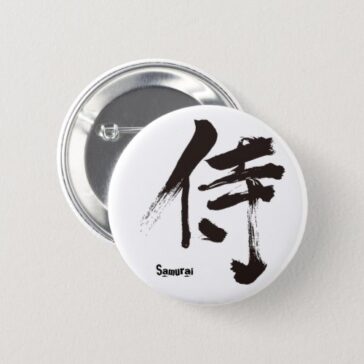
[Kanji] Samurai Button warrior of military retainers of daimyos in the Edo period.
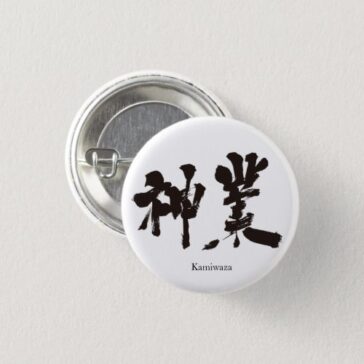
Japanese says Kami-Waza, Kamu-waza. God’s work. Also, such superhuman techniques and acts. Events about God. [Kanji] divine work Button
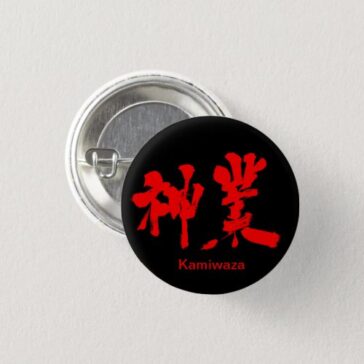
God’s work. Also, such superhuman techniques and acts. Events about God. Japanese says “Kamu-waza”, “Kami-Waza”. [Kanji] divine work (red text) Button
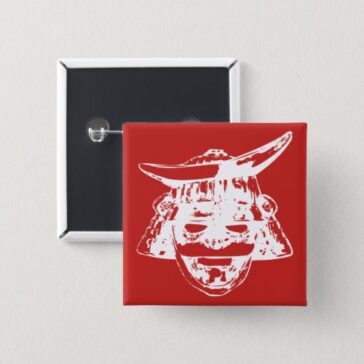
Samurai Button A warrior of military retainers of daimyos in the Edo period.
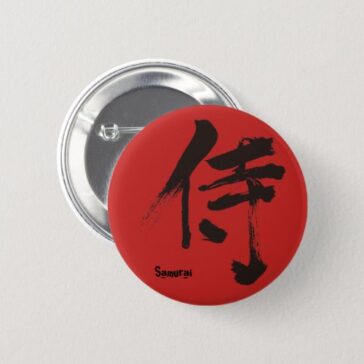
[Kanji] Samurai Button warrior of military retainers of daimyos in the Edo period.
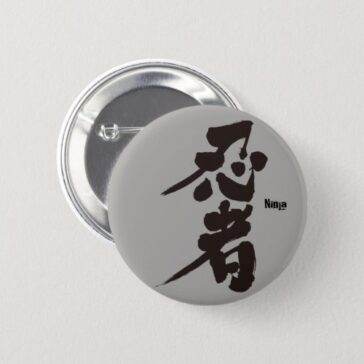
[Kanji] Ninja as black characters Button Those who used ninjutsu to infiltrate enemy territory and engaged in intelligence (spy) activities such as spying and disturbance. In particular, the Iga and Koka ninja organizations that were active mainly during the Warring States period are famous. However, the existence of a ninja is not well known … Read More
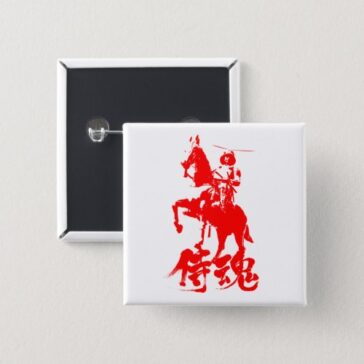
Jidaigeki with swordsmanship where the main themes are Bushido and loyalty. [Kanji] Samurai Spirit Button
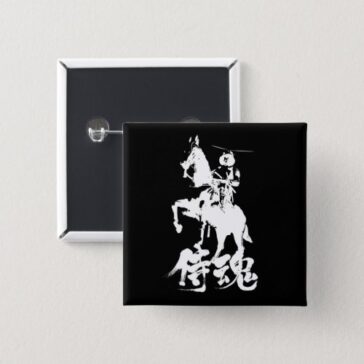
[Kanji] Samurai Spirit white character Buttons Jidaigeki with swordsmanship where the main themes are Bushido and loyalty.
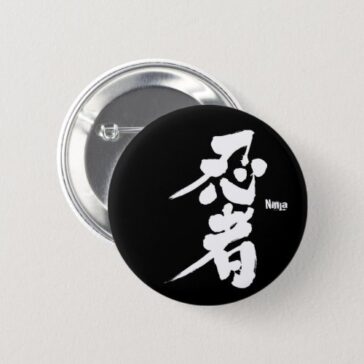
[Kanji] Ninja as white characters pinback Button Those who used ninjutsu to infiltrate enemy territory and engaged in intelligence (spy) activities such as spying and disturbance. In particular, the Iga and Koka ninja organizations that were active mainly during the Warring States period are famous. However, the existence of a ninja is not well … Read More
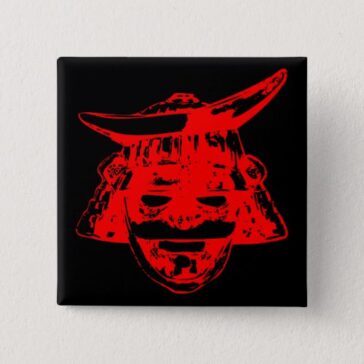
man in attendance on a person of high standing. Samurai Button
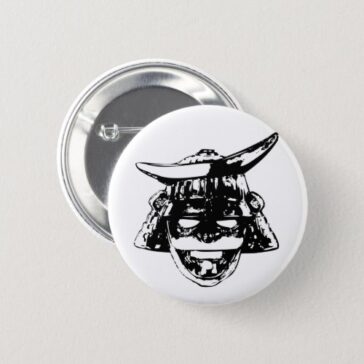
man in attendance on a person of high standing. Samurai Button
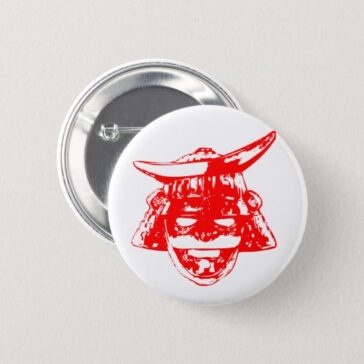
man in attendance on a person of high standing. Samurai Button

This family crest features a standard-thickness circle surrounding the “Rising Wisteria” motif. It can be found by clicking the button below. The white family crest is hidden. Click the “Edit this design” button to display the white crest, hide the black crest, and change the background color. Rising Wisteria with circle Button Family names … Read More
Il s'agit d'un blason familial (Kamon) ornant une fleur de chrysanthème. Au Japon, les blasons familiaux (Kamon) désignent des symboles et des représentations de la vieillesse. Ce blason aurait été utilisé par Saigo Takamori. Note : Chrysanthème : Dans la Chine ancienne, les chrysanthèmes étaient utilisés à des fins ornementales et comme remède pour la longévité… Lire la suite

[Blagues de famille] Autocollant rond représentant un cercle à l'intérieur d'une fleur de cerisier. Motif floral de grandes fleurs de cerisier pour Kamon. Symbole et graphisme floraux représentant la vieillesse. Noms de famille ayant hérité de ces armoiries : Kurita, Mizumachi, Obata, Sakurai, etc. Remarque : Même si le nom de famille est le même, les armoiries diffèrent selon les ancêtres… Lire la suite
This family crest depicts five bamboo-like leaves spread downward, with three gentian flowers drawn above them. It can be found by clicking the button below. The white family crest is hidden. Click the “Edit this design” button to display the white crest, hide the black crest, and change the background color. Gentian Flowers and … Read More
Reverse sides oxalis corniculata for Kamon. Nature plants symbol and graphics at old age for Japanese family. note. Oxalis leaves (Katabami) are heart-shaped. It has strong fertility and was favored by public and samurai families for its auspiciousness. [Family Crests] Reverse sides oxalis corniculata Pinback Button
![[Blagues familiales] Boutons de fleurs de chrysanthème à 16 pétales](https://www.zangyo-ninja.com/wp-content/uploads/family_crests_flowers_pinback_button-Chrysanthemum-Flower_k945w_500-364x364.jpg)
Il s'agit d'un chrysanthème à seize pétales, symbole de longévité (Kamon). Les blasons familiaux (Kamon) désignent des symboles et des représentations de la vieillesse au Japon. Note : Chrysanthème : Dans la Chine ancienne, les chrysanthèmes étaient utilisés à des fins ornementales et comme remède pour la longévité. Ils étaient considérés comme les fleurs les plus énergisantes parmi les cent fleurs. Cette idée a été introduite… Lire la suite
![[Blagues familiales] Boutons de fleurs de paulownia](https://www.zangyo-ninja.com/wp-content/uploads/family_crests_flowers_pinback_button_paulownia-flower_k945w_1024-364x364.jpg)
[Family Crests] Paulownia Flowers with circle Buttons Family Crests(Kamon) symbol and graphics at old age. A bold Circle inside Paulownia leaf and Flowers for Kamon.
[Family Crests] Reverse sides oxalis corniculata Round Button Reverse sides oxalis corniculata for Kamon. Nature plants symbol and graphics at old age for Japanese family. It’s negative positive inversion.
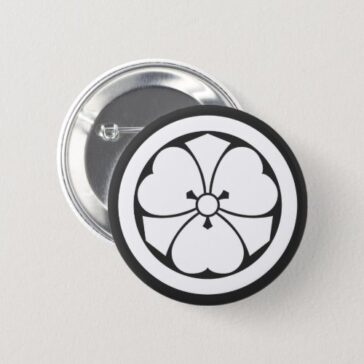
[Family Crests] a circle inside Oxalis corniculata with swords Round Button a circle inside Oxalis corniculata with swords for Kamon. Nature plants symbol and graphics at old age for Japanese family. It’s negative positive inversion.
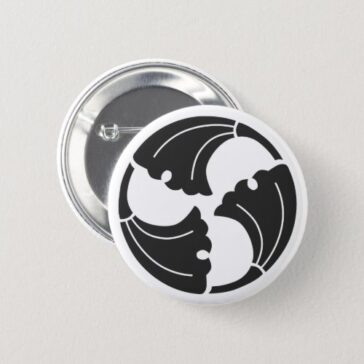
Divided into three Ginkgo leaves for Kamon. Nature plants symbol and graphics at old age for Japanese family. [Family Crests] Divided into 3 Ginkgo leaves Pinback Button
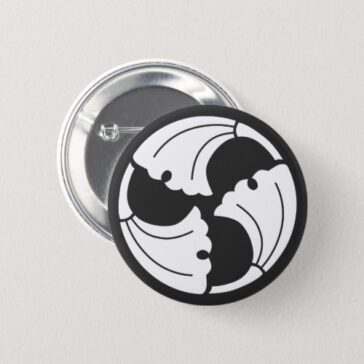
[Family Crests] Divided into 3 Ginkgo leaves Round Button Divided into three Ginkgo leaves for Kamon. Nature plants symbol and graphics at old age for Japanese family. It’s negative positive inversion.
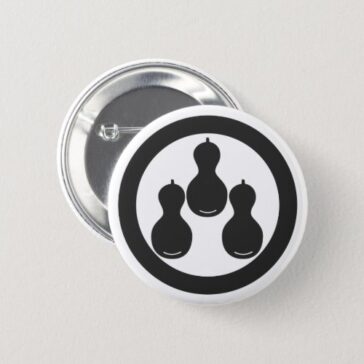
A circle inside three Gourds for Kamon. Nature plants symbol and graphics at old age for Japanese family. note. Gourd: It was used as a water bottle and a liquor bottle. It was also said to have an amulet effect. [Family Crests] a circle inside 3 Gourds Pinback Button Click the button below to … Read More
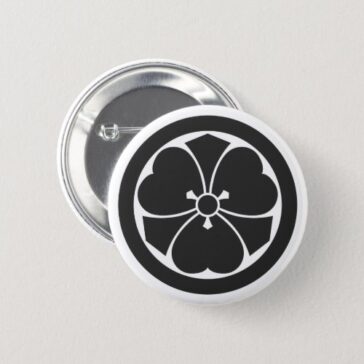
a circle inside Oxalis corniculata with swords for Kamon. Nature plants symbol and graphics at old age for Japanese family. [Family Crests] a circle inside Oxalis corniculata with swords Pinback Button
![[Blagues familiales] Boutons de pivoines](https://www.zangyo-ninja.com/wp-content/uploads/family_crests_flowers_button_Peony_Flower_k945w_1024-364x364.jpg)
[Blagues familiales] Boutons de pivoines. Une pivoine pour Kamon. Symbole et graphisme des armoiries familiales (Kamon) à l'ancienne.
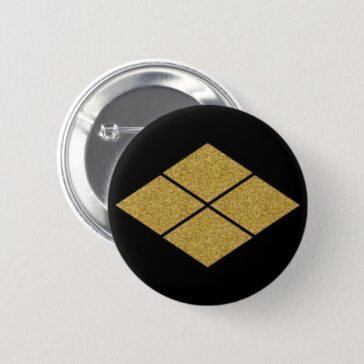
Il s'agit du célèbre blason de la famille Takeda Shingen. Shingen Takeda était un daimyo durant la période Sengoku. Le « Furinkazan », qui aurait figuré sur le sashimono (drapeau militaire), est également célèbre. Remarque : le hishimon (losange) serait une version stylisée du fruit du trapa japonica… Lire la suite
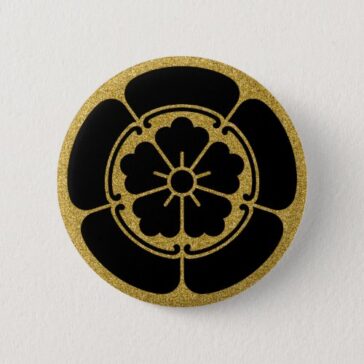
Voici le célèbre blason de la famille d'Oda Nobunaga. Un mokko à cinq branches est entouré d'une fleur de karahana, symbole de Kamon. Ce blason représente la nature, notamment des plantes, symbole de vieillesse pour une famille japonaise. Remarque : le mokko est dessiné comme un nid d'oiseau. Ce nid symbolise la prospérité des descendants et est considéré comme un blason de bon augure. … Lire la suite
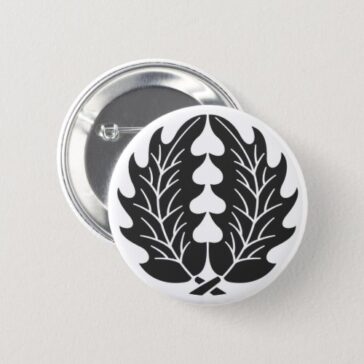
Two symmetrical holly leaves for Kamon. Nature plants symbol and graphics at old age for Japanese family. note. Holly leaves: It was used as an amulet in the Heian period because of its thorns on its leaves. There was a house that was used for the family crest in an attempt to make it … Read More
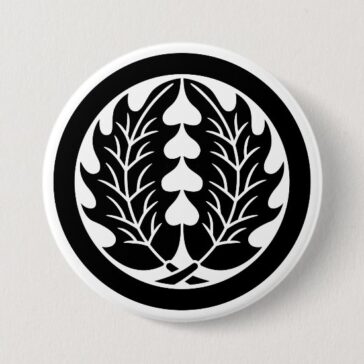
A family crest featuring two symmetrical holly leaves surrounded by a circle. Holly leaves are considered sacred trees that ward off demons, as seen in Setsubun rituals. They came to be used as family crests for their spiritual significance in ensuring household safety by repelling evil spirits and warding off misfortune. It can be … Read More