
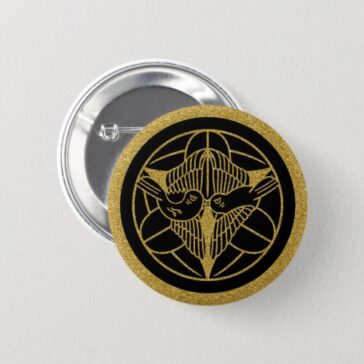
[Blagues familiales] moineaux et feuilles de bambou Bouton
|

It is a family crest that the Uesugi family gave to the Date family as a “proof of marriage”. The combination with bamboo leaves is popular. note. The sparrow has long been a familiar bird to the Japanese. In Shikoku and Wakayama prefectures, sparrows are also called “itakura” and mean small birds (kura) that … Read More
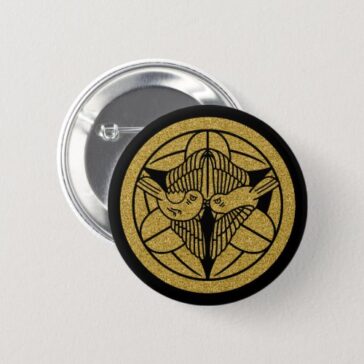
[Family Crests] Sparrows and bamboo leaves Round Button
|

[Family Crests] Sparrows and bamboo leaves Round Button It is a family crest that the Uesugi family gave to the Date family as a “proof of marriage”. The combination with bamboo leaves is popular. note. The sparrow has long been a familiar bird to the Japanese. In Shikoku and Wakayama prefectures, sparrows are also … Read More

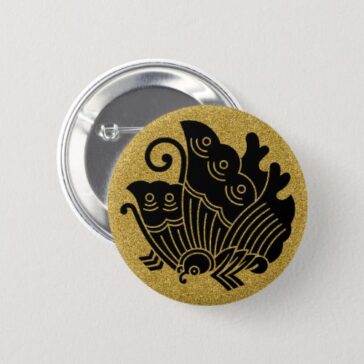
[Family Crests] Swallowtail butterfly Button
|

It is a crest used by “Taira no Kiyomori”, the lord of the Heike clan. Nobunaga Oda began to use the “swallowtail butterfly crest” in honor of Taira’s descendants from a certain time in order to replace Seiwa Genji’s Muromachi Shogunate. note. Butterflies are creatures that grow while transforming from larvae to pupae to … Read More

[Family Crests] Nothing in Kanji character Button
|

One character of nothing is drawn. Nothing means “innocence”, which is a psychological state freed from all anxieties based on the idea of ​​Zen Buddhism. However, no evidence of Oda Nobunaga’s use of this family crest has ever been confirmed, and it is only described in the “Kansei Choshu Shokafu”. [Family Crests] Nothing in … Read More

[Family Crests] Nothing in Kanji letter Button
|

[Family Crests] Nothing in Kanji letter Button One character of nothing is drawn. Nothing means “innocence”, which is a psychological state freed from all anxieties based on the idea of ​​Zen Buddhism. However, no evidence of Oda Nobunaga’s use of this family crest has ever been confirmed, and it is only described in the … Read More

[Blagues familiales] Bouton Taiko Paulownia
|

The family crest used by Toyotomi Hideyoshi when he was inaugurated as Taiko. It is said that he created it himself. Hideyoshi Toyotomi, who gave many paulownia crests to the military commanders who became subordinates in the process of controlling various parts of the country, began to use the taiko paulownia crests, which was … Read More

[Family Crests] Ryoma Sakamoto’s bellflower round Button
|

[Family Crests] Ryoma Sakamoto’s bellflower round Button Cross lines inside Kikyo (ballon flower, bellflower) Kamon. It was used Ryoma Sakamoto who succeeded in the Taisei Hokan at the end of the Edo period. note. Kikyo (ballon flower, bellflower) is Seven herbs of autumn. In the olden days, one flower of bellflower was dedicated to … Read More

[Blagues familiales] Bouton de pièce Eiraku
|

Nobunaga Oda used the Eiraku coin (Eiraku Tsuho) design that was in circulation as a family crest as a symbol of economic power. He used it as a flag. [Family Crests] Eiraku coin button

[Blagues familiales] Bouton rond Taiko Paulownia
|

[Family Crests] Taiko Paulownia Round Button The family crest used by Toyotomi Hideyoshi when he was inaugurated as Taiko. It is said that he created it himself. Hideyoshi Toyotomi, who gave many paulownia crests to the military commanders who became subordinates in the process of controlling various parts of the country, began to use … Read More

[Kanji] congratulations Pin
|

congratulations button representing longevity Kanji

[Kanji] Félicitations Boutons Pinback
|

representing longevity Kanji. Japan calls Kotobuki or Ju. congratulations button

[Blagues familiales] 2 feuilles de rose trémière Bouton
|

The crest of Kamigamo Shrine in Kyoto. The 3 Hollyhock(Aoi) crest used by Ieyasu Tokugawa is said to be derived from it. note: Hollyhock(Aoi) is a perennial plant that grows naturally in forests all over the country and is a common plant. It is said that the development of the house was likened to … Read More

[Family Crests] 2 hollyhock leaves Round Button
|

[Family Crests] 2 hollyhock leaves Round Button The crest of Kamigamo Shrine in Kyoto. The 3 Hollyhock(Aoi) crest used by Ieyasu Tokugawa is said to be derived from it. note: Hollyhock(Aoi) is a perennial plant that grows naturally in forests all over the country and is a common plant. It is said that the … Read More

[Blagues familiales] Bouton Mitsudomoe à rotation gauche
|

Son origine est incertaine, mais il est souvent utilisé comme emblème divin. Apparu au sanctuaire Hachiman, il s'est ensuite répandu dans d'autres sanctuaires. Devenu populaire depuis l'Antiquité, il a servi à la confection d'emblèmes familiaux non spécifiés. [Emblèmes familiaux] Bouton Mitsudomoe à rotation gauche. Le nom de famille auquel… Lire la suite

[Katakana] Samurai red Pinback Buttons
|

[Katakana] Samurai red Button A Japanese warrior. Now there are no samurais in japan.

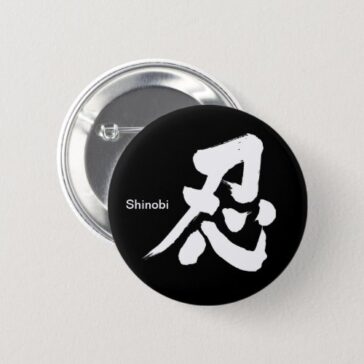
[Kanji] Shinobi Buttons
|

a professional spy (in feudal Japan) highly trained in stealth and secrecy. [Kanji] Shinobi Button

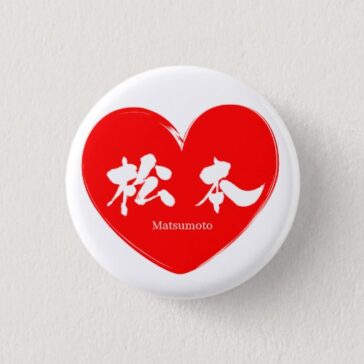
[Kanji] Bouton Matsumoto
|

[Kanji] Badge Matsumoto 1. Matsumoto est une ville située dans la préfecture de Nagano, au Japon. 2. C'est un prénom courant au Japon. Environ 600 000 Japonais y habitent.

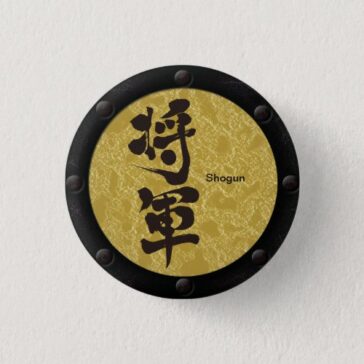
[Kanji] Bouton de style Shogun Yoroi
|

[Kanji] Shogun Yoroi style Button A general who commands an army and sets out. A general in Japan.

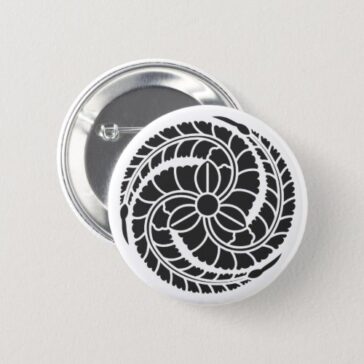
[Blagues familiales] Triple Tomoe Fleurs de glycine Bouton
|

Wisteria flower Kamon. This family crest features three leaves at its center, with three clusters of wisteria flowers rotated clockwise around them. Triple Tomoe Wisteria flowers Button Click the button below to view the inverted black-and-white version of this family crest. Triple Tomoe Wisteria flowers Button (inverted) Family names that have inherited this crest … Read More

[Blagues familiales] Fleur de glycine avec bouton à épingle circulaire
|

Flowers symbol and graphics at old age. Circle with Wisteria Kamon. [Family Crests] Flowers Circle and Wisteria Pin Button Click the button below to view the inverted black-and-white version of this family crest. Wisteria Flowers Round Pin Button (inverted) Family names that have inherited this crest Amano, Fujikawa, Fujimori, Fujino, Fujiwara, Fukuo, Hoshimura, Ida, … Read More

[Family Crests] Paulownia Flowers with circle Pinback button
|

Family Crests(Kamon) symbol and graphics at old age. A bold Circle inside Paulownia leaf and Flowers for Kamon. [Family Crests] Paulownia Flowers with circle Pinback button

[Blagues familiales] Campanules doubles dessinées en lignes Bouton
|

Family Crests(Kamon) symbol and graphics at old age. This family crest depicts double-petaled bellflowers (Kikyo flower) rendered in bold lines. [Family Crests] Double bellflowers rendered in lines Button Click the button below to view the inverted black-and-white version of this family crest. Double bellflowers rendered in lines Button (inverted) Family names that have inherited … Read More

[Blagues familiales] Deux raisins Bouton
|

Le blason à motif de grappe de raisin est un motif très rare originaire du continent. Ce blason, orné de nombreux fruits et de vignes enroulées autour, est considéré comme un porte-bonheur pour la prospérité des descendants, le mariage et les affaires. [Blason familial] Bouton à deux grappes de raisin

[Blagues de famille] Bouton rond Naoe Kanetsugu Love
|

[Blagues familiales] Bouton rond « Ai » de Kanetsugu Naoe : Le bouton rond « Ai » (amour) ornait le casque de Kanetsugu Naoe durant la période Sengoku. Selon une théorie, il s’agirait d’un acronyme pour Atago Gongen, le Bouddha de la Guerre. Atago Gongen est un Bouddha qui combat l’ennemi avec Bishamonten.

[Blagues familiales] Ishida Mitsunari, symbole kanji sur drapeau militaire, bouton rond
|

[Blagues familiales] Symbole kanji d'Ishida Mitsunari sur un drapeau militaire (Bouton rond). Ce symbole kanji a été hissé comme drapeau de guerre par le commandant militaire Mitsunari Ishida durant la période Sengoku. Il signifie : « Si un homme agit pour tous et que tous agissent pour un, les peuples du monde pourront… » Lire la suite

1 2 3 4 5