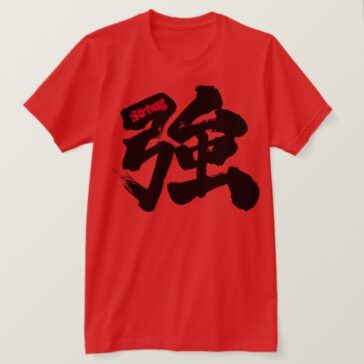
[Kanji] Strong (red text) T-Shirts
|
e strong. Also, something strong. Japan call Kyo, Go etc. [Kanji] Strong (red text) T-Shirts

![[Kanji] Strong (red text) T-Shirt](https://www.zangyo-ninja.com/wp-content/uploads/kanji_strong_red_text_t_shirt-red_e27pu_1024-364x364.jpg)
e strong. Also, something strong. Japan call Kyo, Go etc. [Kanji] Strong (red text) T-Shirts
Be strong. Also, something strong. Japan call Kyo as one letter. [Kanji] Strong T-Shirt
![[Kanji] Horloge ronde la plus puissante](https://www.zangyo-ninja.com/wp-content/uploads/kanji_strongest_round_clock-white_8byvr_1024-364x364.jpg)
[Kanji] Horloge ronde la plus forte. Un superlatif qui exprime la « force ». Elle se situe dans un état de puissance maximale, par comparaison et rivalité avec d'autres. La chose la plus forte. Un état sans égal. En japonais, on dit sai-kyo.
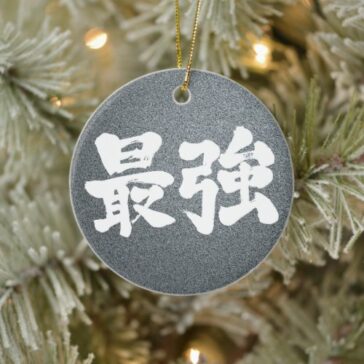
[Kanji] strongest Ceramic Ornament A superlative word that expresses “strength.” It is in the strongest state by comparing and competing with others. The strongest thing. A state that is second to none. Japanese says sai-kyo.
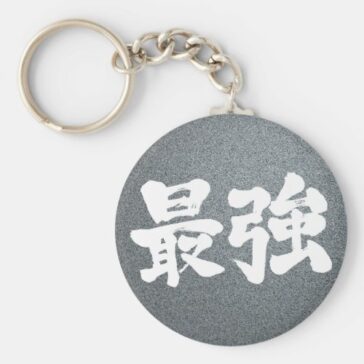
[Kanji] strongest Keychain Japanese says sai-kyo. A superlative word that expresses “strength.” It is in the strongest state by comparing and competing with others. The strongest thing. A state that is second to none.
[Kanji] strongest Button A superlative word that expresses “strength.” It is in the strongest state by comparing and competing with others. The strongest thing. A state that is second to none. Japanese says sai-kyo.
A superlative word that expresses “strength.” It is in the strongest state by comparing and competing with others. The strongest thing. A state that is second to none. Also, when someone says “I am the strongest!”, The person is just proud of the strongest, and in reality it may not be very strong. Japanese … Read More
[Kanji] strongest Dinner Plate The strongest thing. Japanese says sai-kyo. A superlative word that expresses “strength.” It is in the strongest state by comparing and competing with others. The strongest thing. A state that is second to none.
![[Kanji] strongest Jigsaw Puzzle](https://www.zangyo-ninja.com/wp-content/uploads/kanji_strongest_jigsaw_puzzle-white_8byvr_1024-364x364.jpg)
[Kanji] strongest Jigsaw Puzzle A superlative word that expresses “strength.” It is in the strongest state by comparing and competing with others. The strongest thing. A state that is second to none. Japanese says sai-kyo.
![[Kanji] strongest Kitchen Towel](https://www.zangyo-ninja.com/wp-content/uploads/kanji_strongest_kitchen_towel-white_8byvr_1024-364x364.jpg)
[Kanji] strongest Kitchen Towel The strongest thing. A superlative word that expresses “strength.” It is in the strongest state by comparing and competing with others. The strongest thing. A state that is second to none. Japanese says sai-kyo.
[Kanji] Fort (texte rouge) Carnet Un fort. Aussi, quelque chose de fort. Au Japon, on appelle ça Kyo, Go, etc.
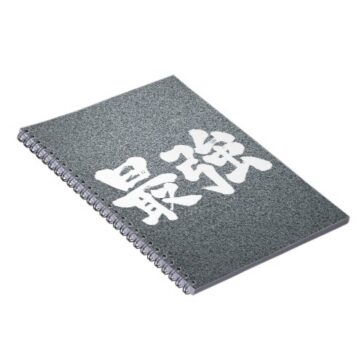
[Kanji] strongest Notebook The strongest thing. A superlative word that expresses “strength.” It is in the strongest state by comparing and competing with others. The strongest thing. A state that is second to none. Japanese says sai-kyo.
[Kanji] Autocollant Cœur le plus fort. La chose la plus forte. En japonais, ça se dit sai-kyo.
[Kanji] Autocollant ovale le plus fort. Un superlatif qui exprime la « force ». Il désigne l'état le plus fort par comparaison et compétition avec les autres. La chose la plus forte. Un état sans égal. En japonais, on dit sai-kyo.
La chose la plus forte. En japonais, on dit « sai-kyo », un superlatif qui exprime la « force ». C'est l'état le plus fort, par comparaison et compétition avec les autres. La chose la plus forte. Un état sans égal. [Kanji] Autocollant étoile le plus fort
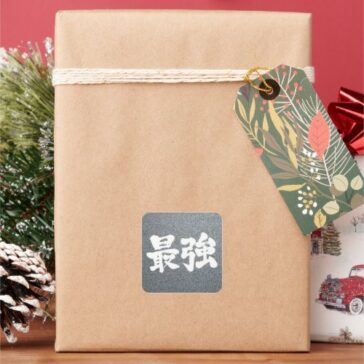
Un superlatif qui exprime la « force ». Il désigne l'état le plus fort, par comparaison et compétition avec les autres. La chose la plus forte. Un état sans égal. En japonais, on dit sai-kyo. [Kanji] Autocollant carré le plus fort
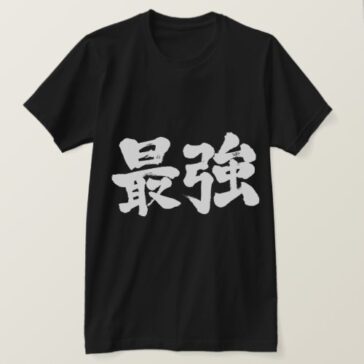
[Kanji] strongest (white letters) T-Shirt The strongest thing. Also, when someone says “I am the strongest!”, The person is just proud of the strongest, and in reality it may not be very strong. Japanese says sai-kyo.
[Kanji] strongest T-Shirt The strongest thing. Also, when someone says “I am the strongest!”, The person is just proud of the strongest, and in reality it may not be very strong. Japanese says sai-kyo.
![[Kanji] Strong design front Keychain](https://www.zangyo-ninja.com/wp-content/uploads/kanji_strong_front_black_back_red_keychain-black-red_8byvr_1024-364x364.jpg)
design Front design Back [Kanji] Strong front black, back red Keychain e strong. Also, something strong. Japan call Kyo, Go etc.
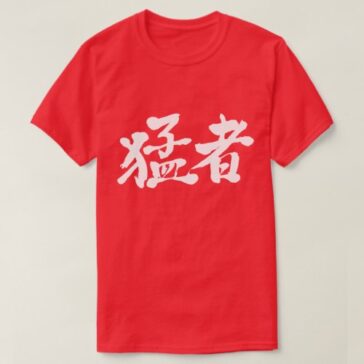
A brave and energetic person. Also, people who have excellent abilities and are active. Japanese says “Mo Sa”. [Kanji] strong players, strong persons T-Shirt
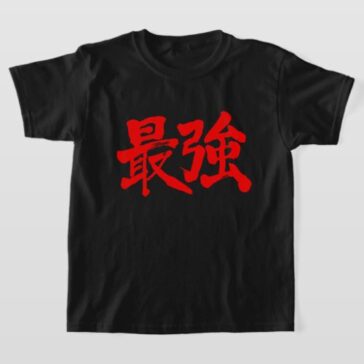
A superlative word that expresses “strength.” It is in the strongest state by comparing and competing with others. The strongest thing. A state that is second to none. Japanese says “Sai Kyou”. [Kanji] the strongest (red letters) T-Shirt
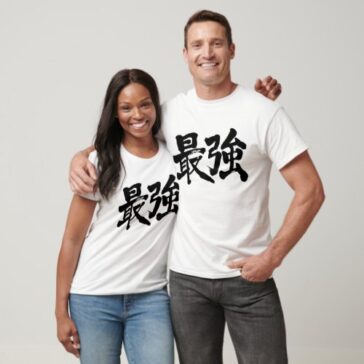
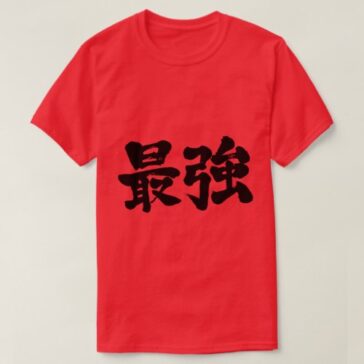
[Kanji] the strongest (black text) T-Shirt A superlative word that expresses “strength.” It is in the strongest state by comparing and competing with others. The strongest thing. A state that is second to none. Japanese says “Sai Kyou”.
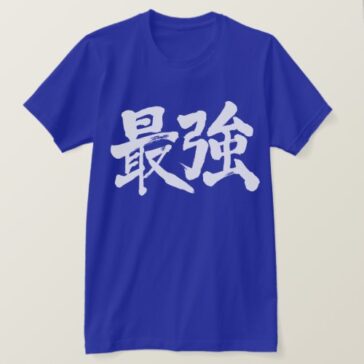
[Kanji] the strongest T-Shirts A superlative word that expresses “strength.” It is in the strongest state by comparing and competing with others. The strongest thing. A state that is second to none. Japanese says “Sai Kyou”.
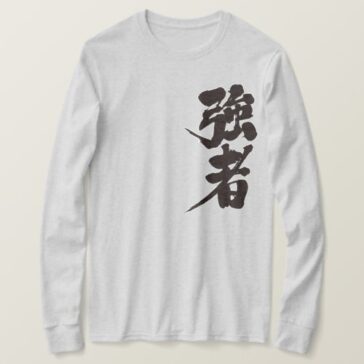
[Kanji] strong players and strong persons long sleeve T-Shirt Originally, “Tsubamono” was a changed word, and it was not a person but a weapon. By the way, the “tsuba” of “tsubamono” is the brim of a sword. After that, it came to mean a soldier who took a weapon and fought bravely. Not only … Read More
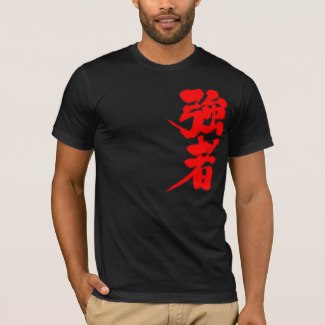
Originally, “Tsubamono” was a changed word, and it was not a person but a weapon. By the way, the “tsuba” of “tsubamono” is the brim of a sword. After that, it came to mean a soldier who took a weapon and fought bravely. Not only soldiers, but also those who are outstanding in their … Read More