
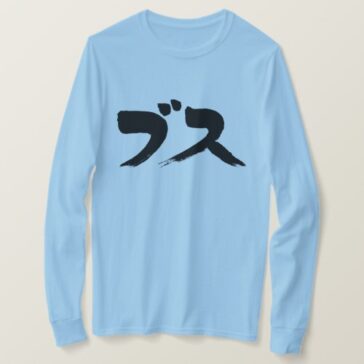
[Katakana] donna brutta Maglietta a maniche lunghe
|

[Katakana] ugly woman Long sleeves T-Shirt A derogatory Japanese slang term that refers to poor appearance. It is a term that refers to an ugly woman in particular, but it is also said to be a woman with a bad personality even if she does not look ugly. Japanese calls “Bu Su”.
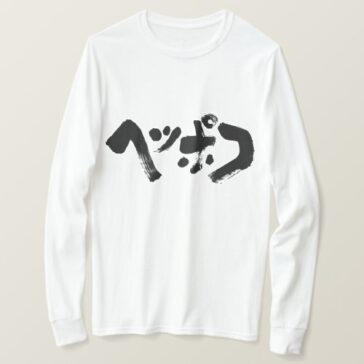
[Katakana] useless long sleeve T-Shirt
|

A word that makes a fool of something that is inferior in skill or useless. Sometimes used on top of nouns. japanese said “Heppoko”. [Katakana] useless long sleeve T-Shirt

[Stemmi di famiglia] Bottone con fiori di genziana e bambù
|

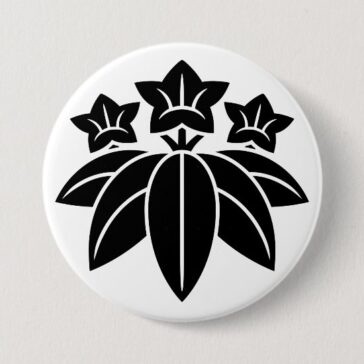
Questo stemma di famiglia raffigura cinque foglie simili a bambù distese verso il basso, con tre fiori di genziana disegnati sopra di esse. È possibile visualizzarlo cliccando sul pulsante sottostante. Lo stemma bianco è nascosto. Clicca sul pulsante "Modifica questo disegno" per visualizzare lo stemma bianco, nascondere quello nero e cambiare il colore di sfondo. Fiori di genziana e… Leggi tutto

[Family Crests] Reverse sides oxalis corniculata Pinback Button
|

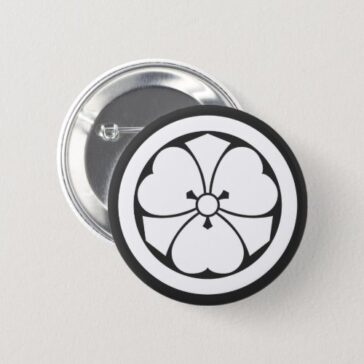
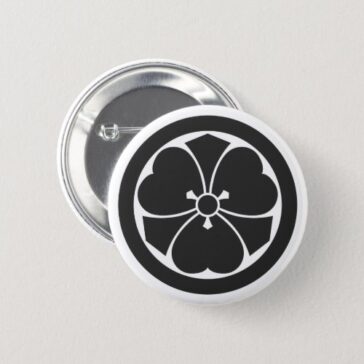
Reverse sides oxalis corniculata for Kamon. Nature plants symbol and graphics at old age for Japanese family. note. Oxalis leaves (Katabami) are heart-shaped. It has strong fertility and was favored by public and samurai families for its auspiciousness. [Family Crests] Reverse sides oxalis corniculata Pinback Button

[Family Crests] 16 petals Chrysanthemum Flower Button
|

It’s Sixteen petals Chrysanthemum Flower for Kamon. Family Crests (Kamon) means symbol and graphics at old age in Japan. note: Chrysanthemum: In ancient China, chrysanthemums are used for ornamental purposes and as a medicine for longevity, and are considered to be the most energetic flowers of the hundred flowers. This idea was introduced to … Read More

[Stemmi di famiglia] Fiori di Paulownia con bottoni circolari
|

[Stemmi di famiglia] Fiori di Paulownia con bottoni circolari Stemmi di famiglia (Kamon) simbolo e grafica in età avanzata. Un cerchio audace all'interno di una foglia di Paulownia e fiori per Kamon.

[Stemmi di famiglia] Lato posteriore oxalis corniculata Bottone rotondo
|

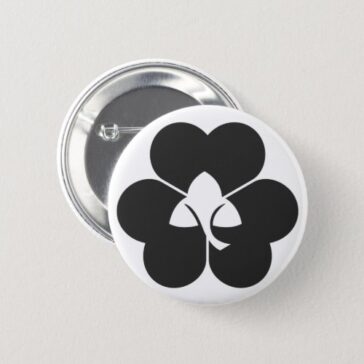
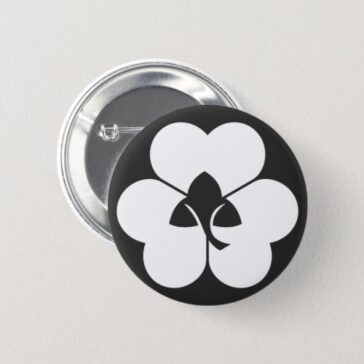
[Stemmi di famiglia] Lati invertiti Oxalis corniculata Bottone rotondo Lati invertiti Oxalis corniculata per Kamon. Simbolo e grafica di piante della natura in età avanzata per la famiglia giapponese. È un'inversione positiva negativa.

[Stemmi di famiglia] un cerchio all'interno di Oxalis corniculata con spade Bottone rotondo
|

[Stemmi di famiglia] un cerchio all'interno di Oxalis corniculata con spade Bottone rotondo un cerchio all'interno di Oxalis corniculata con spade per Kamon. Simbolo e grafica di piante della natura in età avanzata per la famiglia giapponese. È un'inversione negativa positiva.

[Family Crests] Divided into 3 Ginkgo leaves Pinback Button
|

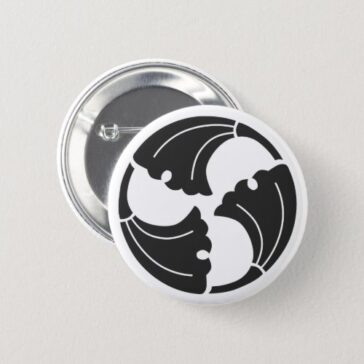
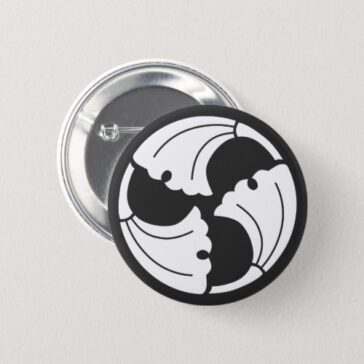
Divided into three Ginkgo leaves for Kamon. Nature plants symbol and graphics at old age for Japanese family. [Family Crests] Divided into 3 Ginkgo leaves Pinback Button

[Family Crests] Divided into 3 Ginkgo leaves Round Button
|

[Family Crests] Divided into 3 Ginkgo leaves Round Button Divided into three Ginkgo leaves for Kamon. Nature plants symbol and graphics at old age for Japanese family. It’s negative positive inversion.

[Stemmi di famiglia] Spilla con cerchio all'interno di 3 zucche
|

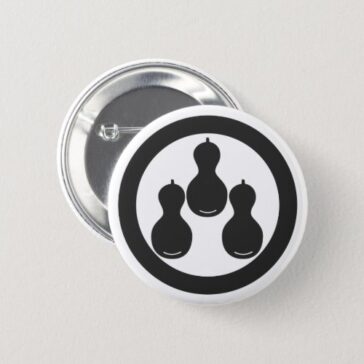
Un cerchio all'interno di tre zucche per Kamon. Simbolo e grafica delle piante della natura in età avanzata per una famiglia giapponese. Nota: Zucca: veniva usata come bottiglia d'acqua e di liquore. Si diceva anche che avesse un effetto amuleto. [Stemmi di famiglia] Un cerchio all'interno di 3 zucche Spilla Clicca sul pulsante qui sotto per… Leggi tutto

[Family Crests] a circle inside Oxalis corniculata with swords Pinback Button
|

a circle inside Oxalis corniculata with swords for Kamon. Nature plants symbol and graphics at old age for Japanese family. [Family Crests] a circle inside Oxalis corniculata with swords Pinback Button

[Stemmi di famiglia] Bottoni con fiori di peonia
|

[Stemmi di famiglia] Bottoni con fiori di peonia Un fiore di peonia per Kamon. Simbolo e grafica dello stemma di famiglia (Kamon) in età avanzata.

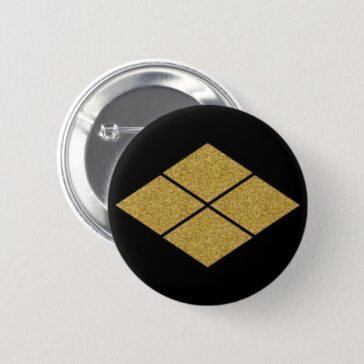
[Family Crests] Takeda rhombus Button
|

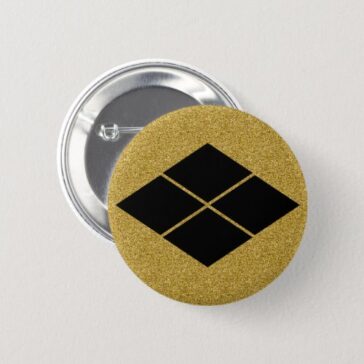
It’s famous family crest of Takeda Shingen. Shingen Takeda was a daimyo during the Warring States period. The “Furinkazan”, which is said to have been written on the flag sashimono (military flag), is also famous. note. Hishimon (rhombus shape) is said to be a stylized version of the trapa japonica fruit or trapa japonica … Read More

[Family Crests] Takeda rhombus Pinback button
|

It’s famous family crest of Takeda Shingen. Shingen Takeda was a daimyo during the Warring States period. The “Furinkazan”, which is said to have been written on the flag sashimono (military flag), is also famous. note. Hishimon (rhombus shape) is said to be a stylized version of the trapa japonica fruit or trapa japonica … Read More

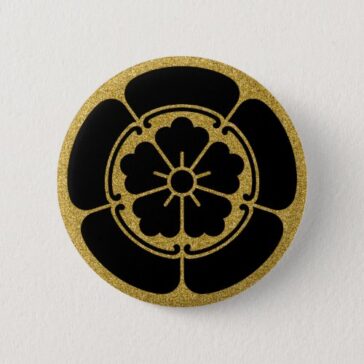
[Stemmi di famiglia] Oda Mokko e Karahana Button
|

Questo è il famoso stemma di famiglia di Oda Nobunaga. Un Mokko a cinque lati all'interno di un fiore di Karahana per Kamon. Simboli e grafiche di piante della natura per la vecchiaia delle famiglie giapponesi. Nota: il Mokko è disegnato come un nido d'uccello. Il nido d'uccello è pensato per la prosperità dei discendenti ed è considerato uno stemma di buon auspicio. … Leggi tutto

[Family Crests] Crossed hawk feathers Button
|

A family crest depicting hawk feathers overlapping diagonally with the left side facing upward. These designs are based on arrow feathers. It can be found by clicking the button below. The white family crest is hidden. Click the “Edit this design” button to display the white crest, hide the black crest, and change the … Read More

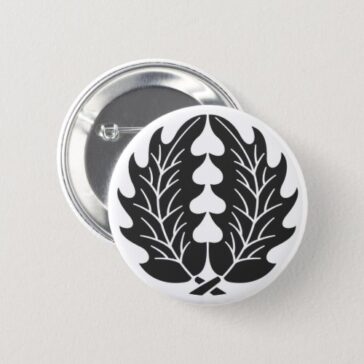
[Family Crests] Two symmetrical holly leaves pinback Button
|

Two symmetrical holly leaves for Kamon. Nature plants symbol and graphics at old age for Japanese family. note. Holly leaves: It was used as an amulet in the Heian period because of its thorns on its leaves. There was a house that was used for the family crest in an attempt to make it … Read More

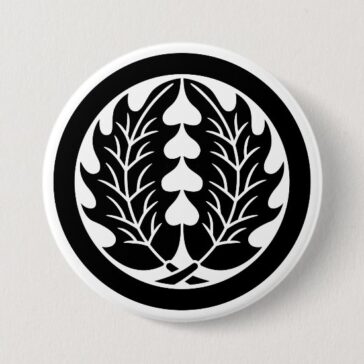
[Family Crests] Two symmetrical holly leaves w/ round Button
|

A family crest featuring two symmetrical holly leaves surrounded by a circle. Holly leaves are considered sacred trees that ward off demons, as seen in Setsubun rituals. They came to be used as family crests for their spiritual significance in ensuring household safety by repelling evil spirits and warding off misfortune. It can be … Read More

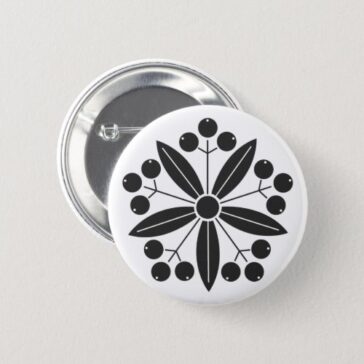
[Family Crests] Nandina like a wheels Pinback Button
|

Nandina like a wheels for Kamon. Nature plants symbol and graphics at old age for Japanese family. note. Nandina domestica : It was treated as an auspicious plant, familiar with the word “rolling through difficulties”. It also has the meaning of “auspicious” and “apotropaic magic”, and was often used for celebrations. [Family Crests] Nandina … Read More

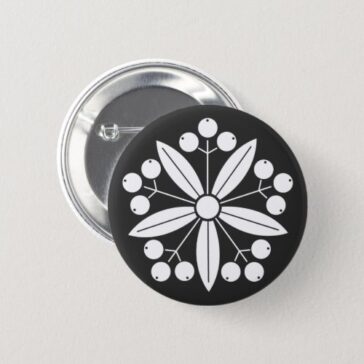
[Family Crests] Nandina like a wheels Round Button
|

Nandina like a wheels for Kamon. Nature plants symbol and graphics at old age for Japanese family. note. Nandina domestica : It was treated as an auspicious plant, familiar with the word “rolling through difficulties”. It also has the meaning of “auspicious” and “apotropaic magic”, and was often used for celebrations. It’s negative positive … Read More

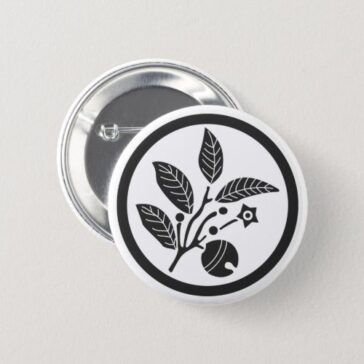
[Family Crests] A circle inside Cleyera japonica and a bell Pinback Button
|

A circle inside Cleyera japonica and a bell for Kamon. Nature plants symbol and graphics at old age for Japanese family. note. Cleyera japonica and a bell : Once upon a time, when Amaterasu Omikami hid in Amano-Iwato, Ame-no-Uzume danced in front of Iwato, holding Sakaki and the bell of Mt. Sakaki and bells … Read More

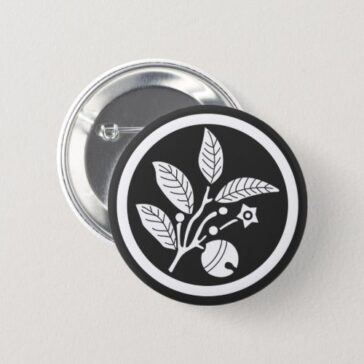
[Family Crests] A circle inside Cleyera japonica and a bell Round Button
|

[Family Crests] A circle inside Cleyera japonica and a bell Round Button A circle inside Cleyera japonica and a bell for Kamon. Nature plants symbol and graphics at old age for Japanese family. It’s negative positive inversion. note. Cleyera japonica and a bell : Once upon a time, when Amaterasu Omikami hid in Amano-Iwato, … Read More

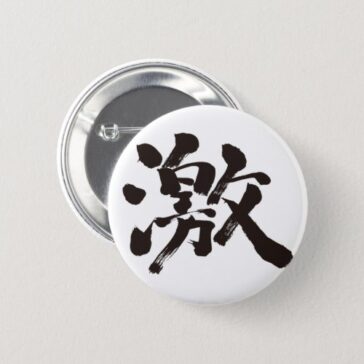
[Kanji] extremely (very, much) Button
|

japanese said “Geki”. It is mean very or much include strength. [Kanji] extremely (very, much) Button

[Kanji] Love Giant Coffee Mug
|

[Kanji] Love Giant Coffee Mug japanese said “Ai”.

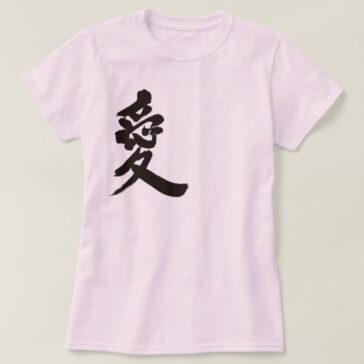
[Kanji] Love / Ai T-Shirt
|

I like it very much and love it. Feeling the beauty, I strongly like it. Show your favor as an action towards the other person. I admire you. I feel like I like it. I miss you. Japanese calls Ai, Mana, etc. [Kanji] Love / Ai T-Shirt

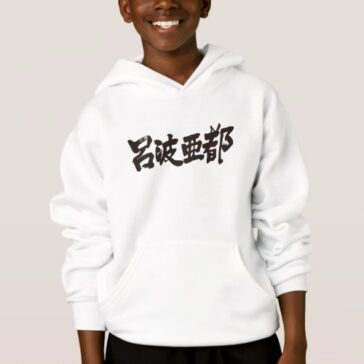
[Kanji] Are you Robert? Hoodie
|

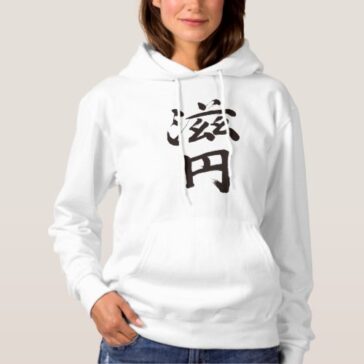
[Kanji] Are you Robert? Hoodie translated name into kanji for Robert. Your (her/his) name became a Japanese Kanji. This used as a phonetic symbol rather than for its meaning.

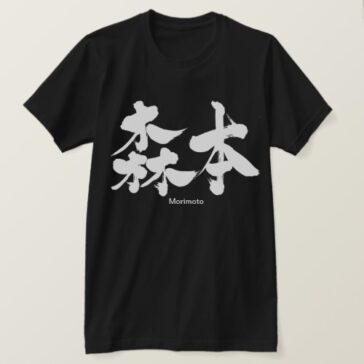
[Kanji] Maglietta Morimoto
|

[Kanji] Maglietta Morimoto, famoso calciatore giapponese.

[Kanji] Hello Jane! Toddler Hoodie
|

translated name into kanji for Jane. Your (her/his) name became a Japanese Kanji. This used as a phonetic symbol rather than for its meaning. [Kanji] Hello Jane! Toddler Hoodie

[Kanji] elegant men / women T-Shirt
|

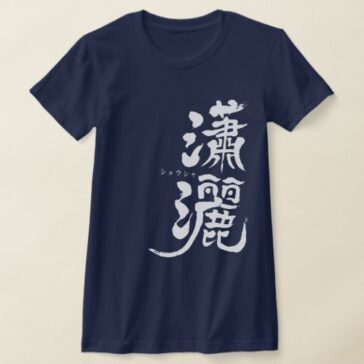
[Kanji] elegant men / women T-Shirt It seems that it is clearly missing. It looks like it’s not profane. japanese said “Sho-Sya”. It’s difficult Kanji who read few Japanese.

1 73 74 75 76 77 78 79 112