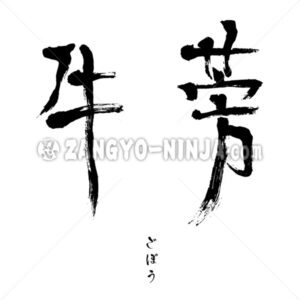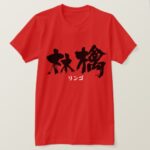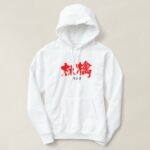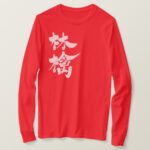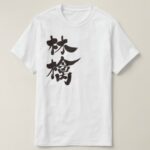

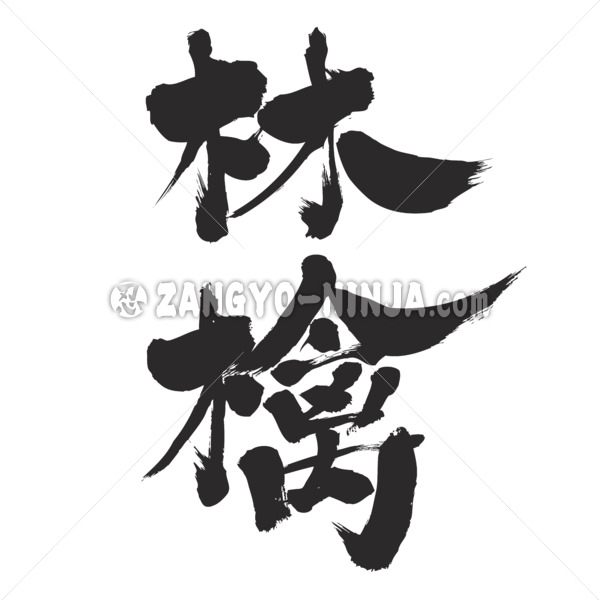
Home » Food & Drink » Apple wrote by vertically in Kanji

Apple ha scritto in verticale in Kanji

creato dal designer

$0.00$1,490.00

600x600
$0.00
1920x1920
$4.80
6000x6000
$9.80
Pieno
$19.80
Pieno
$980.00
Pieno
$1,490.00
Categoria:

The apple is the oldest fruit consumed by humans, with origins dating back about 8,000 years. In Japan, cultivation began in the Meiji period (1868-1912).
Because they are highly nutritious and easy to eat, they are favored all over the world. In the West, it has been said that “an apple a day keeps the doctor away. It is also low in calories and good for the stomach. Since most of the fiber is in the peel, eat it with the peel.
The best time to eat them is by the color of the skin. As they ripen, the red-skinned varieties turn red, and the hollow part of the rind turns from green to yellow.
When cut, the skin turns brown because the polyphenols in the pulp have oxidized. Soaking them in salt or lemon water for a while will prevent the discoloration.

Nutrition of apples

Abundant organic acids, such as malic acid and citric acid, promote recovery from fatigue. Pectin, a soluble fiber, has a beneficial effect on intestinal regulation and cholesterol absorption.
It is also rich in polyphenols, which are expected to have antioxidant, fat-reducing, and anti-aging effects.

How to store apples

Store at low temperatures with high humidity. Put them in thin plastic bags or wrap them one by one in plastic wrap and place them in the vegetable compartment of the refrigerator. Wrapping them in newspaper and then placing them in a plastic bag will help them keep for a longer period of time. However, be careful not to refrigerate them too much, as their aroma and sweetness will not come through.

The origin of the Japanese name is

Japanese said “Rin Go”.
The Chinese name “apple (rinchen)” is thought to have been a transposition of the Chinese names for the tree, such as rin-kin, rinki, and riu-gou. The Chinese character for apple is believed to mean a tree that attracts birds.
The sweet taste and aroma of fruits, not just apples, can attract birds, and among them, apples may have attracted birds in particular.
The 2nd character for “檎” was called “kin” in Chinese and “gong” in Wu, and the name “apple” is said to have come to be called “lingkin, lingon”, which in turn was called “ringo”.
Dettagli tecnici AI Vector, 116.28 KB
, , , , ,

People also views for about Apple

   
pineapple in Kanji - Zangyo-Ninja

pineapple in Kanji

1. large sweet fleshy tropical fruit with a termina [...]
vettore
GRATIS~ Visualizza i dettagli

Caffè in caratteri Kanji

È una delle bevande più popolari al mondo [...]
vettore
GRATIS~ Visualizza i dettagli
Bevitore accanito in Kanji - Zangyo-Ninja

Bevitore incallito in Kanji

Un forte bevitore è qualcuno che riesce a reggere il proprio alcol [...]
vettore
GRATIS~ Visualizza i dettagli
Bardana in Kanji e Hiragana, letto come Gobo in giapponese - Zangyo-Ninja

Bardana in Kanji e Hiragana, si legge Gobo in giapponese

Non è una radice d'albero. Cos'è la bardana? Una radice d'albero [...]
vettore
GRATIS~ Visualizza i dettagli
Curcuma in Kanji - Zangyo-Ninja

Curcuma in Kanji

La curcuma appartiene alla famiglia dello zenzero. È [...]
vettore
GRATIS~ Visualizza i dettagli

Opere consigliate dal creatore Aokage

Tanaka in Kanji - Zangyo-Ninja

Tanaka in Kanji

Salve, signor Tanaka. Questa è una spiegazione dell'o [...]
vettore
GRATIS~ Visualizza i dettagli
Ishida come cognome in Kanji, Katakana e Hiragana - Zangyo-Ninja

Ishida come cognome in Kanji, Katakana e Hiragana

Salve, signor Ishida. Questa è una spiegazione dell'o [...]
vettore
GRATIS~ Visualizza i dettagli
Mizuki nel cognome Kanji - Zangyo-Ninja

Mizuki nel cognome Kanji

Salve, signor Mizuki. Questa è una spiegazione dell'o [...]
vettore
GRATIS~ Visualizza i dettagli
Morita in Kanji, Hiragana e Katakana - Zangyo-Ninja

Morita in Kanji, Hiragana e Katakana

Salve, signor Morita. Questa è una spiegazione dell'o [...]
vettore
GRATIS~ Visualizza i dettagli
AOKAGE
1017

Aokage

Ha vinto diversi premi d'oro e d'argento nella calligrafia giapponese (Shodo). Ama il sushi e il sashimi. Suo padre, che pratica la calligrafia fin da bambino, era un insegnante qualificato. Aokage (青景) deriva dal paesaggio blu come il mare, il cielo azzurro e limpido. E dall'ombra blu. Ombra significa ninja.

Anche le persone intelligenti come te stanno guardando