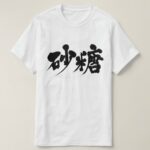

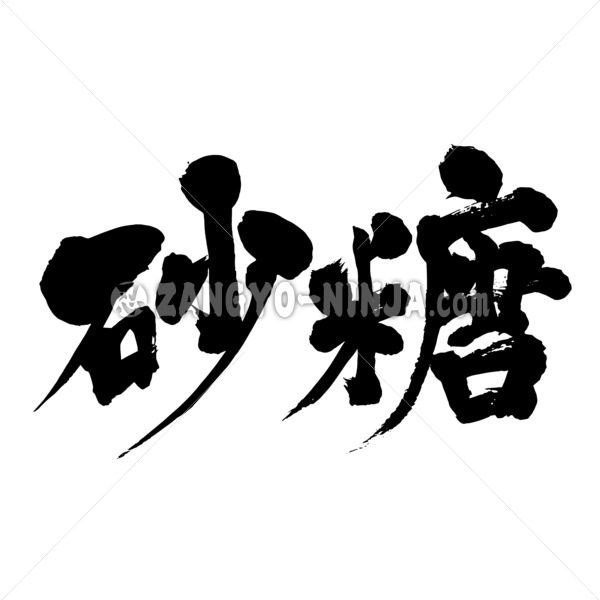
White crystals soluble in water. Sugar cane, sugar beet etc. Used for seasoning.
Simple sugars are called monosaccharides and include glucose, fructose, and galactose. Japanese says “Sato”.
Sugar Ingredients
It can be divided into “cane sugar,” derived from sugar cane (the main raw material), and “sugar beets,” derived from sugar beet. Both cane sugar and sugar beets are almost the same when refined to remove impurities. Currently, cane sugar accounts for 70-80% of the world’s sugar production, with most of the remainder coming from sugar beets. In addition to cane sugar and sugar beets, there is maple sugar, which is produced in Canada and other countries in very small quantities, and palm sugar, which is obtained from sugar palms in Southeast Asia.
Sugar Structure and Main Components
The main component of sugar (sweetening agent) is called sucrose, which is a combination of one glucose and one fructose.
When sucrose in aqueous solution is cut by acid or enzymes, it decomposes to produce glucose and fructose. This reaction is called hydrolysis or inversion. The mixture of glucose and fructose produced by hydrolyzing sucrose is called “invert sugar. Biscuit, a sugar solution that is sprinkled on top of white sugar in the final process to create a moist texture, is a sugar solution made from inverted sugar. Glucose and fructose, which are components of invert sugar, are also called “reducing sugar” because of their reducing properties.
Sugar Production and Consumption
About 80% of the world’s production is cane sugar, and about 20% is sugar beets, with Brazil and India being the two largest producers. The largest producer of cane sugar is the EU, but its production is declining.
Origin and History of Sugar
The center of sugar propagation is believed to be India.
The English name for sugar, “SUGAR,” is said to be derived from the Sanskrit word “sarcara,” which is the language of ancient India. There are also references to sugar in Indian Buddhist scriptures dating back to the 5th century B.C., and in 327 B.C., the word “sugar” was coined in India.
In 327 B.C., when King Alexander of Macedonia made an expedition to India, he wrote, “There are reeds that yield a juice as sweet as honey,” and “There are sweet stones that crumble when chewed. It is assumed that the former refers to sugar cane and the latter to sugar.
Indian cane and sugar were introduced to Persia (present-day Iran) and Egypt in the west, and to China in the east.
The word for sugar, read “Sato” in Japanese, is derived from the word “sarkara“. In ancient Indian Sanskrit, it means “sugarcane. As this etymology suggests, sugar is believed to have originated in ancient India some 2,400 years ago.
On a different note, there is a surname that sounds the same. It currently boasts the largest population in Japan.