
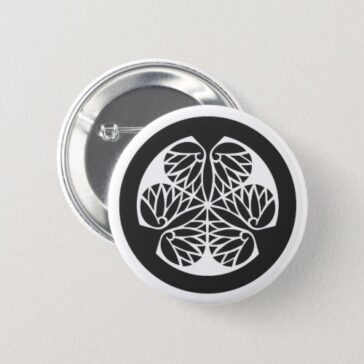
[Family Crests] 3 hollyhocks inside circle pinback button
|

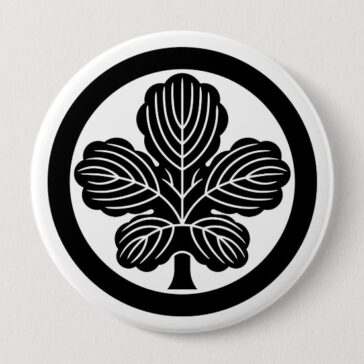
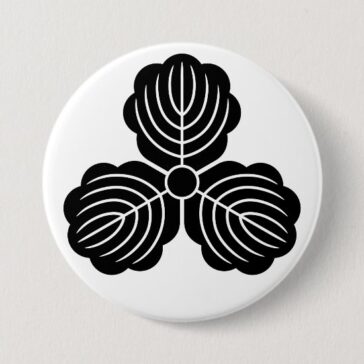
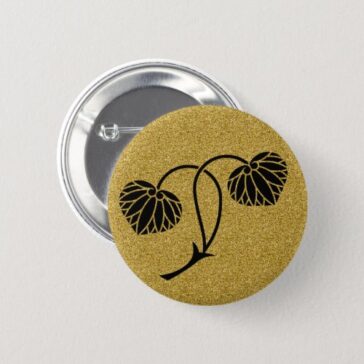
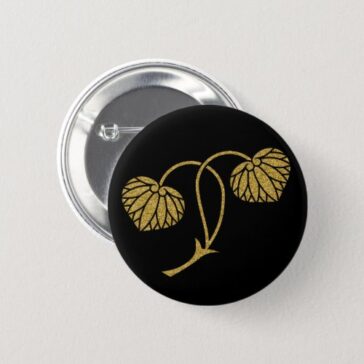
It is the most famous family crest of Mitsuha Aoi in Japan and has been used by the Shogun Tokugawa family for generations during the Edo period. [Family Crests] 3 hollyhocks inside circle pinback button
[Stemmi di famiglia] 3 malvarose all'interno di bottoni a spilla circolari
|

3 malvarose all'interno di bottoni a spilla circolari. È lo stemma di famiglia più famoso di Mitsuha Aoi in Giappone ed è stato utilizzato dalla famiglia dello Shogun Tokugawa per generazioni durante il periodo Edo. È il disegno invertito in bianco e nero.

[Family Crests] Four-sided Mokko inside Karahana flower Round Button
|

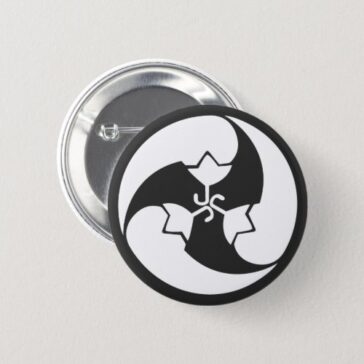
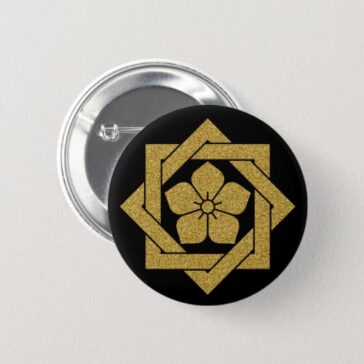
Four-sided Mokko inside Karahana flower for Kamon. Nature plants symbol and graphics at old age for Japanese family. It’s negative positive inversion. [Family Crests] Four-sided Mokko inside Karahana flower Round Button

[Stemmi di famiglia] Foglia Kaji con cerchio Bottone rotondo
|

Foglia di Kaji per Kamon. Questo stemma di famiglia presenta un cerchio disegnato attorno a un motivo di foglie di kaji. Gli alberi di kaji sono considerati sacri perché le loro foglie vengono utilizzate come recipienti per le offerte agli dei, e in seguito sono state utilizzate come stemmi divini. Puoi trovarlo cliccando sul pulsante qui sotto. Il... Leggi tutto

[Stemmi di famiglia] Bottone classico Mitsudomoe con rotazione a destra
|

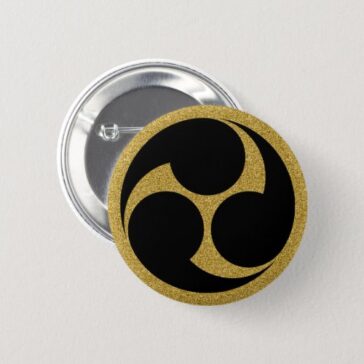
This is a clockwise “Mitudoomoe” (triple tomoe). Clockwise flow is traditionally depicted as rotating to the right. The standard Mitudoomoe is shown here. It can be found by clicking the button below. The white family crest is hidden. Click the “Edit this design” button to display the white crest, hide the black crest, and … Read More

[Stemmi di famiglia] Nove foglie di bambù Bottone rotondo
|

Questo stemma di famiglia raffigura tre foglie di bambù disposte in serie, con tre serie di queste disposte insieme a formare un disegno circolare. Le foglie di bambù sono considerate piante sacre fin dall'antichità e ancora oggi vengono utilizzate nei rituali shintoisti. Sono state adottate come stemma di famiglia per il loro significato di buon auspicio. Può... Leggi tutto

[Family Crests] 5 Kudzu flowers Round Button
|

Family Crests(Kamon) symbol and graphics at old age. Seven herbs of autumn. It is a perennial vine of the leguminous family that blooms purple flowers. It has a strong fertility. The old man probably incorporated it into the crest because of its taste and characteristics. [Family Crests] 5 kudzu Flowers Button Click the button … Read More

[Stemmi di famiglia] Bottone rotondo Hagi che abbraccia
|

[Stemmi di famiglia] Bottone rotondo Hagi che abbraccia Hagi per Kamon. Simbolo e grafica di piante naturali in età avanzata per la famiglia giapponese. È un'inversione positiva negativa. Nota: Hagi: un piccolo arbusto deciduo. È considerato una delle sette erbe autunnali ed è una delle piante familiari per i giapponesi.

[Stemmi di famiglia] Tre foglie di quercia Bottone rotondo classico
|

Questo stemma di famiglia raffigura tre ampie foglie di quercia disposte in tre direzioni. Le foglie di quercia erano considerate sacre fin dall'antichità e venivano utilizzate come recipienti per presentare offerte agli dei. È possibile visualizzarlo cliccando sul pulsante sottostante. Lo stemma bianco è nascosto. Clicca sul pulsante "Modifica questo disegno"... Leggi tutto

[Family Crests] Tomoe designed chili peppers Round Button
|

[Family Crests] Tomoe designed chili peppers Round Button Tomoe designed chili peppers for Kamon. Nature plants symbol and graphics at old age for Japanese family. It’s negative positive inversion.

[Stemmi di famiglia] Bottone dei crisantemi di Takamori Saigo
|

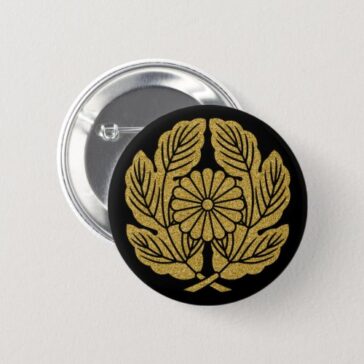
[Stemmi di famiglia] Bottone con crisantemi di Saigo Takamori. Si tratta di foglie di crisantemo abbracciate su un fiore di crisantemo per Kamon. Gli stemmi di famiglia (Kamon) significano simboli e grafiche in età avanzata in Giappone. È uno stemma di famiglia che si dice sia stato usato da Saigo Takamori. Nota: Crisantemo: nell'antica Cina, i crisantemi sono usati a scopo ornamentale e... Leggi tutto

[Family Crests] Takeda rhombus Pinback button
|

It’s famous family crest of Takeda Shingen. Shingen Takeda was a daimyo during the Warring States period. The “Furinkazan”, which is said to have been written on the flag sashimono (military flag), is also famous. note. Hishimon (rhombus shape) is said to be a stylized version of the trapa japonica fruit or trapa japonica … Read More

[Family Crests] Takeda rhombus Button
|

It’s famous family crest of Takeda Shingen. Shingen Takeda was a daimyo during the Warring States period. The “Furinkazan”, which is said to have been written on the flag sashimono (military flag), is also famous. note. Hishimon (rhombus shape) is said to be a stylized version of the trapa japonica fruit or trapa japonica … Read More

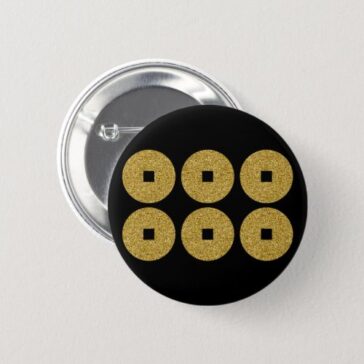
[Family Crests] Sanada’s 6 coins Button
|

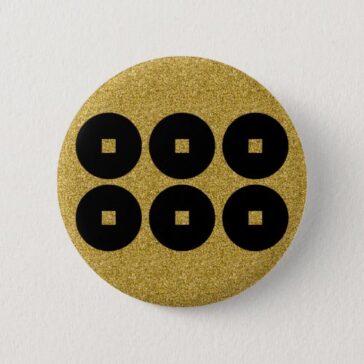
This is also a famous family crest. There are various theories, but at that time, it was said that the “Sanzu River” was flowing between the world and the world, and that the ferry to cross the river required “Rokumonsen (current monetary value of about 300 yen)”. I am. The family crest also shows … Read More

[Family Crests] Sanada’s 6 coins Pinback button
|

[Family Crests] Sanada’s 6 coins Pinback button This is also a famous family crest. There are various theories, but at that time, it was said that the “Sanzu River” was flowing between the world and the world, and that the ferry to cross the river required “Rokumonsen (current monetary value of about 300 yen)”. … Read More

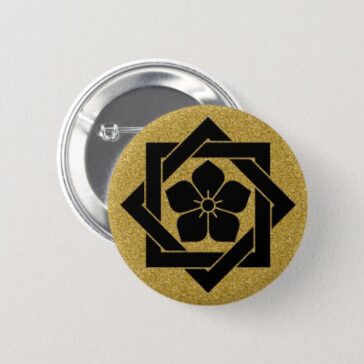
[Family Crests] Ryoma Sakamoto’s bellflower Button
|

Cross lines inside Kikyo (ballon flower, bellflower) Kamon. It was used Ryoma Sakamoto who succeeded in the Taisei Hokan at the end of the Edo period. note. Kikyo (ballon flower, bellflower) is Seven herbs of autumn. In the olden days, one flower of bellflower was dedicated to the gods and Buddhas to forge the … Read More

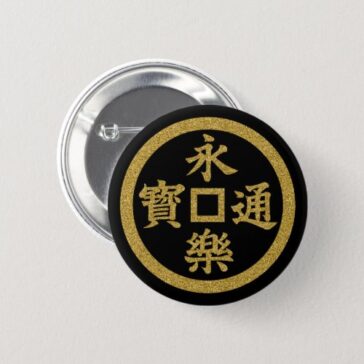
[Family Crests] Eiraku coin Round Button
|

[Family Crests] Eiraku coin Round Button Nobunaga Oda used the Eiraku coin (Eiraku Tsuho) design that was in circulation as a family crest as a symbol of economic power. He used it as a flag.

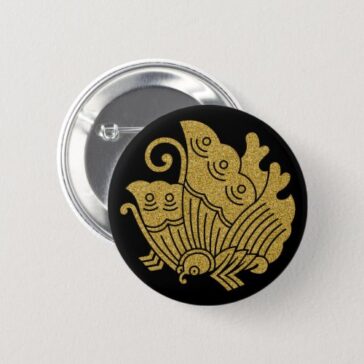
[Family Crests] Swallowtail butterfly Round Button
|

[Family Crests] Swallowtail butterfly Round Button It is a crest used by “Taira no Kiyomori”, the lord of the Heike clan. Nobunaga Oda began to use the “swallowtail butterfly crest” in honor of Taira’s descendants from a certain time in order to replace Seiwa Genji’s Muromachi Shogunate. note. Butterflies are creatures that grow while … Read More

[Family Crests] Ryoma Sakamoto’s bellflower round Button
|

[Family Crests] Ryoma Sakamoto’s bellflower round Button Cross lines inside Kikyo (ballon flower, bellflower) Kamon. It was used Ryoma Sakamoto who succeeded in the Taisei Hokan at the end of the Edo period. note. Kikyo (ballon flower, bellflower) is Seven herbs of autumn. In the olden days, one flower of bellflower was dedicated to … Read More

[Family Crests] 2 hollyhock leaves Button
|

The crest of Kamigamo Shrine in Kyoto. The 3 Hollyhock(Aoi) crest used by Ieyasu Tokugawa is said to be derived from it. note: Hollyhock(Aoi) is a perennial plant that grows naturally in forests all over the country and is a common plant. It is said that the development of the house was likened to … Read More

[Family Crests] 2 hollyhock leaves Round Button
|

[Family Crests] 2 hollyhock leaves Round Button The crest of Kamigamo Shrine in Kyoto. The 3 Hollyhock(Aoi) crest used by Ieyasu Tokugawa is said to be derived from it. note: Hollyhock(Aoi) is a perennial plant that grows naturally in forests all over the country and is a common plant. It is said that the … Read More

[Stemmi di famiglia] Bottone Mitsudomoe con rotazione a sinistra
|

L'origine non è chiara, ma è spesso usato come stemma divino, e ha avuto inizio al Santuario di Hachiman per poi diffondersi ad altri santuari. Essendo un disegno popolare fin dall'antichità, è stato utilizzato per stemmi di famiglia non specificati. [Stemmi di famiglia] Bottone Mitsudomoe rotante a sinistra Il cognome a cui… Leggi tutto

[Stemmi di famiglia] Simbolo Kanji di Ishida Mitsunari sulla bandiera militare Bottone
|

Si tratta di un simbolo Kanji che fu issato come bandiera di guerra da un comandante militare di nome Mitsunari Ishida durante il periodo degli Stati Combattenti. Significa: "Se una persona agisce per tutti e tutti agiscono per uno, i popoli del mondo possono essere felici". [Stemmi di famiglia] Simbolo Kanji di Ishida Mitsunari sulla bandiera militare Bottone

[Stemmi di famiglia] Spilla con fiore di glicine e cerchio
|

Flowers symbol and graphics at old age. Circle with Wisteria Kamon. [Family Crests] Flowers Circle and Wisteria Pin Button Click the button below to view the inverted black-and-white version of this family crest. Wisteria Flowers Round Pin Button (inverted) Family names that have inherited this crest Amano, Fujikawa, Fujimori, Fujino, Fujiwara, Fukuo, Hoshimura, Ida, … Read More

[Family Crests] Two grapes Button
|

The grape crest is a very rare pattern that came from the continent. note. Grape crests bear many fruits and vines are wrapped around them, so they are used as lucky charms for prosperity of descendants, marriage, and prosperity of business. [Family Crests] Two grapes Button

[Family Crests] Naoe Kanetsugu Love Button
|

The frontal “Ai(love)” that was attached to the helmet worn by Kanetsugu Naoe during the Warring States period. There is a theory that this is an acronym for War Buddha called Atago Gongen. The Atago Gongen is a Buddha who fights against the enemy with Bishamonten. [Family Crests] Naoe Kanetsugu Love Button

[Family Crests] Genji carriage wheels round Button
|

Genji carriage wheel round Button A family crest inspired by the ancient imperial carriage. It became a family crest due to its aesthetic significance. Note that the imperial carriage is also known as the Genji carriage. It can be found by clicking the button above. The white family crest is hidden. Click the “Edit … Read More