
Home » What's your name? » Aoki in Kanji, Katakana and Hiragana

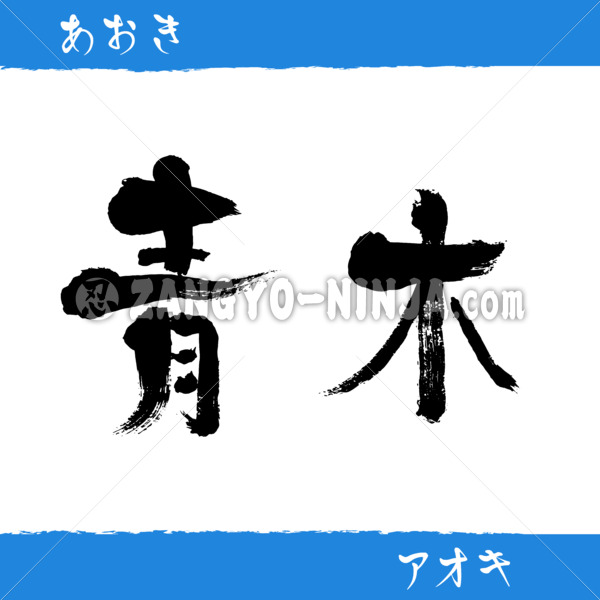
Aoki in Kanji, Katakana and Hiragana

criado pelo designer

$0.00$1,490.00

600x600
$0.00
1920x1920
$4.80
6000x6000
$9.80
Completo
$19.80
Completo
$980.00
Completo
$1,490.00

Place names and environments as origins

The place name “Aoki” exists in numerous locations nationwide, giving rise to “Aoki” clans that adopted these names in various regions. Place names like ‘Aoki’ exist throughout Japan, including in Kanagawa Prefecture, Fukuoka Prefecture, and Niigata Prefecture, each serving as the origin of the “Aoki” surname.
Another theory suggests the name refers to places where trees, like the Aoki tree, are always lush and green. People living in such areas came to adopt the surname “Aoki.”

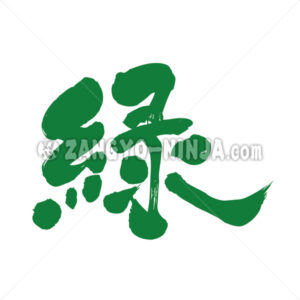
Why did the Japanese call green “blue”?

“Ao” originally meant blue, representing the sea or a clear sky. Did trees of that color exist? No, blue trees never existed, even in ancient times. Trees with lush green leaves did exist. Calling green ‘blue’ stems from ancient Japanese, where the color green was included within the concept of “blue.” Even today, calling a green apple “aoriingo” (青りんご) seems to be a remnant of this old usage.

The Legendary Origin of the Aoki Clan

Some clans trace the name “Aoki” to a completely different origin. The most prominent example is the Aoki clan of Manazuru, Kanagawa Prefecture. Minamoto no Yoritomo, who raised an army to overthrow the Heike clan, was defeated by the Heike forces at the Battle of Ishibashiyama. He then hid in the “Shitodo Cave” deep in the mountains of Manazuru.
However, remaining hidden there risked discovery. It is said that the local residents placed Aoki trees at the entrance to camouflage the cave. Aoki trees are green not only in their leaves but also in their stems. By blocking the entrance to the cave where Yoritomo and his men were hiding with these trees, they managed to evade pursuit by the Heike forces.
The saved Yoritomo bestowed the surname “Aoki” upon the villagers. To this day, “Aoki” remains the most common surname in Manazuru Town.

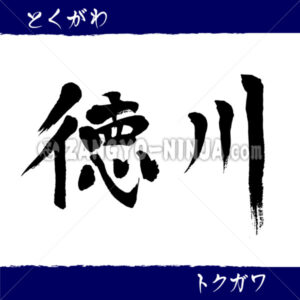
Explicação desta caligrafia

A fileira superior está em hiragana, a fileira do meio em kanji e a fileira inferior em katakana, todas escritas horizontalmente.
Detalhes técnicos AI Vector, 265.35 KB
, , , , ,

People also views for about Aoki

   
Mizuki em sobrenome Kanji - Zangyo-Ninja

Mizuki em kanji de sobrenome

Olá, Sr. Mizuki. Esta é uma explicação do ou [...]
vetor
GRÁTIS~ Ver detalhes
Tanaka em Kanji - Zangyo-Ninja

Tanaka em Kanji

Olá, Sr. Tanaka. Esta é uma explicação do ou [...]
vetor
GRÁTIS~ Ver detalhes
Abel e Aibel em Kanji com brasão (fonte Maru-yose) - Zangyo-Ninja

Abel e Aibel em Kanji com brasão (fonte Maru-yose)

Ambas são “abel” e “aibel”. Essas obras são fonetas [...]
vetor
GRÁTIS~ Ver detalhes
Matsumoto em Kanji - Zangyo-Ninja

Matsumoto em Kanji

1. É uma cidade localizada na região central de Nag [...]
vetor
GRÁTIS~ Ver detalhes
Morita em Kanji, Hiragana e Katakana - Zangyo-Ninja

Morita em Kanji, Hiragana e Katakana

Olá, Sr. Morita. Esta é uma explicação do ou [...]
vetor
GRÁTIS~ Ver detalhes
Morita em Kanji, Katakana e Hiragana - Zangyo-Ninja

Morita em Kanji, Katakana e Hiragana

Olá, Sr. Morita. Esta é uma explicação do ou [...]
vetor
GRÁTIS~ Ver detalhes
Sasaki em Kanji - Zangyo-Ninja

Sasaki em Kanji

The etymology is “small saki” (protrudi [...]
vetor
GRÁTIS~ Ver detalhes

Obras recomendadas pelo criador Aokage

Café em Kanji

É uma das bebidas mais populares do mundo [...]
vetor
GRÁTIS~ Ver detalhes
Ichiban, primeiro em Kanji - Zangyo-Ninja

Ichiban, primeiro em Kanji

Em japonês, a palavra "top" pode ser escrita de diversas maneiras, [...]
vetor
GRÁTIS~ Ver detalhes
Bebedor pesado em Kanji - Zangyo-Ninja

Bebedor inveterado em kanji

Um bebedor inveterado é alguém que consegue tolerar o consumo de álcool [...]
vetor
GRÁTIS~ Ver detalhes
AOKAGE
1032

Aokage

Ele ganhou vários prêmios de ouro e prata em caligrafia japonesa (Shodo). Adora sushi e sashimi. Pratica caligrafia desde criança, pois seu pai era professor qualificado. Aokage (青景) vem da paisagem azul, como o mar, o céu azul claro e a sombra azul. Sombra significa ninja.

Pessoas alegres como você também estão olhando para