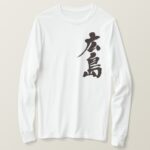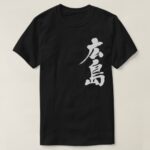

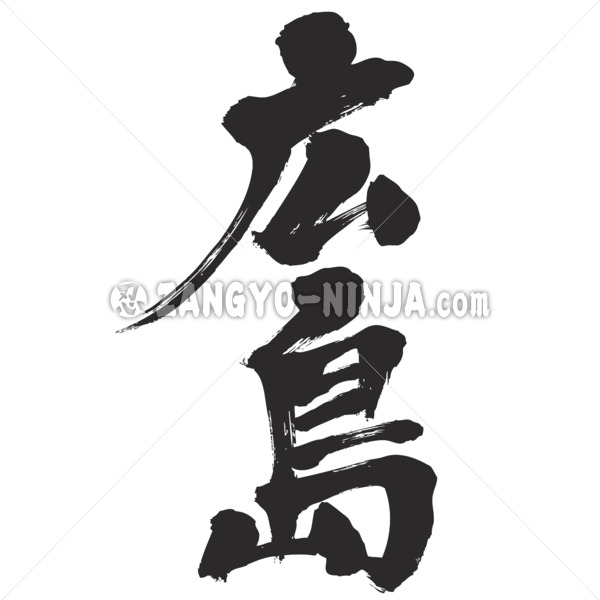
Description for Hiroshima
Abbreviation for Hiroshima Prefecture or its prefectural capital, Hiroshima City.
History of Hiroshima City
During the Edo period, Hiroshima developed as a castle town of the Asano clan with an income of 426,500 koku. Since the Meiji period, it has had a strong character as a military city, and during the Sino-Japanese War, the Imperial General Headquarters was located there. During World War II, the city suffered a devastating blow when an atomic bomb was dropped on August 6, 1945. After the war, it was revived as an international city of peace and culture. Currently, heavy industries such as automobiles, shipbuilding, industrial machinery, and machine tools and light industries such as food and furniture have developed, and oysters and seaweed are cultivated. Established in 1889 (Meiji 22). Designated city in 1980. It has eight administrative districts.
Food culture and gourmet food in Hiroshima
Hiroshima Prefecture’s famous dish is “Hiroshima Okonomiyaki”. It is made in a different way from okonomiyaki in Kansai and Monjayaki in Tokyo.
Oyster production is the largest in Japan, accounting for about 60% of the national production. Oyster dishes from Hiroshima Prefecture can be enjoyed not only raw but also steamed oysters, grilled oysters, oyster pots and oyster dishes in a parade.
Other citrus fruits are also abundant, and in particular, the amount of lemon production is the largest in Japan. Sweets using citrus fruits represented by lemon cake are also popular products.
Economy and Industry of Hiroshima Prefecture
Hiroshima Prefecture’s industry is centered on “manufacturing”, from heavy industry such as shipbuilding, steel, and automobiles, to cutting-edge industries such as electrical machinery and electronic parts.
In addition, Hiroshima Prefecture is located between the Kansai and Kyushu regions and has a well-developed transportation network, so there is a lively flow of people and goods, making it an economic and industrial base in the Chugoku region.
Industry
It is a prefecture that is one of the leading industries in western Japan, with the automobile industry centering on Hiroshima City, the steel and textile industry centering on Fukuyama City, and the shipbuilding industry centering on Kure City. The value of manufactured goods shipped is No. 1 in the Chugoku, Shikoku and Kyushu regions.
Agriculture
Many agricultural products are produced due to the difference in climate between the southern and northern parts of the prefecture. Taking advantage of the Seto Inland Sea’s warm climate, citrus fruits, especially lemons, boast the highest production volume in Japan.
Fishing industry
Because the Seto Inland Sea is dotted with many islands, the waves are calm and the currents are complex, making it a treasure trove of marine products.
The conditions are especially suitable for oyster farming, and it accounts for about half of the oyster production in Japan.
Sightseeing and specialties in Hiroshima Prefecture
Two World Heritage sites, Miyajima-Itsukushima Shrine and the Atomic Bomb Dome, are worth seeing.
In addition, Onomichi Senkoji Temple, which is famous as a filming location for movies, Tomonoura, Fukuyama Castle, and Hiroshima Castle for those who like history, and Mazda Stadium, home of the Hiroshima Toyo Carp, for baseball lovers.
Etymology of “Hiroshima”
The name “Hiroshima” is said to have originated in 1589 (Tensho 17) when Terumoto Mohri started the construction of Hiroshima Castle. It is a combination of ‘hiro’ (hiromoto), the ancestor of the Mori clan, and ‘island’ (island) of Motonaga Fukushima, a samurai in the Warring States period, or a natural landform formed by combining the islands of a wide delta. There are various theories, such as that it came from.