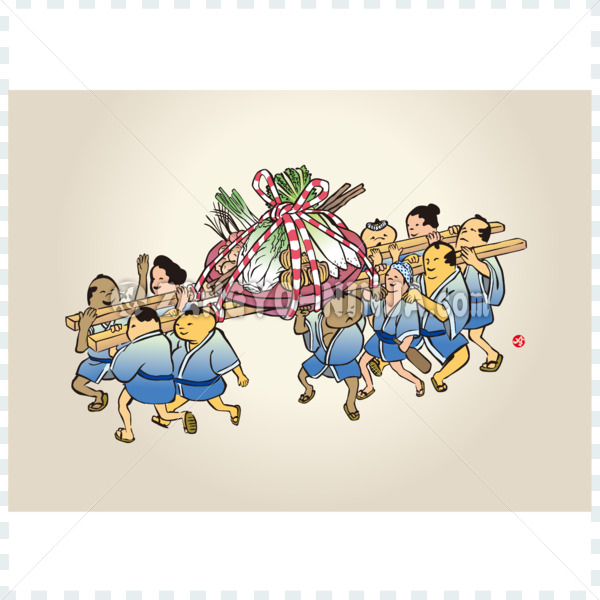

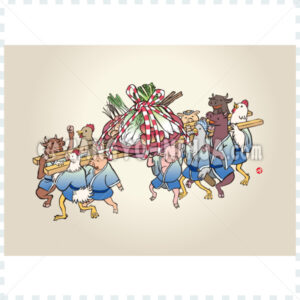
Home » Celebration & Prize » Harvest Fest. Dwarfs carrying a portable shrine

Fiesta de la Cosecha. Enanos transportando un santuario portátil

creado por diseñador

$0.00$1,490.00

600x600
$0.00
1920x1920
$4.80
6000x6000
$9.80
Lleno
$19.80
Lleno
$980.00
Lleno
$1,490.00

This is a contemporary illustration drawn in brushstroke style.

In Japan, there are invisible dwarfs.

There is a Japanese folktale about a dwarf called “Issunboushi” who exterminates demons. There is also a world fairy tale about “Seven Dwarfs” who save a princess in a castle. Where do these dwarfs come from and what do they do?

Japanese people love festivals.

Festivals are held everywhere in Japan. There are hundreds to thousands of festivals in Japan, most of which are held in the late summer and fall, and are mainly to thank the local gods and celebrate the harvest. In modern times, thanksgiving and celebrations have become a means to an end, and the purpose is to gather together to drink, go to stalls to buy something to eat, and so on.

This illustration is intended to be a celebration.

There is the event of carrying a Portable shrine(Mikoshi) at a festival. The Mikoshi is a kind of ritual in which a small house is built for the local deity to enter, and the people of the community carry it in procession to celebrate the good harvest of the year and wish for a bountiful harvest the next time.
The Mikoshi is made into a vegetable on a platter (burdock root, carrot, Chinese cabbage, onion, leek, radish and potato) and carried by a small person dressed in the costume of the old days to express a fantasy and nostalgic atmosphere.
Often the dwarfs are said to appear as messengers of gods or demons. Since this is meant to bring about a bountiful harvest, if we were to use a Western Gothic analogy, would they be like angels coming to us carrying wheat and bread?
Detalles técnicos AI Vector, 1.51 MB
, , , , , ,

People also views for about Harvest

   
Ichiban, primero en kanji - Zangyo-Ninja

Ichiban, primero en kanji

La palabra "top" en japonés tiene varias formas de escribirse, [...]
vector
GRATIS~ Ver detalles
Shomon Raifuku en kanji, el proverbio en hiragana. 笑門来福 - Zangyo-Ninja

Shomon Raifuku en kanji, el proverbio en hiragana. 笑門来福

La felicidad llega naturalmente a los hogares llenos de risas [...]
vector
GRATIS~ Ver detalles

Obras recomendadas por el creador aokimono

Abel y Aibel en Kanji con escudo (fuente Maru-yose) - Zangyo-Ninja

Abel y Aibel en kanji con escudo (fuente Maru-yose)

Ambos son “abel” y “aibel”. Estas obras son fonéticas [...]
vector
GRATIS~ Ver detalles
iCe en bicaligrafía como diseño tradicional japonés - Zangyo-Ninja

iCe en bicaligrafía como diseño tradicional japonés

Descripción iCe y Natsugori(夏氷) Este diseño es un diseño [...]
vector
GRATIS~ Ver detalles
Excelente en inglés e hiragana - Zangyo-Ninja

Excelente en inglés e hiragana

Esta es una obra en la que la palabra hiragana “すげー” y [...]
vector
GRATIS~ Ver detalles
Monte Fuji - Zangyo-Ninja

Monte Fuji

El monte Fuji es la montaña más alta de Japón. La más alta [...]
vector
GRATIS~ Ver detalles
vivo en inglés, kanji e hiragana - Zangyo-Ninja

vivo en inglés, kanji e hiragana

Esta es una caligrafía escrita utilizando un método llamado [...]
vector
GRATIS~ Ver detalles
Foto de avatar
17

aokimono

El tema central de mi vida es el Japón alternativo. Esta letra A es el símbolo actual del Aokimono. Se asemeja a la primera letra de los 51 caracteres hiragana, "あ". Además, "A" es la primera letra del alfabeto. Es uno de los estilos alternativos del Japón, llamado "Bicaligrafía", en el que escribo japonés en inglés e inglés en japonés.

Las buenas personas como usted también están viendo