
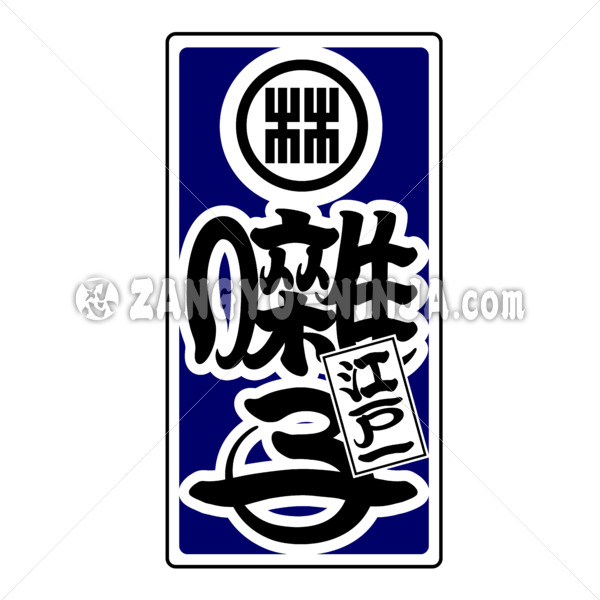

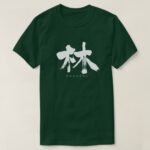
This is a fictional group performing hayashi music.
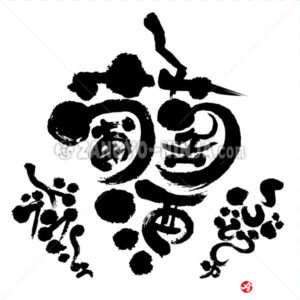
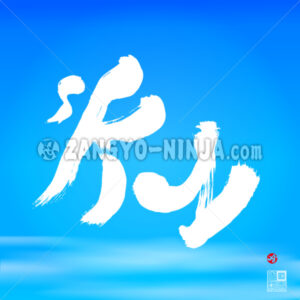
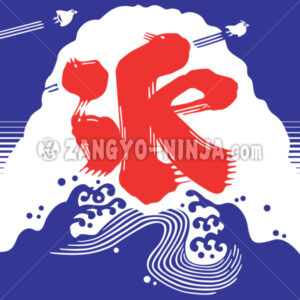
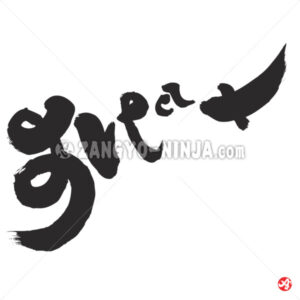
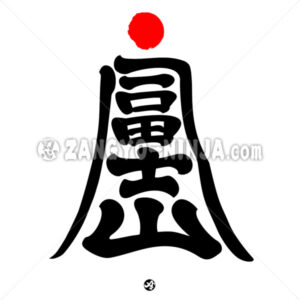
This work designs the fictional hayashi group “Hayashi” in the style of a senjafuda (temple/shrine charm) using this site’s original font.
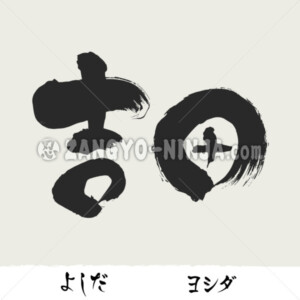
The font under development features an ultra-thick line style resembling brushwork, often called senja-moji or yose-moji, with enhanced curves and rounded forms.
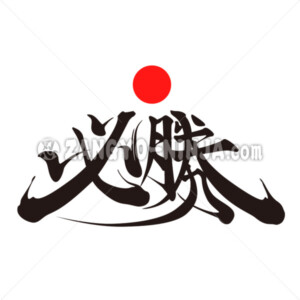
The large kanji character in the center represents the “hayashi” (accompaniment music) kanji. The smaller kanji character in the lower right represents the Edo-ichi kanji symbolizing “Top of Edo” The upper part features the actual Hayashi family crest.
Family crests rarely match surnames, but the Japanese-unique performance style “囃子” and the kanji for “林” (two horizontal strokes representing trees) share the exact same phonetic reading.
What is Hayashi?
A term in Japanese music. Derived from the verb “hayasu” (to enhance, to accentuate), it refers to instrumental accompaniment supporting a soloist or central performance, or the musicians themselves. Folk arts, Noh, Kyogen, Kabuki, and yose each have their own distinctive hayashi (rhythms).
What are Senjafuda?
These are rectangular paper plaques affixed to pillars or beams in shrines and temples as proof of worship. They bear the owner’s name, business name, birthplace, etc., and also served as a tool for self-expression.
What's Maru-yose font?
Maru means circle or roundness, while Yose refers to traditional Japanese entertainment venues where people gather to watch performances.The calligraphy style used to write performers' names in these venues is called Yose Shotai. Designed to bring good fortune and attract crowds, it features heavy bold strokes with minimal spacing.
Maru also has another meaning: the Japanese words Marumaru and Marutto mean “all” or “everything.” We are attempting to preserve the old-fashioned feel while arranging it in a modern style.
This font is currently under development. If you would like us to continue developing it, please support us by purchasing something on this site.
We also offer an affiliate program, so please take advantage of it.


![[Escudos familiares] Broches de flores de Tachibana](https://www.zangyo-ninja.com/wp-content/uploads/family_crests_flowers_pinback_button-tachibana_k945w_1024-150x150.jpg)