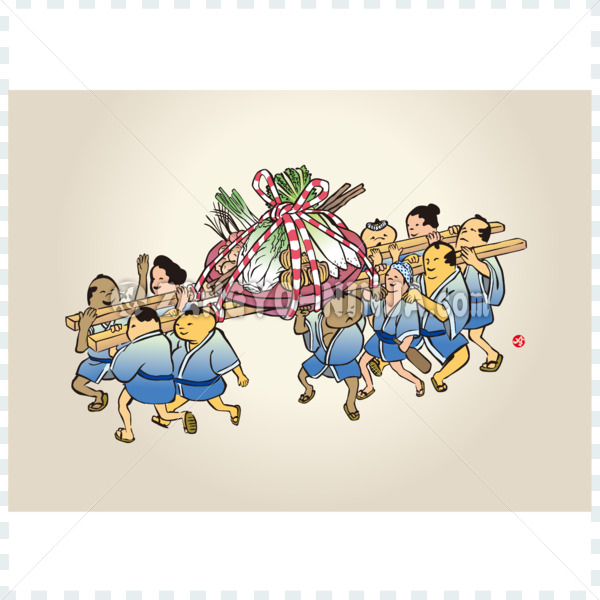

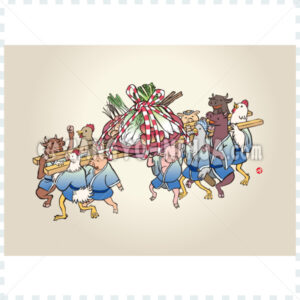
Home » Celebration & Prize » Harvest Fest. Dwarfs carrying a portable shrine

Fête des récoltes. Des nains transportent un sanctuaire portatif

créé par un designer

$0.00$1,490.00

600x600
$0.00
1920x1920
$4.80
6000x6000
$9.80
Complet
$19.80
Complet
$980.00
Complet
$1,490.00

This is a contemporary illustration drawn in brushstroke style.

In Japan, there are invisible dwarfs.

There is a Japanese folktale about a dwarf called “Issunboushi” who exterminates demons. There is also a world fairy tale about “Seven Dwarfs” who save a princess in a castle. Where do these dwarfs come from and what do they do?

Japanese people love festivals.

Festivals are held everywhere in Japan. There are hundreds to thousands of festivals in Japan, most of which are held in the late summer and fall, and are mainly to thank the local gods and celebrate the harvest. In modern times, thanksgiving and celebrations have become a means to an end, and the purpose is to gather together to drink, go to stalls to buy something to eat, and so on.

This illustration is intended to be a celebration.

There is the event of carrying a Portable shrine(Mikoshi) at a festival. The Mikoshi is a kind of ritual in which a small house is built for the local deity to enter, and the people of the community carry it in procession to celebrate the good harvest of the year and wish for a bountiful harvest the next time.
The Mikoshi is made into a vegetable on a platter (burdock root, carrot, Chinese cabbage, onion, leek, radish and potato) and carried by a small person dressed in the costume of the old days to express a fantasy and nostalgic atmosphere.
Often the dwarfs are said to appear as messengers of gods or demons. Since this is meant to bring about a bountiful harvest, if we were to use a Western Gothic analogy, would they be like angels coming to us carrying wheat and bread?
Détails techniques AI Vector, 1.51 MB
, , , , , ,

Les internautes consultent également les informations sur Harvest

   
Ichiban, premier en Kanji - Zangyo-Ninja

Ichiban, premier en Kanji

Le mot « top » en japonais s'écrit de différentes manières, [...]
vecteur
GRATUIT~ Afficher les détails
Shomon Raifuku en Kanji, le proverbe en Hiragana. 笑門来福 - Zangyo-Ninja

Shomon Raifuku en Kanji, le proverbe en Hiragana. 笑門来福

Le bonheur s'installe naturellement dans les foyers emplis de rires [...]
vecteur
GRATUIT~ Afficher les détails

Œuvres recommandées par le créateur aokimono

Abel et Aibel en Kanji avec écusson (police Maru-yose) - Zangyo-Ninja

Abel et Aibel en kanji avec blason (police Maru-yose)

Les deux sont « abel » et « aibel ». Ces œuvres sont phonétiques [...]
vecteur
GRATUIT~ Afficher les détails
Excellent en anglais et en hiragana - Zangyo-Ninja

excellent en anglais et en hiragana

Il s'agit d'une œuvre dans laquelle le mot hiragana « すげー » et [...]
vecteur
GRATUIT~ Afficher les détails
Mont Fuji - Zangyo-Ninja

Mont Fuji

Le mont Fuji est la plus haute montagne du Japon. Le plus haut [...]
vecteur
GRATUIT~ Afficher les détails
Zangyo-Ninja en direct en anglais, kanji et hiragana

vivant en anglais, kanji et hiragana

Il s'agit d'une calligraphie réalisée selon une méthode appelée [...]
vecteur
GRATUIT~ Afficher les détails
Photo d'avatar
17

aokimono

Le thème de ma vie est le Japon alternatif. Ce signe « A » est l'emblème actuel de mon aokimono. Il ressemble à la première lettre des 51 hiragana, « あ ». Or, « A » est la première lettre de l'alphabet. C'est un style d'écriture alternatif japonais, appelé « bi-calligraphie », qui consiste à écrire le japonais en anglais et l'anglais en japonais.

Des gens bien comme vous regardent aussi