
Home » Food & Drink » Honey in Kanji

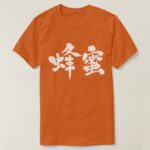
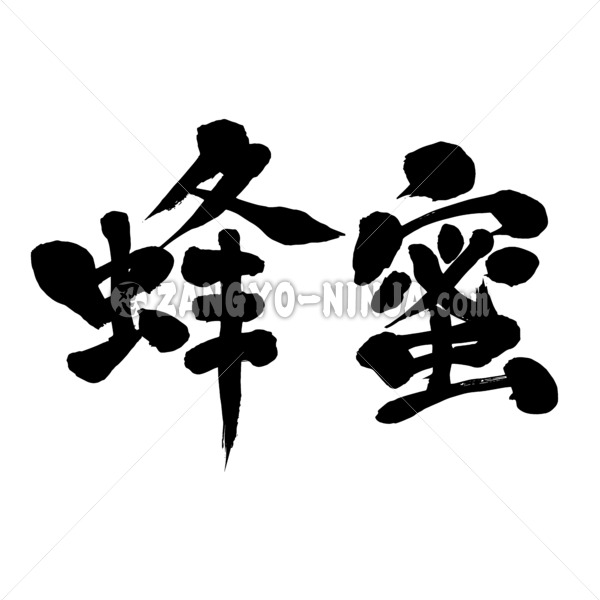
Miel en kanji

créé par un designer

$0.00$1,490.00

600x600
$0.00
1920x1920
$4.80
6000x6000
$9.80
Complet
$19.80
Complet
$980.00
Complet
$1,490.00

a sweet yellow liquid produced by bees. Japanese says “hachi mitsu”.
Honey bees fly around the fields and collect nectar from blooming flowers, store it in the hives where they live, and mature it.
Originally, honeybees collect energy sources necessary for life from flowers, store them, and eat them.
Honey’s unique taste, aroma, and color are determined by the nectar that bees collect from flowers. There are too many to count. Even with the same flower, the subtle differences in flavor depending on the location of nectar collection and the weather of the year is a proof of nature’s uniqueness.

Benefits and nutrition of honey

Honey contains water and trace nutrients, most of which are sugars.
Honey is enzymatically decomposed in the “honey stomach” where bees collect nectar, so there is no need for humans to decompose it themselves, and it can be absorbed without burdening the body.

Honey has been loved all over the world since ancient times

The history of honey is very old, and even in “Greek mythology”, the god of beekeeping appears. In cave ruins such as Spain and South Africa in BC, mural paintings of “honey hunters” who collect honey from nests can be seen. It is thought that there was a high risk of being attacked by bees in times when there were no protective clothing like now, but for ancient people, sweet and nutritious honey was a valuable food that they wanted to take even if it meant risking it. That’s right. In Europe, where beekeeping has a long history, honeybees were considered important members of the family, and in England, it is customary to report to the hive when a master dies or when a daughter gets married.
Détails techniques AI Vector, 119.8 KB
, , , , , ,

People also views for about Honey

   
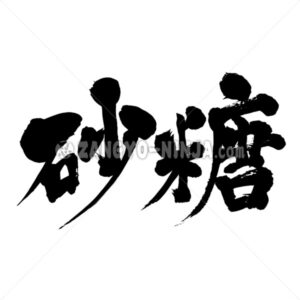
sucre en Kanji - Zangyo-Ninja

sucre en kanji

White crystals soluble in water. Sugar cane, sugar [...]
vecteur
GRATUIT~ Afficher les détails

Café en kanji

C'est l'une des boissons les plus populaires au monde [...]
vecteur
GRATUIT~ Afficher les détails
Gros buveur en Kanji - Zangyo-Ninja

Grand buveur en kanji

Un gros buveur est quelqu'un qui tient bien l'alcool [...]
vecteur
GRATUIT~ Afficher les détails
Bardane en Kanji et Hiragana, lu comme Gobo en japonais - Zangyo-Ninja

Bardane en kanji et hiragana, se prononce Gobo en japonais

Ce n'est pas une racine d'arbre. Qu'est-ce que la bardane ? Une bien [...]
vecteur
GRATUIT~ Afficher les détails
Curcuma en Kanji - Zangyo-Ninja

Curcuma en kanji

Le curcuma appartient à la famille du gingembre. Il est composé de [...]
vecteur
GRATUIT~ Afficher les détails

Œuvres recommandées par le créateur Aokage

Tanaka en Kanji - Zangyo-Ninja

Tanaka en kanji

Bonjour, Monsieur Tanaka. Voici une explication du ou [...]
vecteur
GRATUIT~ Afficher les détails
Ichiban, premier en Kanji - Zangyo-Ninja

Ichiban, premier en Kanji

Le mot « top » en japonais s'écrit de différentes manières, [...]
vecteur
GRATUIT~ Afficher les détails
Morita en Kanji, Hiragana et Katakana - Zangyo-Ninja

Morita en kanji, hiragana et katakana

Bonjour, Monsieur Morita. Voici une explication du ou [...]
vecteur
GRATUIT~ Afficher les détails
Mizuki dans le nom de famille Kanji - Zangyo-Ninja

Mizuki en kanji de nom de famille

Bonjour, Monsieur Mizuki. Voici une explication du ou [...]
vecteur
GRATUIT~ Afficher les détails
AOKAGE
1027

Aokage

Il a remporté plusieurs médailles d'or et d'argent en calligraphie japonaise (Shodo). Il adore les sushis et les sashimis. Ayant pratiqué la calligraphie depuis son enfance, son père était professeur qualifié. Aokage (青景) évoque les paysages bleus, comme la mer et le ciel d'un bleu limpide, ainsi que l'ombre bleue. L'ombre symbolise un ninja.

Les personnes joyeuses comme vous regardent aussi