

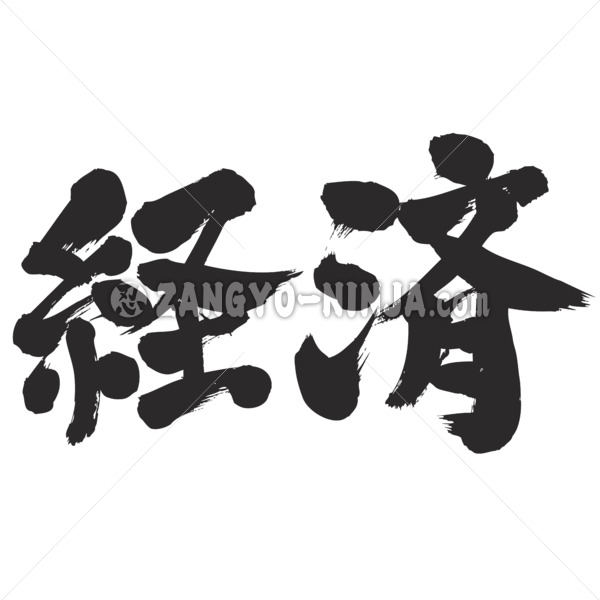

The economy is the totality of human relationships involved in the production, distribution, and consumption of material goods such as food, clothing, and shelter.
Like other animals, humans cannot survive without eating. However, the process by which we consume food is fundamentally different from that of animals. We prepare food in various ways, such as cooking it or serving it in containers, to give it a certain form. From a purely physiological standpoint, there are aspects of this process that could be considered excessive. Moreover, these excessive aspects are unrelated to the efficient consumption or conservation of food; rather, they are detrimental to those goals. This excessiveness is not limited to the process of eating. Our clothing and housing go beyond the simple necessity of protecting us from the cold or sheltering us from the rain. Attached to them are elements that transcend functionality, such as ostentation, religion/magic, aesthetics, and novelty—elements that can be collectively referred to as culture. We consume not only to satisfy physiological needs but also to fulfill cultural needs. In other words, we must eat culture, wear culture, live in culture, breathe culture, and consume culture.
This applies to both production and distribution. Production activities are not carried out out of necessity to survive, but are supported by a labor ethic that inspires a desire to work, such as the joy of completing a task, the desire to produce something better than one’s neighbors, the joy of collaboration, dedication, atonement for original sin, a sense of vocation, and a desire for conquest. Labor is also the consumption of labor values. On the other hand, activities that supply such labor values, such as the direction and supervision of labor, and the activities of shamans, religious leaders, and educators, also take on important meaning. In distribution as well, culture plays a deep role that transcends purely functional factors such as the exchange based on the concept of equivalence, the transfer of wealth in the form of taxes, dowries, and offerings, and so on. Moreover, the cultural factors at work in consumption, production, and distribution are not separate and distinct, but rather constitute a cultural system that is interconnected and forms a whole. If we consider culture as a vast, organically integrated system composed of customs, language, law, belief, politics, and technology, encompassing both immutable aspects as customs and traditions and aspects open to change, then the economy can be understood as the production, consumption, and circulation of material goods, surrounded by such a cultural system and inseparably intertwined with culture down to its minutest details.
Japanese calls “Kei zai”.













![[Kanji] Tokyo horizon long slleves T-Shirt](https://www.zangyo-ninja.com/wp-content/uploads/kanji_tokyo_horizon_long_slleves_t_shirt-white_e2877_1024-150x150.jpg)