

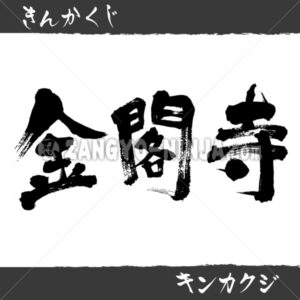
Description for Kinkaku-ji The golden World Heritage Site, Kinkaku-ji Temple. Its official name is Rokuon-ji Temple, but it is commonly known as Kinkaku-ji Temple because its most famous structure, the Shari-den Hall (Golden Pavilion), is covered in gold leaf. Located in Kita Ward, Kyoto City, it is a temple of the Rinzai sect’s Shokoku-ji … Read More
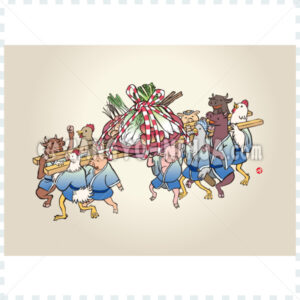
Esta é a segunda ilustração desenhada à mão. A primeira está aqui. Ela representa um festival da fertilidade. No Japão, festivais locais são realizados com frequência, principalmente no outono. É um festival para celebrar uma boa colheita, por isso acontece na época da colheita do arroz… Leia Mais
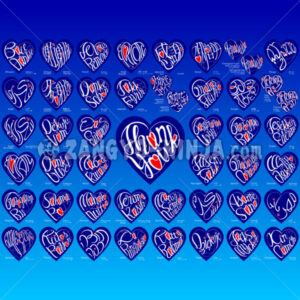
This style comes from the Manga culture If you look closely, you can see the letters slightly bulging in a heart shape. In manga, it is common to intentionally distort the lines toward the center or the character in order to make the space look wider, as if looking through a camera’s wide-angle lens, … Read More
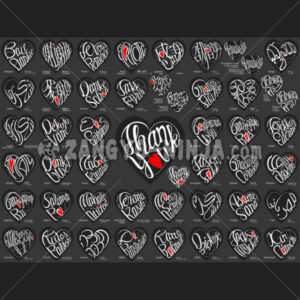

Covers approximately 5,000,000,000 people This is a heart-shaped typographic representation of the word “thank you” in 44 languages. The choice of words has been made so that the thank you in each country are polite or formal, or more emphatic than a general thank you, so that they can be used by friends, family, … Read More
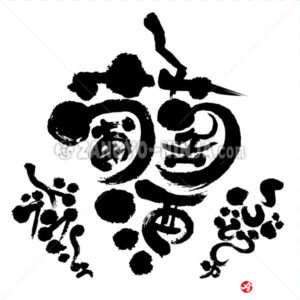
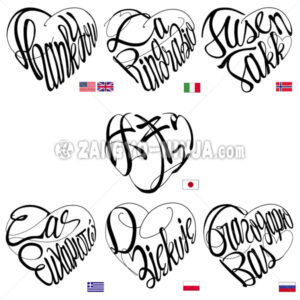
This is a typographic work that expresses the feeling of “Thank you” in the form of English, Italy, Norwegian, Polish, Greek, Russian and Japanese Katakana. The theme is “Heart of Gratitude”. The English version is styled differently The one-line style is Thank you in English. 2-line style Thank you can be found at the … Read More
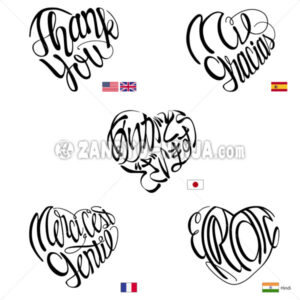
Thank you is expressed in English, Spanish, French, Indian Hindi and Japanese Hiragana as a heart-shaped writing style. And theme is “Heart of Gratitude”. It corresponds to the Japanese honorific of gratitude, “Arigatou Gozaimasu”. The basic hiragana “arigatou” is shown here, but “gozaimasu” is added after it to show respect. This is the current … Read More
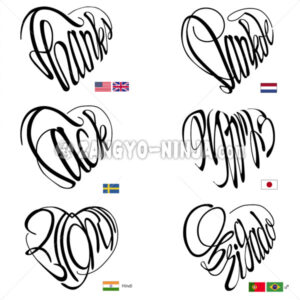
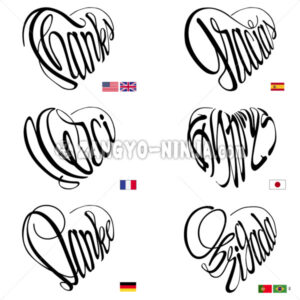
Thanks is expressed in English, Spanish, French, German, Portuguese and Japanese Hiragana as a heart-shaped writing style. And theme is “Heart of Gratitude”. The Japanese phrase “thanks” is written in a basic form. This Japanese phrase “arigatou” is the basic form of the word “thanks”. Although there are ways to write it that include … Read More
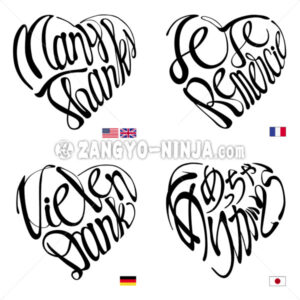
Many thanks is expressed in English, French, German, and Japanese Hiragana as a heart-shaped writing style. And theme is “Heart of Gratitude”. The Japanese phrase “many thanks” is written in a modern way In Japanese, it is “Meccha Arigatou”. This is also written entirely in hiragana. “Arigatou” is equivalent to ‘Thanks’ in English, as … Read More
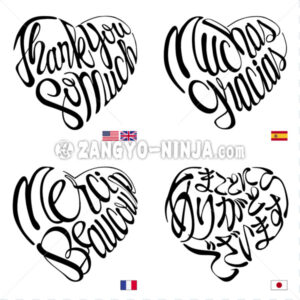
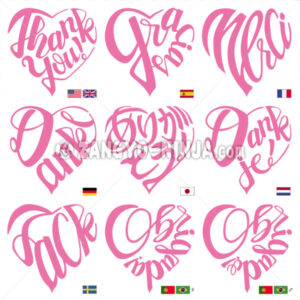
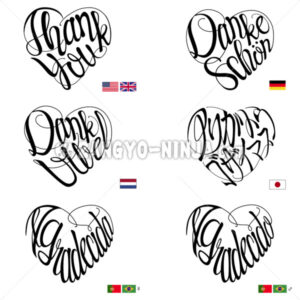
Esta é uma representação tipográfica em forma de coração da palavra "Obrigado" em inglês, espanhol, francês, alemão, hiragana japonês, holandês, sueco e português. Como o português é dividido em palavras masculinas e femininas, existem 9 tipos de designs em 8 idiomas no total. Design em forma de coração. Você já se esqueceu de agradecer quando alguém...? Leia Mais
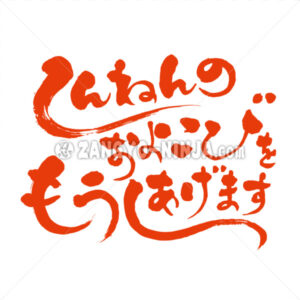
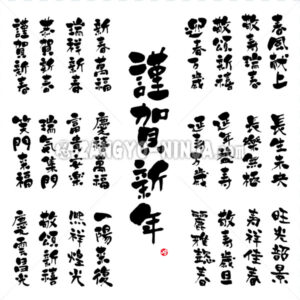
Here is an example of a New Year’s greeting. It is written in hiragana. The translation is a statement of joy for the arrival of the New Year and celebration of it. This is written in honorifics, so it is valid not only for friends but also for close elders. There is a manner … Read More
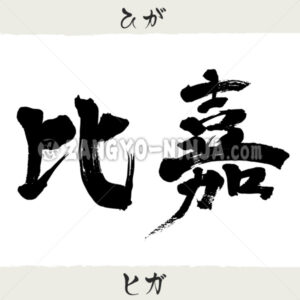
Widely distributed throughout Okinawa Prefecture, it is the most common surname in the prefecture. Derived from “bijā,” meaning east. Located in the southeastern part of Hamahiga Island, central Okinawa Island. Locally, it is collectively called Bama-Hija with the beach in the northwest. There is a rocky hill called a gusuku at an elevation of … Read More
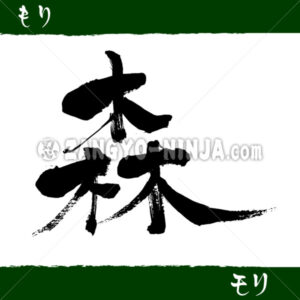
This word has two main uses. One is to mean “forest.” There is a kanji character using the character for “Ki” (木) that means “Hayashi” (林). Both “森” and ‘林’ mean “forest,” but those who realize that the different kanji characters actually mean different things are very astute. In Japanese, “林” refers to a … Read More
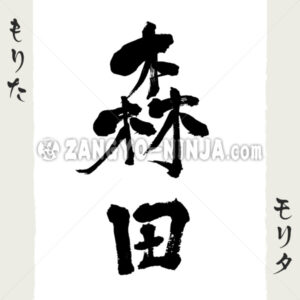
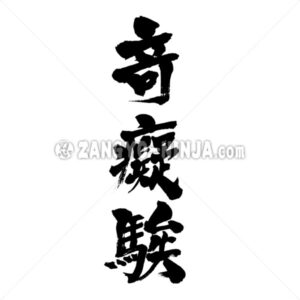
Read as Kichigai, this reading has two meanings. To be in an unusual state of mind, to speak or act in a manner that is not normal. To lose one’s mind. To be abnormally absorbed in one thing. Also, the person. Mania. This is a coined kanji character It reads “Kichigai,” originally written in … Read More
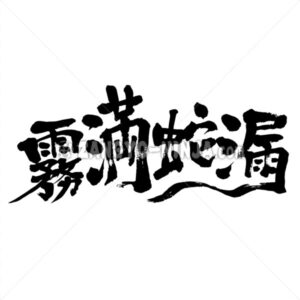
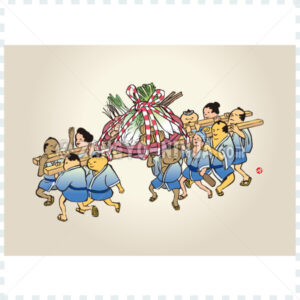
This is a contemporary illustration drawn in brushstroke style. In Japan, there are invisible dwarfs. There is a Japanese folktale about a dwarf called “Issunboushi” who exterminates demons. There is also a world fairy tale about “Seven Dwarfs” who save a princess in a castle. Where do these dwarfs come from and what do … Read More
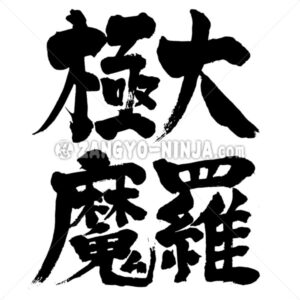
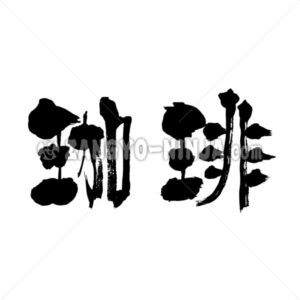
It is one of the most popular beverages in the world. It has a distinctive aroma and pleasant bitterness. Because it contains caffeine, it has a stimulant effect on the nerves. Coffee was first used as a beverage around the 6th century. Initially, coffee was popular among Arabian Muslims as a medicine to improve … Read More
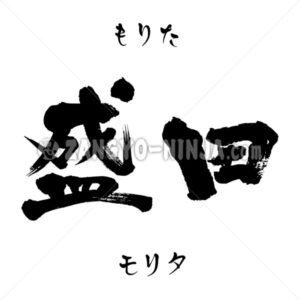
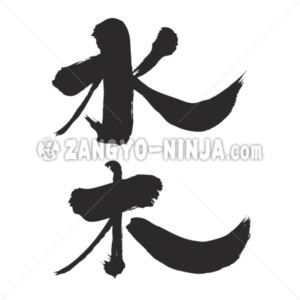
Hello, Mr. Mizuki. This is an explanation of the origin of the surname Mizuki, which is shared by your ancestors and friends. This is 2,857th surname in Japan It is said that the surnames derived from place names are very common as the origin of surnames. Mizuki is presumed to be one of them. … Read More