
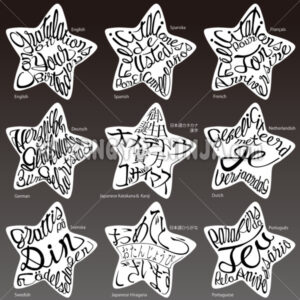
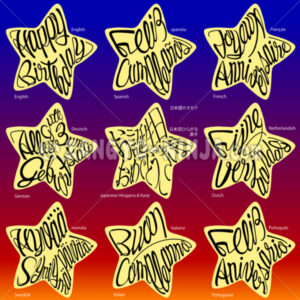
This annual celebration into a star-shaped typographic design. The phrase “Happy Birthday” is arranged in typography to form a star shape and has been translated into English, Spanish, French, Japanese, German, Dutch, Norwegian, Portuguese, and Italian. Explanation regarding Japanese. Of these nine languages, the one in the center is in Japanese. This is written … Read More
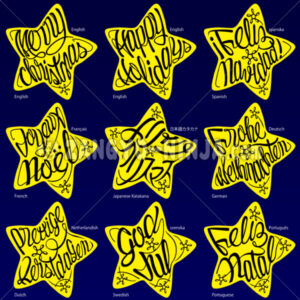
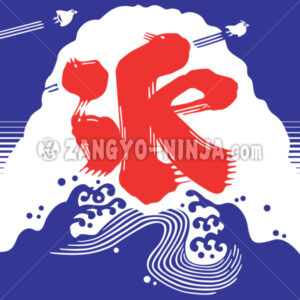
Description iCe and Natsugori(夏氷) This design is an artist’s interpretation of the traditional Japanese motif known as “Natsugori” (夏氷). When summer arrives in Japan, shops hang these flags to signal, “We’re selling shaved ice!” The word “ice” written in red at the center is actually the Japanese character for ‘ice’ (氷), rendered in bi-calligraphy—Japanese … Read More
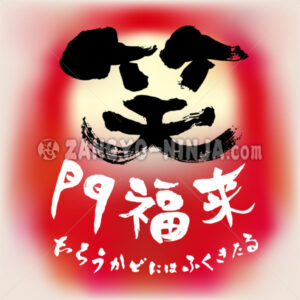
Happiness naturally comes to homes filled with laughter. This phrase originates from the proverb “Wa ra u ka do ni ha fu ku ki ta ru” (laughter brings good fortune), meaning that happiness naturally comes to households where smiles never cease. The hiragana text below this work corresponds to that proverb. Regarding the kanji … Read More
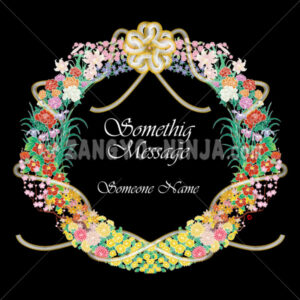
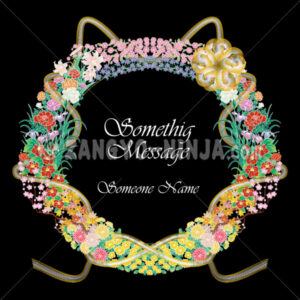
This is the original type. I previously shared a work featuring a kemomimi-style mizuhiki design, but this flower wreath is the original creation. The mizuhiki on both sides remains symmetrical and unchanged, and the flower types are mostly the same, but only the plum-shaped mizuhiki at the top center is positioned differently. This is … Read More
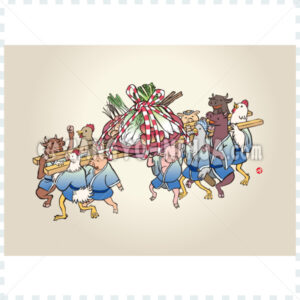
This is the second type of illustration drawn in a hand-drawn style. The first type is here. It signifies a fertility festival. In Japan, local festivals are frequently held mainly in the autumn season. It is a festival to celebrate a good harvest, so it is held in the season when the rice harvest … Read More
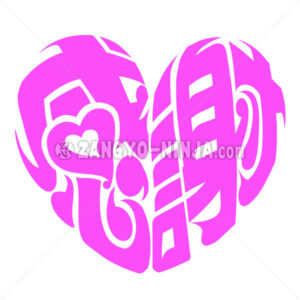
This style comes from the Manga culture If you look closely, you can see the letters slightly bulging in a heart shape. In manga, it is common to intentionally distort the lines toward the center or the character in order to make the space look wider, as if looking through a camera’s wide-angle lens, … Read More
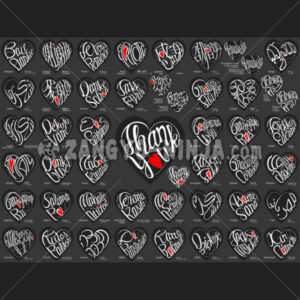
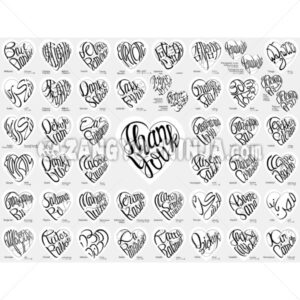
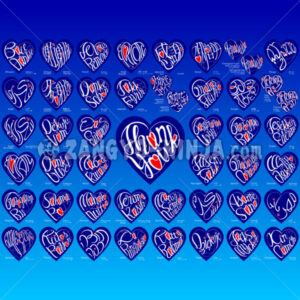
Covers approximately 5,000,000,000 people This is a heart-shaped typographic representation of the word “thank you” in 44 languages. The choice of words has been made so that the thank you in each country are polite or formal, or more emphatic than a general thank you, so that they can be used by friends, family, … Read More
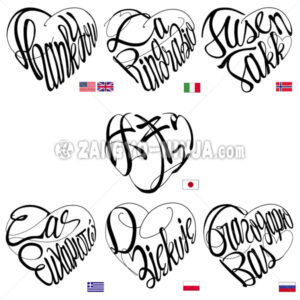
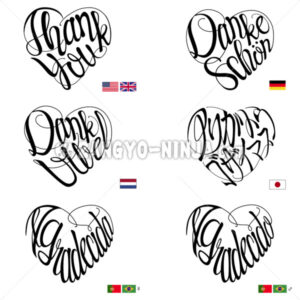
This is a typographic work that expresses the feeling of “Thank you” in the form of English, Italy, Norwegian, Polish, Greek, Russian and Japanese Katakana. The theme is “Heart of Gratitude”. The English version is styled differently The one-line style is Thank you in English. 2-line style Thank you can be found at the … Read More
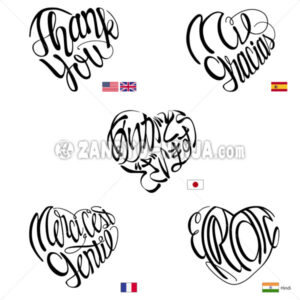
Thank you is expressed in English, Spanish, French, Indian Hindi and Japanese Hiragana as a heart-shaped writing style. And theme is “Heart of Gratitude”. It corresponds to the Japanese honorific of gratitude, “Arigatou Gozaimasu”. The basic hiragana “arigatou” is shown here, but “gozaimasu” is added after it to show respect. This is the current … Read More
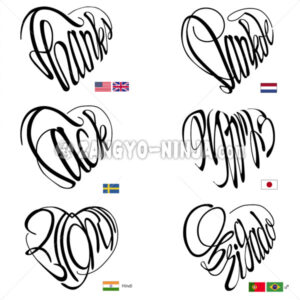
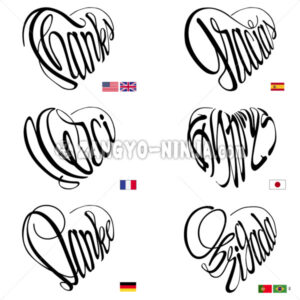
Thanks is expressed in English, Spanish, French, German, Portuguese and Japanese Hiragana as a heart-shaped writing style. And theme is “Heart of Gratitude”. The Japanese phrase “thanks” is written in a basic form. This Japanese phrase “arigatou” is the basic form of the word “thanks”. Although there are ways to write it that include … Read More
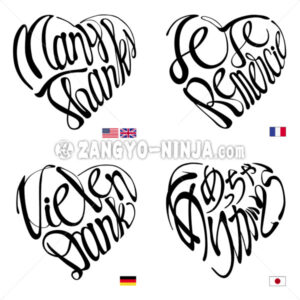
Many thanks is expressed in English, French, German, and Japanese Hiragana as a heart-shaped writing style. And theme is “Heart of Gratitude”. The Japanese phrase “many thanks” is written in a modern way In Japanese, it is “Meccha Arigatou”. This is also written entirely in hiragana. “Arigatou” is equivalent to ‘Thanks’ in English, as … Read More
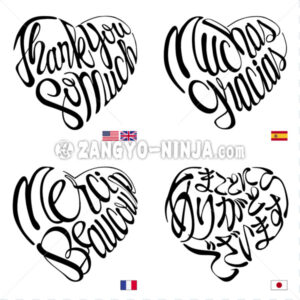
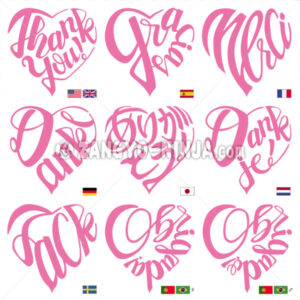
This is a heart-shaped typographic rendition of the word “Thank you” in English, Spanish, French, German, Japanese Hiragana, Dutch, Swedish, and Portuguese. Since Portuguese is divided into male and female words, there are 9 types of designs in 8 languages in total. Heart-shaped design Have you ever forgotten to say thank you when someone … Read More
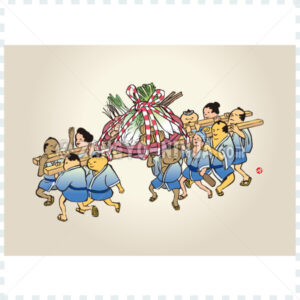
This is a contemporary illustration drawn in brushstroke style. In Japan, there are invisible dwarfs. There is a Japanese folktale about a dwarf called “Issunboushi” who exterminates demons. There is also a world fairy tale about “Seven Dwarfs” who save a princess in a castle. Where do these dwarfs come from and what do … Read More
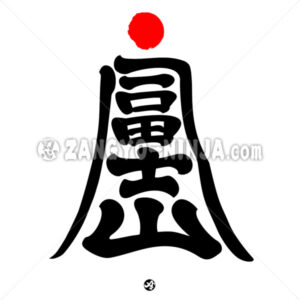
Mt.Fuji is the highest mountain in Japan. The highest point on Mt. Fuji is Kengamine, which is about 3,776 meters high. The period during which you can safely climb Mt. Fuji is two months from early July to mid-September. is. About 300,000 people will climb Mt. Fuji in the next two months. Fuji has … Read More