
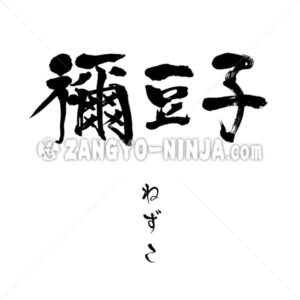
Nezuko in Kanji and Hiragana - Zangyo-Ninja

One of the names for Japanese women In Japan, names ending with characters like “子 (ko), 美 (mi), or 恵 (e)” are almost always female, though there are exceptions. Until the Showa era, names ending with “子” were common for women, but from the end of Showa through Heisei, such names became less frequent. … Read More

vector
not rated $0.00$1,490.00 Select license

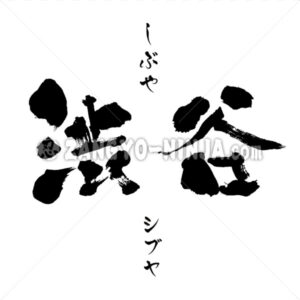
Shibuya exists both as a place name and as a surname. Shibuya as a place name (Tokyo) A ward located in the southwest of Tokyo’s 23 wards. In 1932 (Showa 7), the three towns of Shibuya, Sendagaya, and Yoyohata in Toyotama District merged to form Shibuya Ward. Regarding the station itself, in March 2013, … Read More
vector
not rated $0.00$1,490.00 Select license
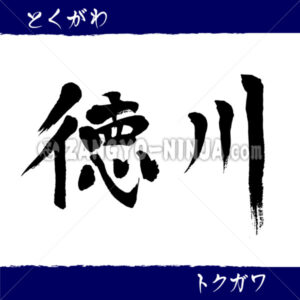
Tokugawa in Kanji, Katakana and Hiragana - Zangyo-Ninja

The surname of the shogunal family of the Edo shogunate, which lasted for approximately 260 years. Originally a local lord in Matsudaira Village, Kamo District, Mikawa Province, who used the Matsudaira surname, but changed it to Tokugawa during Ieyasu’s time. The Edo Shogunate began in 1603 (Keichō 8) when Tokugawa Ieyasu established it, and … Read More

vector
not rated $0.00$1,490.00 Select license
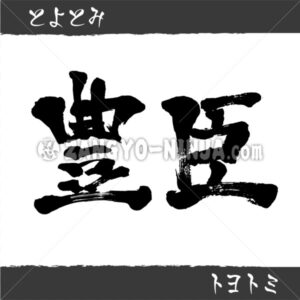
Toyotomi in Kanji, Katakana and Hiragana - Zangyo-Ninja

A daimyo family of the Azuchi-Momoyama period. It began when Hideyoshi was appointed Grand Minister of State in 1586 and granted the Toyotomi surname. History of the Toyotomi Clan Hideyoshi, originally from the Kinoshita clan of Owari Province, became a senior retainer of Oda Nobunaga and changed his surname to Hashiba in 1573 (Tenshō … Read More
vector
not rated $0.00$1,490.00 Select license
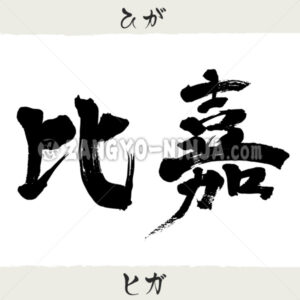
Higa in Kanji, Katakana and Hiragana - Zangyo-Ninja

Widely distributed throughout Okinawa Prefecture, it is the most common surname in the prefecture. Derived from “bijā,” meaning east. Located in the southeastern part of Hamahiga Island, central Okinawa Island. Locally, it is collectively called Bama-Hija with the beach in the northwest. There is a rocky hill called a gusuku at an elevation of … Read More

vector
not rated $0.00$1,490.00 Select license
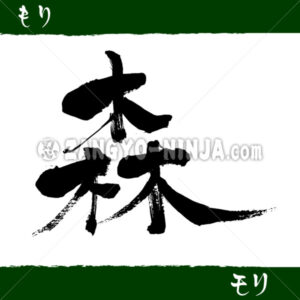
Mori means forest in Kanji, Hiragana & Katakana - Zangyo-Ninja

This word has two main uses. One is to mean “forest.” There is a kanji character using the character for “Ki” (木) that means “Hayashi” (林). Both “森” and ‘林’ mean “forest,” but those who realize that the different kanji characters actually mean different things are very astute. In Japanese, “林” refers to a … Read More
vector
not rated $0.00$1,490.00 Select license
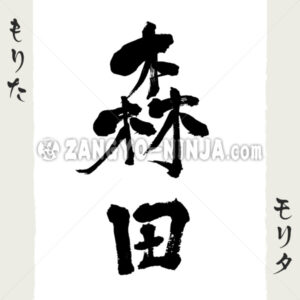
Morita in Kanji, Katakana and Hiragana - Zangyo-Ninja

Hello, Mr. Morita. This is an explanation of the origin of the surname Morita, which is shared by your ancestors and friends. The first line on the left is in hiragana, the middle line is in kanji, and the third line on the right is in katakana, all written vertically. The first kanji character, … Read More

vector
not rated $0.00$1,490.00 Select license
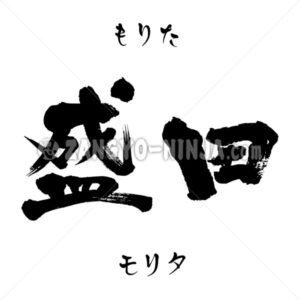
Morita in Kanji, Hiragana and Katakana - Zangyo-Ninja

Hello, Mr. Morita. This is an explanation of the origin of the surname Morita, which is shared by your ancestors and friends. Found nationwide, particularly common in Aomori, Toyama, and Tottori Prefectures. Shared lineage with the Morita clan. Derived from the auspicious character “盛” (prosperity) and “田” (field). The Morita family of Aomori Prefecture: … Read More
vector
not rated $0.00$1,490.00 Select license
Mizuki in surname Kanji - Zangyo-Ninja

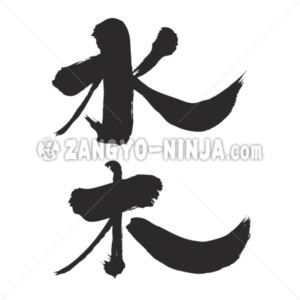
Hello, Mr. Mizuki. This is an explanation of the origin of the surname Mizuki, which is shared by your ancestors and friends. This is 2,857th surname in Japan It is said that the surnames derived from place names are very common as the origin of surnames. Mizuki is presumed to be one of them. … Read More

vector
not rated $0.00$1,490.00 Select license
Honda in Kanji and Katakana as Japanese family name - Zangyo-Ninja

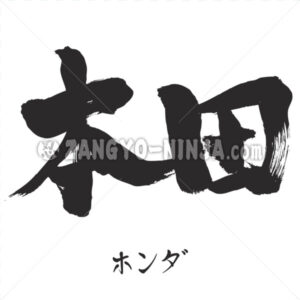
Honda is the 130th common Japanese surname. Hello, Mr. Honda. This is an explanation of the origin of the surname Honda, which is shared by your ancestors and friends. Topography. From the main rice field. It was located in the eastern part of Kagoshima Prefecture (formerly Osumi Province) during the Nanbokucho Period. It is … Read More
vector
not rated $0.00$1,490.00 Select license
Ohshiro in Kanji, Katakana and Hiragana - Zangyo-Ninja

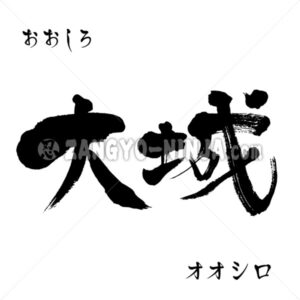
Hello, Mr. Ohshiro. This is an explanation of the origin of the surname Ohshiro, which is shared by your ancestors and friends. This is a representative surname originating from Okinawa’s castle ruins (gusuku) culture. Meaning “large castle,” it was formerly called “ufugushi” and traces its origins to ancient settlements and clan lineages (monchū) in … Read More

vector
not rated $0.00$1,490.00 Select license
Yoshida in Kanji, Katakana and Hiragana - Zangyo-Ninja

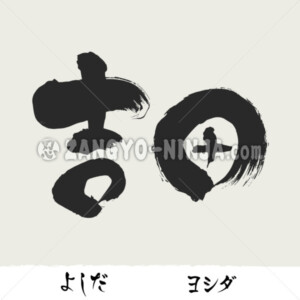
Hello, Mr. Yoshida. This is an explanation of the origin of the surname Yoshida, which is shared by your ancestors and friends. There are two main theories regarding the origin of the name: one is based on the place name, and the other is derived from “Yoshida,” which refers to rice fields with positive … Read More
vector
not rated $0.00$1,490.00 Select license
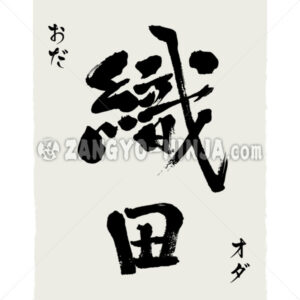
Oda in Kanji, Katakana and Hiragana - Zangyo-Ninja

A military commander of the Sengoku and Azuchi periods. The surname of Nobunaga. Son of Oda Nobuhide. His childhood name was Yoshihōshi. He succeeded to the family headship in 1551. Defeated Imagawa Yoshimoto at the Battle of Okehazama in 1560. Formed an alliance with Matsudaira Motoyasu (Tokugawa Ieyasu) of Mikawa in 1562. As a … Read More

vector
not rated $0.00$1,490.00 Select license
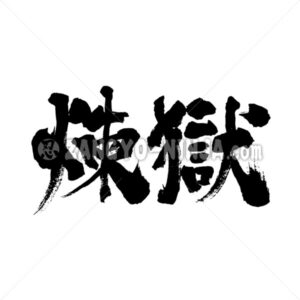
Rurgatory in Kanji, read as Rengoku in Japanese - Zangyo-Ninja

Description for Rurgatory. The “Rengoku” isn’t just a character from the manga or anime. One refers to the place or state In Christian doctrine, the place and state where souls who have committed venial sins—not severe enough to warrant hell but not yet worthy of heaven—undergo purification through suffering while awaiting the Last Judgment. … Read More
vector
not rated $0.00$1,490.00 Select license
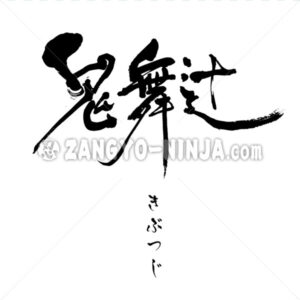
Kibutsuji in Kanji and Hiragana - Zangyo-Ninja

One of the extremely rare Japanese surnames. The name “Kibutsuji” isn’t just a character from the manga or anime. It may have existed in the past, but it is not currently found in Japanese surname databases. It might be a fictional surname, but “鬼” means demon, “舞” means dance, and ‘辻’ means crossroads. This … Read More

vector
not rated $0.00$1,490.00 Select license
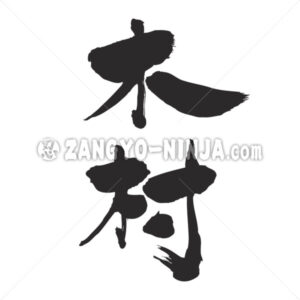
Kimura in Kanji - Zangyo-Ninja

Hello, Mr. Kimura. This is an explanation of the origin of the surname Kimura, which is shared by your ancestors and friends. Multiple theories exist regarding the origin of the name “Kimura,” including: – Deriving from a place name meaning “village where trees grow thickly” – Being related to the historically known Ashikaga clan … Read More
vector
not rated $0.00$1,490.00 Select license
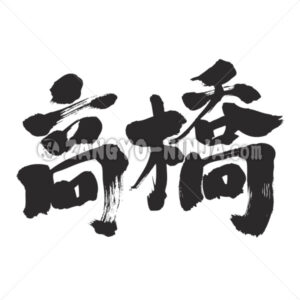
Takahashi in Kanji as Japanese family name - Zangyo-Ninja

Hello, Mr. Takahashi. This is an explanation of the origin of the surname Takahashi, which is shared by your ancestors and friends. The surname Takahashi is derived from the place name “Takahashi” in various parts of the country. “Takahashi” means “the edge of a hill” or “a high bridge”, and it was named as … Read More

vector
not rated $0.00$1,490.00 Select license
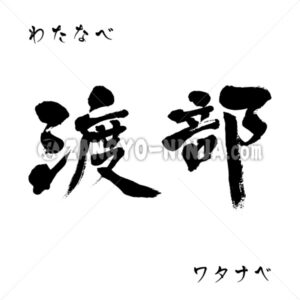
Watanabe in Kanji, Katakana and Hiragana - Zangyo-Ninja

Hello, Mr. Watanabe. This is an explanation of the origin of the surname Watanabe, which is shared by your ancestors and friends. The clan traces its ancestry to Watanabe no Tsunemori (Minamoto no Tsunemori), the foremost of the Four Heavenly Kings of Yorimitsu famed for slaying demons. Its name originates from its base at … Read More

vector
not rated $0.00$1,490.00 Select license
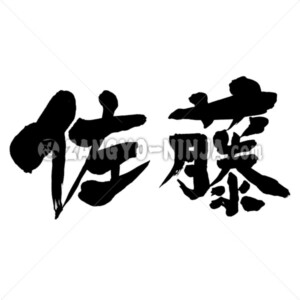
Sato in Kanji (include wisteria in kanji) - Zangyo-Ninja

Hello, Mr. Sato. This is an explanation of the origin of the surname Sato, which is shared by your ancestors and friends. The surname Sato is said to have started with the gift of Kamatari Nakatomi (Mr. Fujiwara) from Emperor Tenchi, and the name of Sato by the descendant of Hidesato Fujiwara, Kinkiyo Saemonnojo. … Read More
vector
not rated $0.00$1,490.00 Select license
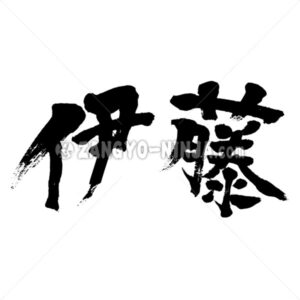
Ito in Kanji (include wisteria in kanji) - Zangyo-Ninja

Hello, Mr. Ito. This is an explanation of the origin of the surname Ito, which is shared by your ancestors and friends. It is the fifth most common surname in Japan. The surname Ito was adopted by descendants of Fujiwara no Hidesato, a warrior of the Fujiwara clan descended from Fujiwara no Kamatari (614–69), … Read More

vector
not rated $0.00$1,490.00 Select license
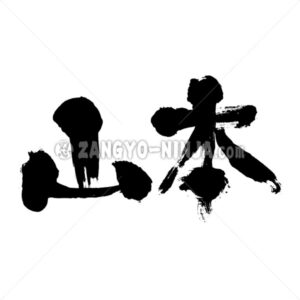
Yamamoto in Kanji - Zangyo-Ninja

Hello, Mr. Yamamoto. This is an explanation of the origin of the surname Yamamoto, which is shared by your ancestors and friends. It refers to the “foot of the mountain” and is named as a place name in such a place. And the house that settled in the Yamamoto place name gave the surname … Read More
vector
not rated $0.00$1,490.00 Select license
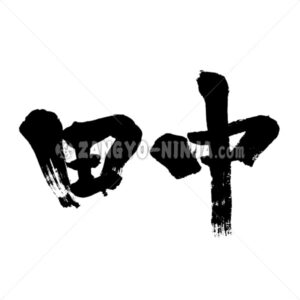
Tanaka in Kanji - Zangyo-Ninja

Hello, Mr. Tanaka. This is an explanation of the origin of the surname Tanaka, which is shared by your ancestors and friends. Tanaka is the 4th most common Japanese surname in Japan. The etymology is for rice fields and cultivation. The surname “Tanaka” originates from geographical features or place names such as “in the … Read More

vector
not rated $0.00$1,490.00 Select license
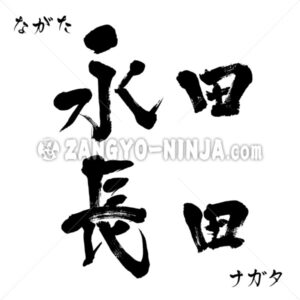
Nagata in 2 types Kanji, Katakana and Hiragana - Zangyo-Ninja

Hello, Mr. Nagata. This is an explanation of the origin of the surname Nagata, which is shared by your ancestors and friends. Their origins seem to differ depending on the era and location. Origin of this surname It is generally thought to derive from words meaning “endlessly spreading rice fields” or “long rice fields,” … Read More
vector
not rated $0.00$1,490.00 Select license
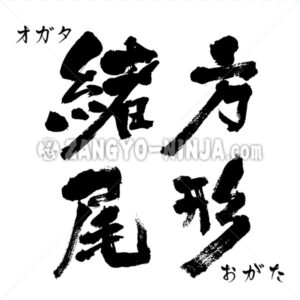
Ogata in 2 types Kanji, Katakana and Hiragana - Zangyo-Ninja

Hello, Mr. Ogata. This is an explanation of the origin of the surname Ogata, which is shared by your ancestors and friends. Their origins seem to differ depending on the era and location. Origin of this surname Originating from Ogata-cho, Bungo-Ono City, Oita Prefecture. A place name recorded during the Nara period. It is … Read More

vector
not rated $0.00$1,490.00 Select license
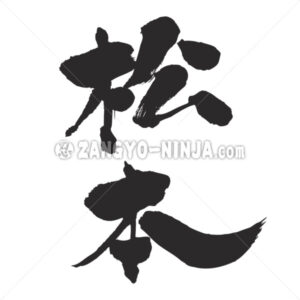
Matsumoto in Kanji - Zangyo-Ninja

1. It is a city located in the center region of Nagano prefecture. 2. Matsumoto is the 15th most common Japanese surname. There are about 620,000 people in Japan. It is as large as the population of Portland, Oregon. The most popular existing castle is Matsumoto Castle. It is located in Matsumoto City, also … Read More
vector
not rated $0.00$1,490.00 Select license
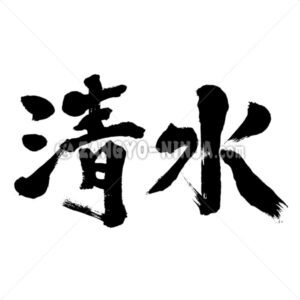
Shimizu in Kanji - Zangyo-Ninja

Hello, Mr. Shimizu. This is an explanation of the origin of the surname Shimizu, which is shared by your ancestors and friends. Shimizu is the 20th most common Japanese surname. Shimizu means “the place where Shimizu springs”. Inoue is an artificial water source, while Shimizu is a natural water source. Therefore, it is thought … Read More

vector
not rated $0.00$1,490.00 Select license
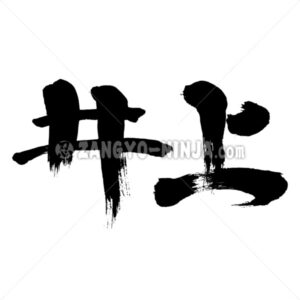
Inoue in Kanji - Zangyo-Ninja

Hello, Mr. Inoue. This is an explanation of the origin of the surname Inoue, which is shared by your ancestors and friends. Inoue is the 16th most common Japanese surname. The etymology is on the well. Around the well. Since the well was an important base of life in ancient times, it is said … Read More
vector
not rated $0.00$1,490.00 Select license
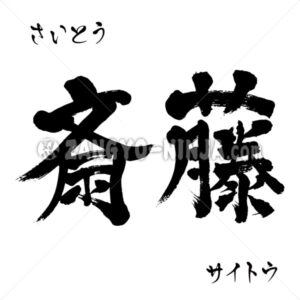
Saito in Kanji, Katakana and Hiragana - Zangyo-Ninja

Hello, Mr. Saito. This is an explanation of the origin of the surname Saito, which is shared by your ancestors and friends. Its origin dates back to the Heian period when Fujiwara no Toshihito’s son, who was appointed as the head of the Saikyū (Sacred Palace Maiden) at Ise Shrine, adopted the name “Saito” … Read More

vector
not rated $0.00$1,490.00 Select license
Alakina in Kanji - Zangyo-Ninja

This used as a phonetic symbol rather than for its meaning.

vector
not rated $0.00$1,490.00 Select license
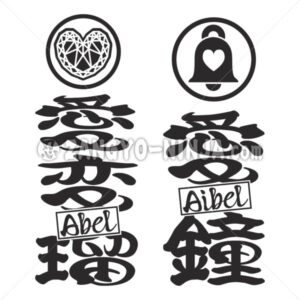
Abel and Aibel in Kanji with crest (Maru-yose font) - Zangyo-Ninja

Both are “abel” and “aibel.” These works are phonetic translations of names converted into kanji. Regarding the left work “愛” means love. “変” means transformation. “瑠” signifies a blue gemstone. It represents someone who transforms love into a blue gemstone. The upper part designs these kanji meanings as a family crest-style mark. Regarding the … Read More

vector
not rated $0.00$1,490.00 Select license
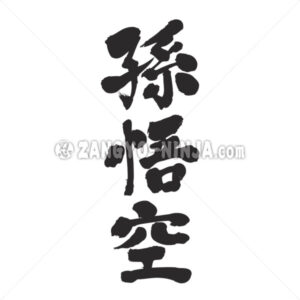
Son Goku in Kanji - Zangyo-Ninja

A monster monkey that appears in a Chinese feature novel “Saiyuki”. It was born from stone, learned the art of change and the art of Kintoun and made threatening heaven, and it was taken over by Nyorai (Budda). After that, he was rescued by Genjo Sanzo who would like to take a script to … Read More

vector
not rated $0.00$1,490.00 Select license