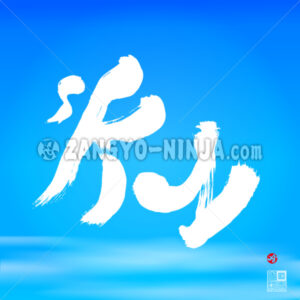
Description of this sky As stated in the title, it is written as “sky” in calligraphy, but it is also written as “空” (sky). “sky” is intentionally written in this position, at this size, and with this angle. ‘空’ is generally the kanji representing the space above the horizon, but the gas “air” that … Read More
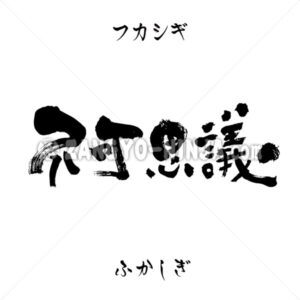
This is a Buddhist term. It means something that cannot be expressed in words or comprehended by the mind. Something beyond the reach of language or thought. Something strange and bizarre. Something vastly different from the ordinary. In modern usage, it is abbreviated to “Fushigi (不思議)” by omitting the second character “ka(可)”. Originally, it … Read More
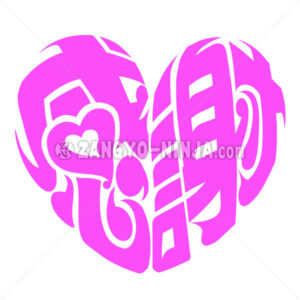
Since gratitude is something that is felt with the heart (although some say it is conveyed as a will to the head), the design is a heart-shaped version of the kanji character for gratitude. What is gratitude? Gratitude is an emotion that we feel when we recognize that we have obtained some good result, … Read More
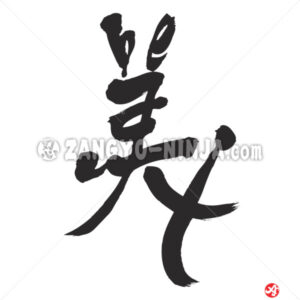
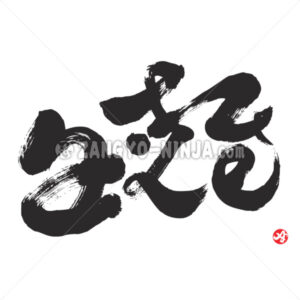
This is a calligraphy written using a method called bi-calligraphy, and it has the same meaning as the English word “alive” and the Japanese word “生きる”. It seems that many Americans today have not mastered cursive writing, and the letters of the alphabet are laid out sideways or joined together, making it a little … Read More
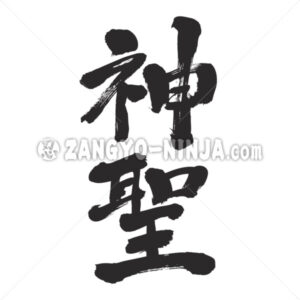
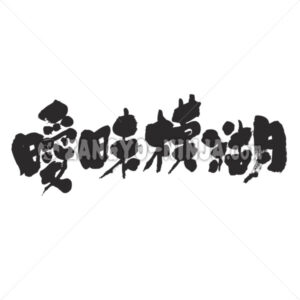
Description for Obscure as four-letter idioms It’s a word used when you’re in an ambiguous state and you’re not sure what you mean. For example, it is used when you are not sure whether a romance is about to start or whether you are just getting along as friends. Japanese said “Aimai-moko” as four … Read More
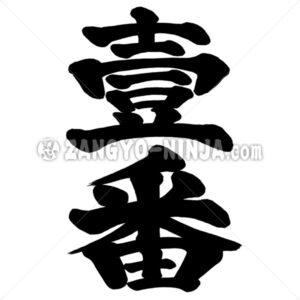
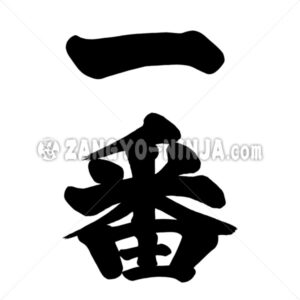
The top in Japanese has various ways of writing it, and this is one example. Description for old letters Ichiban The first word is written in traditional characters. The meaning of the first element in the series that can be counted. Number one. The first or highest in order or sequence. The beginning of … Read More
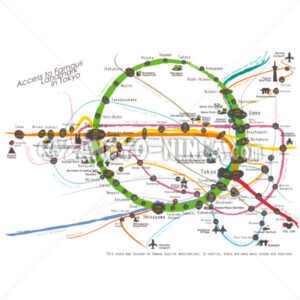
This work is a brush-style work of the lines (train and subway) to the famous landmarks of Tokyo. There are so many lines in Tokyo. The routes and transfer stations for going to the landmarks are listed. The file(vector ai file)is divided into layers by line, station name and station number for each layer. … Read More
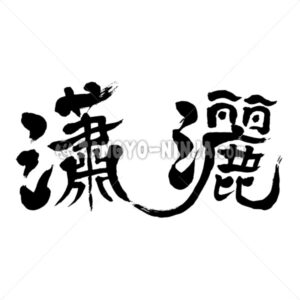
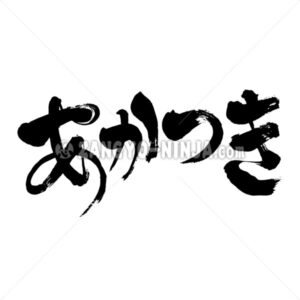
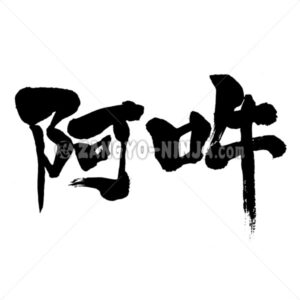
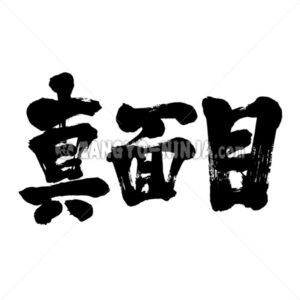
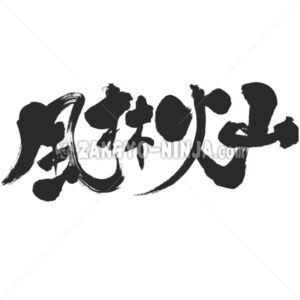
It is a popular name that is said to have been written on the flag sashimono (military flag) of Sengoku daimyo Takeda Shingen. “Furinkazan” is a word used to indicate the movement in the event of a war. When it should move as quickly like the wind, and when it should wait like a … Read More
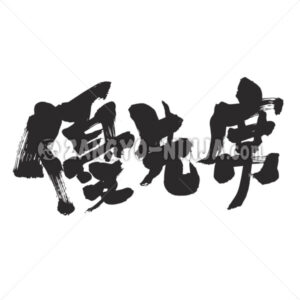
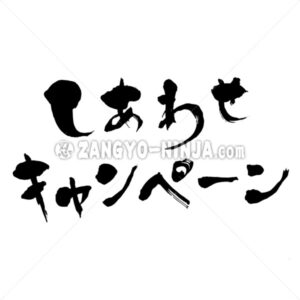
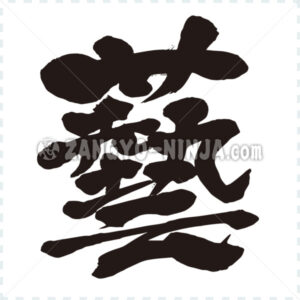
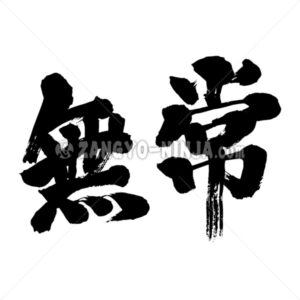
Buddhist language. Everything has changed, and it is not a permanent residence. Everything in this world changes quickly and does not stay in the same state for a while. Especially the ephemeral nature of life. Don’t know when you will die. Japanese says “Mu Jou”.
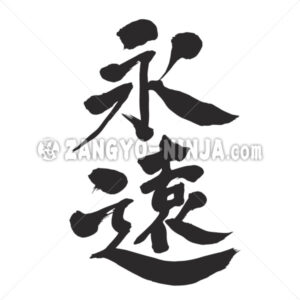
1. To endless forever. It exists beyond time. 2. A philosophy that is thought to last indefinitely while in time itself. Also, like mathematical truth, something that is known in time is considered to be valid regardless of time. Japan call “Ei en” and “To wa”.
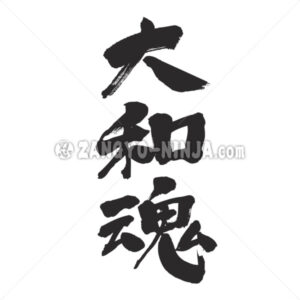
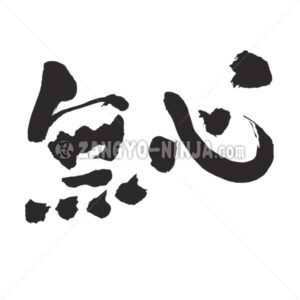
1. Be innocent. 2. There is no work of will and feelings. 3. Buddhist term 4. Waka / Renka with the aim of humor and obscene expression. 5. Lack of thought. Don’t be clever. 6. There is no heart to understand the emotion. 7. Don’t be considerate. Japan call “Mu shin”.