Home » Edo & Classic history » a view with Bonsai in Hiragana and full moon

☆彡☆★☆Christmas Sale 50% OFF!★☆★Use coupon code“6pqpuw7j”. ★Excludes ‘ITEM’ on this site. ★Valid until December 25th. ★Enter“6pqpuw7j” at checkout.☆★☆SAVE 50%★☆★☆彡

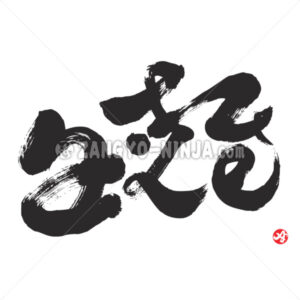
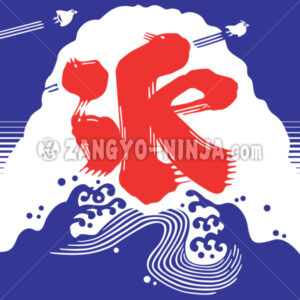
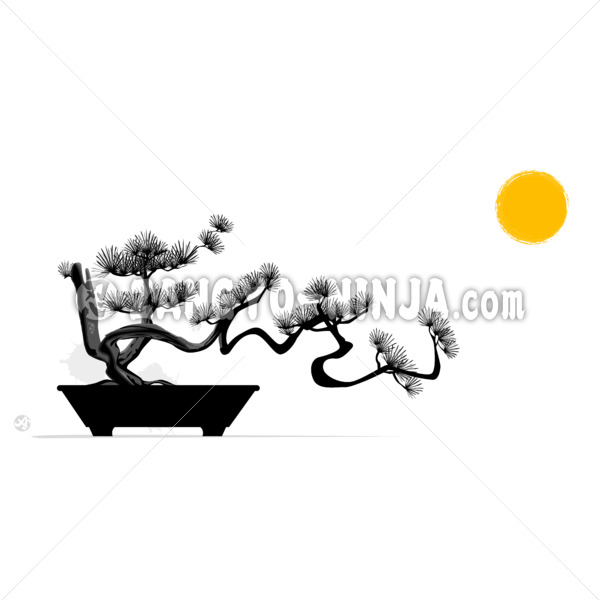
a view with Bonsai in Hiragana and full moon

created by designer

$0.00$1,490.00

600x600
$0.00
1920x1920
$4.80
6000x6000
$9.80
Full
$19.80
Full
$980.00
Full
$1,490.00

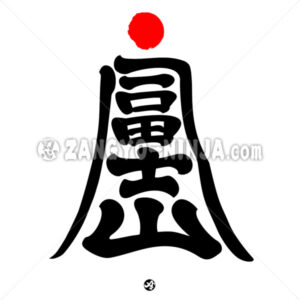
This is a vector file, but the work is drawn in an ink painting style (Suiboku Style).

In Japan, the moon and the sun are represented differently.

In this work, the yellow circle on the right side is the moon. The yellow circle drawn by foreigners is usually the sun, but in Japan, the red circle is drawn as the sun, as shown in the Japanese national flag. In Japan, the sun is usually depicted in red and the moon in yellow. This is one of the reasons why the sensitivity of the Japanese flag is slightly different from that of other countries.

Any flowers and trees can be used for bonsai.

There are no restrictions as far as flowering trees that can fit into small pots, such as plum trees, maple trees, pine trees, bamboo, broad-leaved trees, and coniferous trees. Among them, pine tree bonsai is especially famous for its characteristic of transforming into more complex shapes the more time is spent on it. Besides, it is also used as a tree of good luck in Japan, represented by the pine, bamboo, and plum trees (Shochikubai).

In the past, pine trees were used as unexpected objects

Have you ever visited a castle in Japan? Did you know that there are many pine trees planted within the castle grounds? When a castle is besieged in war, the most difficult thing is food for the soldiers and other people. It seems that pine trees were planted to provide food for the soldiers. I don’t know if they actually ate them, but they don’t seem to be tasty.
Technical Details AI Vector, 511.01 KB
, , ,

People also views for about a

   
Ginkakuji in Kanji, Katakana and Hiragana - Zangyo-Ninja

Ginkakuji in Kanji, Katakana and Hiragana

Description for Ginkaku-ji It is called Higashiyama [...]
vector
FREE~ View detail
Kaminarimon in Kanji, Katakana and Hiragana - Zangyo-Ninja

Kaminarimon in Kanji, Katakana and Hiragana

Description for Kaminarimon The name of the south g [...]
vector
FREE~ View detail

Works recommended by creator aokimono

Abel and Aibel in Kanji with crest (Maru-yose font) - Zangyo-Ninja

Abel and Aibel in Kanji with crest (Maru-yose font)

Both are “abel” and “aibel.” These works are phonet [...]
vector
FREE~ View detail
Mount Fuji - Zangyo-Ninja

Mount Fuji

Mt.Fuji is the highest mountain in Japan. The highe [...]
vector
FREE~ View detail
alive in English, Kanji and Hiragana - Zangyo-Ninja

alive in English, Kanji and Hiragana

This is a calligraphy written using a method called [...]
vector
FREE~ View detail
beauty in English, Kanji and Hiragana - Zangyo-Ninja

beauty in English, Kanji and Hiragana

This is a work in which the Japanese word “美し [...]
vector
FREE~ View detail
great in English and Hiragana - Zangyo-Ninja

great in English and Hiragana

This is a work in which the Hiragana word “すげー” and [...]
vector
FREE~ View detail
growing up in English and Kanji - Zangyo-Ninja

growing up in English and Kanji

This is a calligraphy written using a method called [...]
vector
FREE~ View detail
Avatar photo
17

aokimono

The theme of my life is Alternative Japan. This A mark is the current symbol of Aokimono. It is a mark that looks like the first letter of 51 Hiragana characters, "あ". Also "A" is the first letter in the alphabet. It's one of the alternative Japan style, called "Bi-Calligraphy" that I write Japanese in English and English in Japanese.

Good people like you are also viewing