
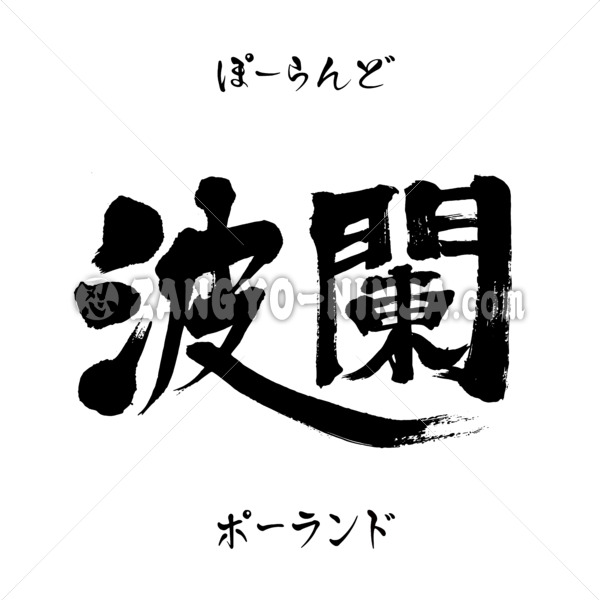
Description for Poland
During World War II, it was occupied by German forces. After the war, it joined the former Soviet bloc. In 1989, it established the first non-communist government in the socialist sphere. It joined the North Atlantic Treaty Organization (NATO) in 1999 and the European Union (EU) in 2004.
Poland has historically produced many renowned figures.
Composer Chopin was born in 1810 in the village of Żelazowa Wola, about 60 km west of Warsaw. His restored birthplace is open to the public as a tourist attraction. Warsaw’s Church of the Holy Cross is also famous for housing his heart inside a pillar.
Other notable Polish figures include Nicolaus Copernicus, who proposed the heliocentric theory, and Marie Curie, the Nobel Prize-winning physicist.
Polish Food Culture
Polish cuisine is characterized by its simplicity and rich flavor. Pierogi (Polish dumplings) served in local restaurants come filled with various ingredients like potatoes, cheese, or meat, making it fun to sample different varieties. Many dishes feature a tangy flavor from fermented foods, and bigos—a stew of sauerkraut (fermented cabbage) and meat—is uniquely Polish. Among the wide variety of soups, be sure to try żurek, made with fermented rye. For those with a sweet tooth, pączki (Polish doughnuts) are recommended.
Explanation of this calligraphy
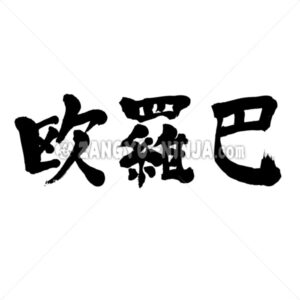
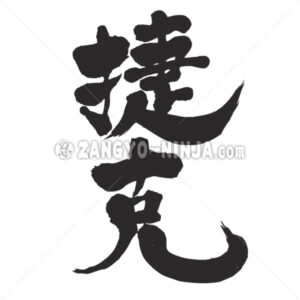
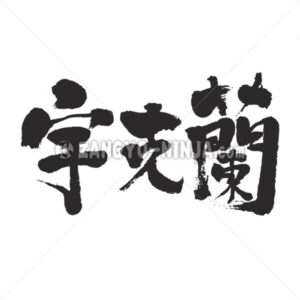
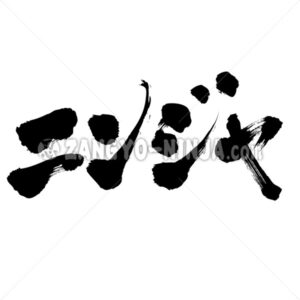
The top row is in hiragana, the middle row in kanji, and the bottom row in katakana, all written horizontally.
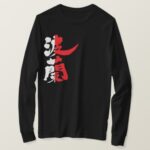
The kanji “波蘭” (Haran) appears to be a phonetic representation of “Poland.” However, it is a kanji character properly listed in dictionaries.