The Federative Republic of Brazil. Brazil is the largest country in Central and South America. It is the fifth largest country in the world by land area, following Russia, Canada, China, and the United States.
About Brazil
Within the South American continent, only Ecuador and Chile do not share a border with Brazil. It borders ten countries: French Guiana, Suriname, Guyana, Venezuela, and Colombia to the north; Uruguay and Argentina to the south; and Paraguay, Bolivia, and Peru to the west.
While Spanish is the official language in most South American countries, Brazil alone uses Portuguese as its official language.
Though nearly 90% of its territory, represented by the Amazon River basin, is tropical and covered by jungles and forests—earning it the nickname “the lungs of the world”—over 60% of its population lives in regions with a warm climate influenced by topography, sea breezes, and the Antarctic.
Brazil is synonymous with
soccer, cheerful people, the Rio Carnival, Copacabana Beach, Iguazu Falls, the
Amazon River, and churrasco. It is globally renowned as the “Kingdom of Soccer” and is also famous for its vibrant music scenes, including samba and
bossa nova. Furthermore, it is a captivating country characterized by vast natural landscapes and a rich blend of diverse cultures.
A Country with Deep Ties to Japan
Since the arrival of the first immigrant ship, the Kasato Maru, at Santos Port in 1908, approximately 250,000 Japanese people immigrated to Brazil, spanning both pre-war and post-war periods. Today, around 1.9 million Japanese Brazilians reside there, reflecting the long-standing relationship between the two nations.
Brazilian Agriculture
Brazil is one of the world’s leading agricultural powers. It boasts the world’s largest coffee bean production, primarily cultivated in the highlands. Soybeans and sugarcane production are increasing annually. These crops are exported worldwide.
Explanation of this Calligraphy
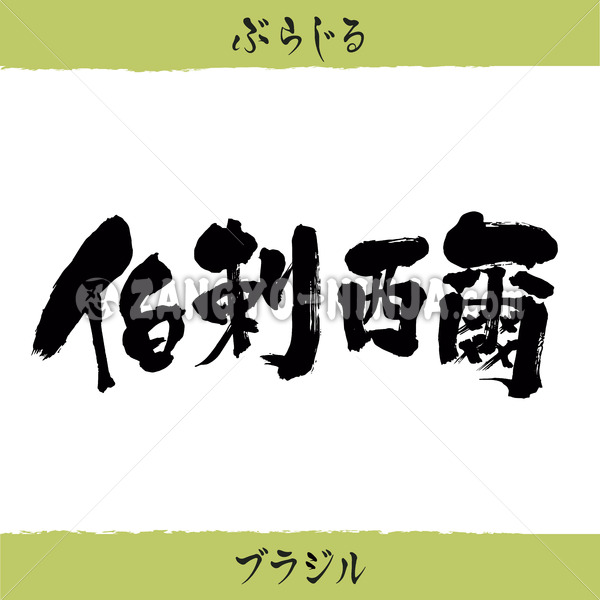
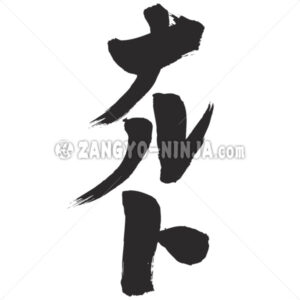
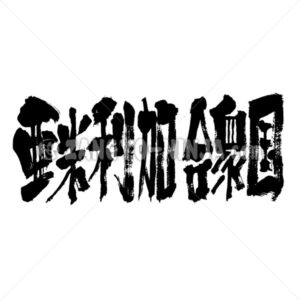
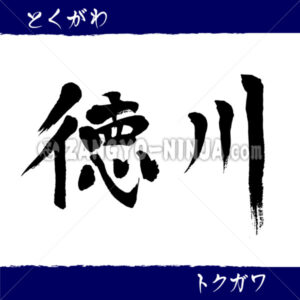
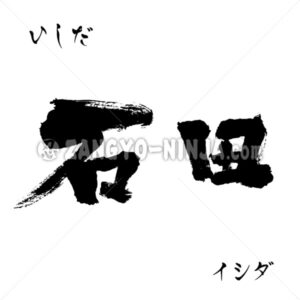
The top row is in hiragana, the middle row in kanji, and the bottom row in katakana.
The kanji appears to be phonetic spelling. Even among Japanese people, few can immediately recognize it.