
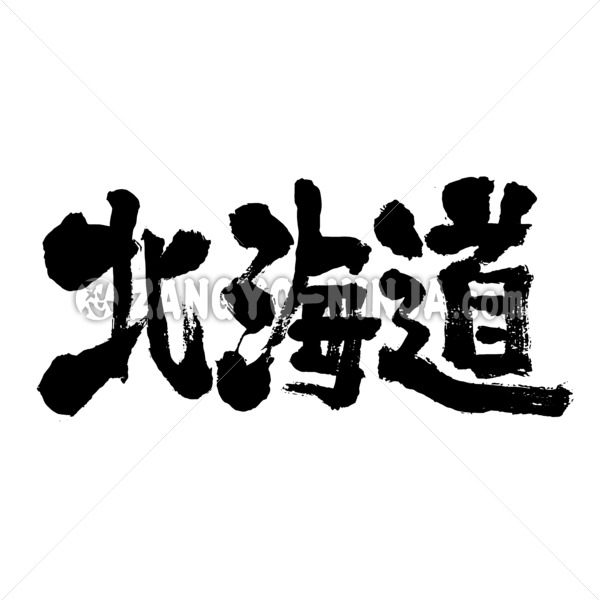
Description for Hokkaido prefecture
Hokkaido is Japan’s largest island, located in the northernmost part of the country. It accounts for more than one-fifth of Japan’s total land area and 22% of its total land mass. It is roughly the same size as the Republic of Austria in Europe.
Overview of History
It was once called Ezochi. With the enforcement of the Local Autonomy Law in 1947, the Hokkaido Government was abolished, and Hokkaido became a local government like other prefectures, which continues to this day. Additionally, since the signing of the Japan-Russia Friendship Treaty on February 7, 1855 (December 21, 1854), the area south of Etorofu Island has been recognized as Japanese territory. In 1875, under the Japan-Russia Treaty of Exchange of Sakhalin and the Kuril Islands, Japan relinquished Sakhalin, and the entire Kuril Islands became Japanese territory. Under the San Francisco Peace Treaty signed in 1951, the Japanese government is said to have renounced its rights to the Kuril Islands, but the issue of the sovereignty of the Northern Territories remains unresolved.
Climate of Hokkaido
The average annual temperature in the plains is 5–8°C, which is 7–10°C lower than in Tokyo. The lowest temperature in the inland basin is around -30°C, and Asahikawa has recorded a low of -41.0°C (in 1902). The snow cover period extends from December to March, with soil freezing particularly pronounced in the eastern regions with less snowfall, reaching up to several dozen centimeters. Drifting ice can also be observed along the Okhotsk Coast and the Nemuro Strait.
Natural Parks and Tourism
Hokkaido, with its unique climate and vast natural landscapes, is blessed with excellent tourist destinations. The Daisetsuzan, Akan, Shikotsu-Toya, Shiretoko, Rishiri-Rebun-Sarobetsu, Kushiro Marshland National Parks, Onuma, Abashiri, Niseko-Shakotan, Otaru Coast, Hidaka Mountains-Eri, Shokanbetsu, Teuri, and Yagishiri Quasi-National Parks are representative examples, with an additional 12 prefectural natural parks. In these natural parks, the scenic beauty of volcanoes, coastlines, and mountains unfolds, and many serve as tourist bases for hot spring resorts. The high number of summer tourists is a characteristic of Hokkaido tourism, and the number of visitors to remote tourist destinations continues to increase. Domestic tourists tend to visit during the fall, and recently, there has been an increase in people from outside the prefecture coming to enjoy winter recreation such as skiing and snow festivals.