

Description for Sweden
It borders Finland to the north, Norway to the west, and faces the Gulf of Bothnia and the Baltic Sea to the east.
Approximately 60% of the land area is forested. High-quality coniferous timber is exported for furniture and construction materials, and the paper and pulp industry has also developed significantly.
Climate
The climate is somewhat continental. Average monthly summer temperatures are similar across the country, around 15°C in July in the north and 17°C in the south. However, northern farmland is affected by summer frosts. Winter temperatures vary significantly: February averages around -1°C in the southwest but drops to -12°C in the north.
Tourism
Healing in Nature
Sweden’s vast wilderness soothes the soul. In northern Lapland, hike under the midnight sun in summer or stay at the world-famous Ice Hotel in winter to experience nature at its grandest.
Chasing the Aurora
Northern Sweden is renowned as a prime destination for aurora viewing. Areas around Kiruna and Abisko National Park are among the world’s best spots to witness the Northern Lights.
Culture and Design in the Cities
Cities like Stockholm and Gothenburg offer rich exposure to Swedish culture and design. Stockholm’s Old Town, Gamla Stan, preserves medieval streetscapes and hosts numerous museums showcasing modern art and design.
Cruising in the City of Water
Stockholm is often called the “Venice of the North,” a city of water. The scenery of the town crisscrossed by waterways is truly beautiful. Taking a boat tour through the city to view the town from the sea is also highly recommended.
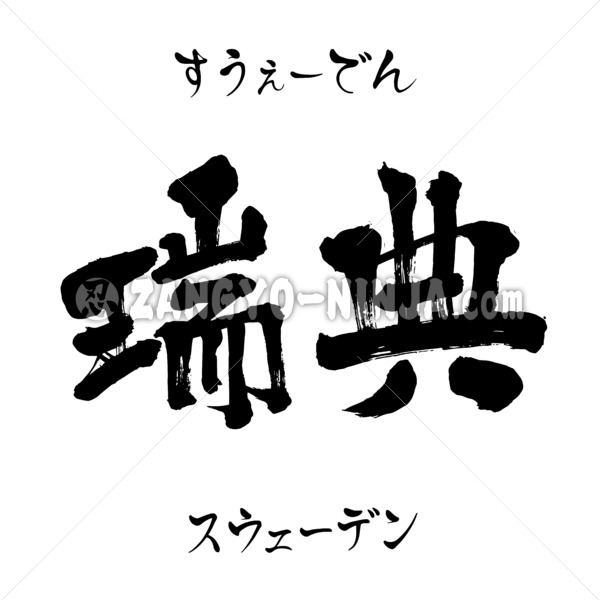
Explanation of This Calligraphy
The top row is in hiragana, the middle row in kanji, and the bottom row in katakana. All are written horizontally.