
Description for UAE
The United Arab Emirates (UAE) is a federal state located at the southeastern tip of the Arabian Peninsula, bordering the Arabian Gulf and part of the Gulf of Oman. It consists of seven emirates: Abu Dhabi, Dubai, Sharjah, Ras Al Khaimah, Fujairah, Ajman, and Umm Al Quwain. Most of the country is desert, but areas such as the Al Ain region in the eastern part of Abu Dhabi Emirate are blessed with oases and fertile soil. The climate is hot and humid along the coast and arid inland.
Dubai’s Population and Economic Development
Dubai’s population has doubled over the past decade, now accounting for one-third of the UAE’s total population. However, according to data published by the Dubai Statistics Center, while there are approximately 280,000 UAE nationals, there are approximately 3.2 million foreigners residing in Dubai. Many foreigners have immigrated from neighboring countries such as India, Pakistan, Bangladesh, and the Philippines, which is believed to be supporting Dubai’s population growth.
Until the 1960s, Dubai was a poor fishing village in the desert, surviving on the sale of pearls harvested from the Arabian Gulf. In 1966, oil was discovered off the coast of Dubai, but since Dubai’s oil reserves were limited, the ruler at the time anticipated future depletion and used the revenue from oil to develop various infrastructure projects. In particular, the development of air transportation, sea transportation, and free trade zones is said to have had a significant impact on the foundation of Dubai’s current development.
Dubai’s tourist resources and attractions
As mentioned above, commerce and tourism are now major pillars of Dubai’s economy. The city boasts a wealth of facilities designed to attract tourists from around the world, including luxurious hotels, resorts, shopping malls, and theme parks. One of the most iconic buildings is the Burj Khalifa, which opened in 2010 and stands at 828 meters tall, making it the world’s tallest skyscraper.
Description of this work
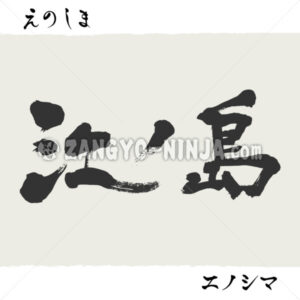
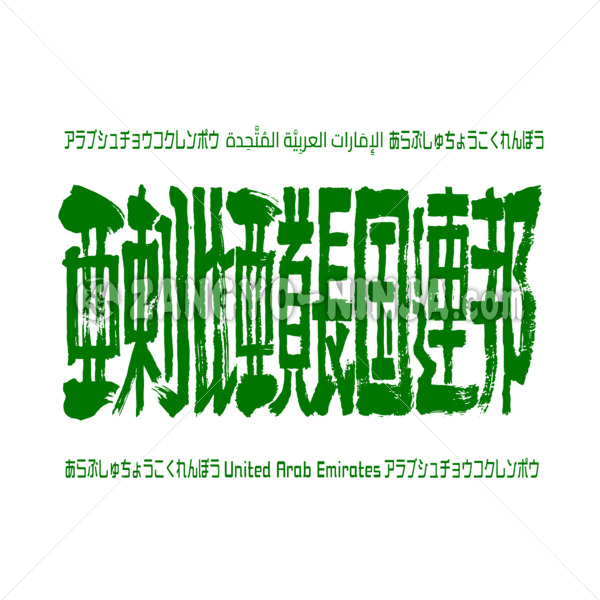
The middle section is in kanji, the upper left section is in katakana, Arabic, and hiragana, arranged in a line. The lower section is in hiragana, English, and katakana, also arranged in a line.
Arabic is written and read from right to left, but in the past, Japanese was also written from right to left. As Western culture was adopted and politics and education developed, the writing direction changed to left to right.