
Home » Celebration & Prize » Harvest Fest. Dwarfs carrying a portable shrine

☆彡☆★☆Christmas Sale 50% OFF!★☆★Use coupon code“6pqpuw7j”. ★Excludes ‘ITEM’ on this site. ★Valid until December 25th. ★Enter“6pqpuw7j” at checkout.☆★☆SAVE 50%★☆★☆彡

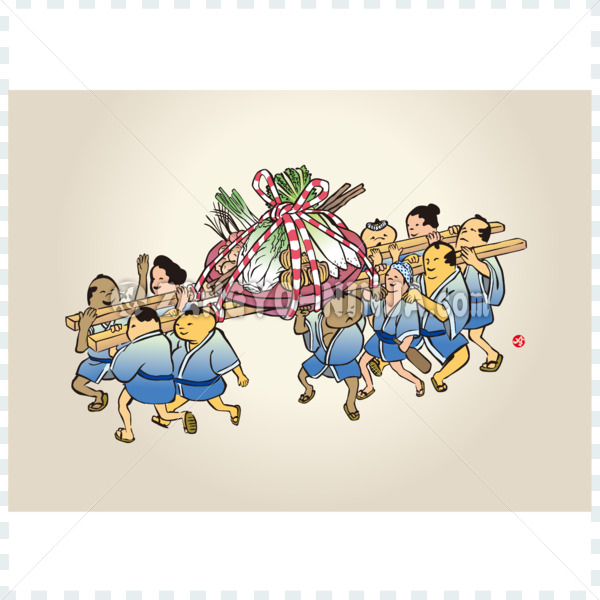
Harvest Fest. Dwarfs carrying a portable shrine

created by designer

$0.00$1,490.00

600x600
$0.00
1920x1920
$4.80
6000x6000
$9.80
Full
$19.80
Full
$980.00
Full
$1,490.00

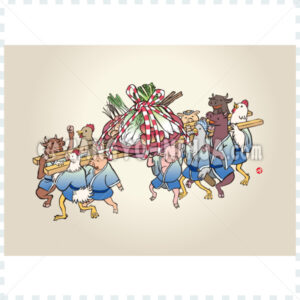
This is a contemporary illustration drawn in brushstroke style.

In Japan, there are invisible dwarfs.

There is a Japanese folktale about a dwarf called “Issunboushi” who exterminates demons. There is also a world fairy tale about “Seven Dwarfs” who save a princess in a castle. Where do these dwarfs come from and what do they do?

Japanese people love festivals.

Festivals are held everywhere in Japan. There are hundreds to thousands of festivals in Japan, most of which are held in the late summer and fall, and are mainly to thank the local gods and celebrate the harvest. In modern times, thanksgiving and celebrations have become a means to an end, and the purpose is to gather together to drink, go to stalls to buy something to eat, and so on.

This illustration is intended to be a celebration.

There is the event of carrying a Portable shrine(Mikoshi) at a festival. The Mikoshi is a kind of ritual in which a small house is built for the local deity to enter, and the people of the community carry it in procession to celebrate the good harvest of the year and wish for a bountiful harvest the next time.
The Mikoshi is made into a vegetable on a platter (burdock root, carrot, Chinese cabbage, onion, leek, radish and potato) and carried by a small person dressed in the costume of the old days to express a fantasy and nostalgic atmosphere.
Often the dwarfs are said to appear as messengers of gods or demons. Since this is meant to bring about a bountiful harvest, if we were to use a Western Gothic analogy, would they be like angels coming to us carrying wheat and bread?
Technical Details AI Vector, 1.51 MB
, , , , , ,

People also views for about Harvest

   
Win, sure of victory in Kanji - Zangyo-Ninja

Win, sure of victory in Kanji

This is a term that has become commonplace from the [...]
vector
FREE~ View detail

Ichiban, first in Kanji

Description for Ichiban The beginning of the order [...]
vector
FREE~ View detail

Works recommended by creator aokimono

Abel and Aibel in Kanji with crest (Maru-yose font) - Zangyo-Ninja

Abel and Aibel in Kanji with crest (Maru-yose font)

Both are “abel” and “aibel.” These works are phonet [...]
vector
FREE~ View detail
Mount Fuji - Zangyo-Ninja

Mount Fuji

Mt.Fuji is the highest mountain in Japan. The highe [...]
vector
FREE~ View detail
alive in English, Kanji and Hiragana - Zangyo-Ninja

alive in English, Kanji and Hiragana

This is a calligraphy written using a method called [...]
vector
FREE~ View detail
beauty in English, Kanji and Hiragana - Zangyo-Ninja

beauty in English, Kanji and Hiragana

This is a work in which the Japanese word “美し [...]
vector
FREE~ View detail
great in English and Hiragana - Zangyo-Ninja

great in English and Hiragana

This is a work in which the Hiragana word “すげー” and [...]
vector
FREE~ View detail
growing up in English and Kanji - Zangyo-Ninja

growing up in English and Kanji

This is a calligraphy written using a method called [...]
vector
FREE~ View detail

a view with Bonsai in Hiragana and full moon

This is a vector file, but the work is drawn in an [...]
vector
FREE~ View detail
Avatar photo
17

aokimono

The theme of my life is Alternative Japan. This A mark is the current symbol of Aokimono. It is a mark that looks like the first letter of 51 Hiragana characters, "あ". Also "A" is the first letter in the alphabet. It's one of the alternative Japan style, called "Bi-Calligraphy" that I write Japanese in English and English in Japanese.

Good people like you are also viewing