Description for Nepal
Nepal is a landlocked country in South Asia bordering India and China’s Tibet Autonomous Region. Its capital is Kathmandu.
Approximately 80% of its territory consists of hilly and mountainous terrain. Life in these steep landscapes is harsh, making it one of the world’s poorest nations. Agriculture is the primary industry, while tourism thrives, particularly trekking in the Himalayan range featuring peaks over 8,000 meters, including Mount Everest, the world’s highest mountain.
Approximately 80% of its territory consists of hilly and mountainous terrain. Life in these steep landscapes is harsh, making it one of the world’s poorest nations. Agriculture is the primary industry, while tourism thrives, particularly trekking in the Himalayan range featuring peaks over 8,000 meters, including Mount Everest, the world’s highest mountain.
There are 126 ethnic groups. With 123 languages spoken, many people cannot read or write Nepali. Conversely, enthusiasm for English is high; even in rural public elementary schools, many teach subjects other than Nepali in English.
The monarchy was abolished in 2008. A new constitution was promulgated in 2015, establishing a federal state divided into seven provinces.
Approximately 80% of the population is Hindu.
The most significant aspect relates to dietary practices. While the degree varies by individual, there is a tendency to avoid eating “beef, pork, seafood, and eggs.” Cows and fish are considered sacred creatures associated with Hindu deities, while pigs are viewed as impure animals.
Additionally, people may refuse food touched by others, as they believe the impurity transferred through contact. From a religious perspective, the right hand is considered sacred, while the left hand is regarded as “unclean.”
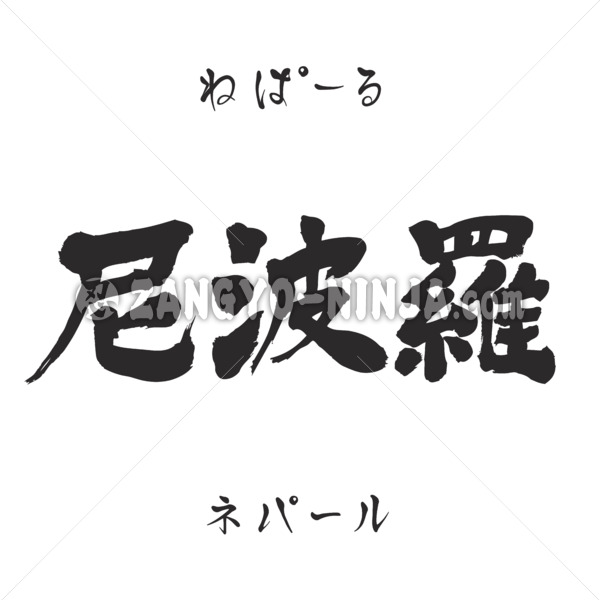
Explanation of this calligraphy
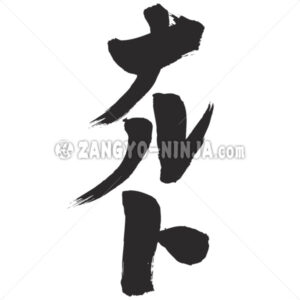
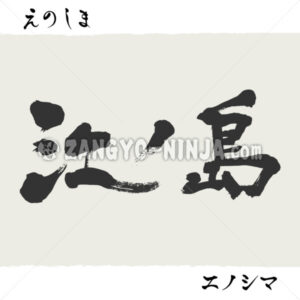
The top row is in hiragana, the middle row in kanji, and the bottom row in katakana, all written horizontally.
Regarding the kanji notation: Since Nepal is written as “尼泊尔” in Chinese, it is said that this was adapted into Japanese kanji.