

Happiness naturally comes to homes filled with laughter.
This phrase originates from the proverb “Wa ra u ka do ni ha fu ku ki ta ru” (laughter brings good fortune), meaning that happiness naturally comes to households where smiles never cease.
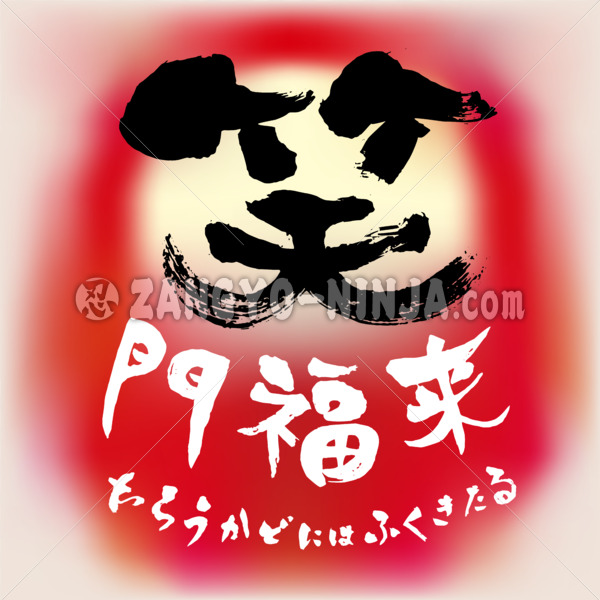
The hiragana text below this work corresponds to that proverb.
Regarding the kanji at the top of the work:
- 笑う (warau) → laughter never ceases, always smiling, always bright and cheerful
- 門 (kado) → home, family
- 来る (kitaru) → to come to us
- 福 (fuku) → happiness, fortune
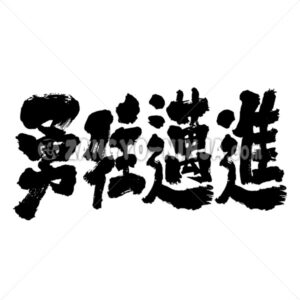
Typically, the four-character idiom is written as “笑門来福” (Warau ka do ni ha kitaru fuku). However, this work deliberately uses “笑門福来” (Warau ka do ni wa fuku kitaru) to match the proverb exactly.
(Swapping “福” and “来”.)
The reason relates to the background.
The background features a motif of the traditional Japanese craft, the Daruma doll, which conveys an impression of endurance and a stern expression. As an antithesis to modernity(or perhaps the artist’s perspective), the character “笑” (laugh) is depicted as a smiling face, while the character “福” (happiness) is arranged at the center of the Kesa(Buddhist robe).
Some craft Daruma dolls also have the character “福” written around that area. This work could also be seen as offering a business idea for Japanese souvenir shops.
For reference, the English equivalents of “笑門来福” are:
- laugh and grow fat
- Fortune comes in at the merry gate
Let’s live joyfully.