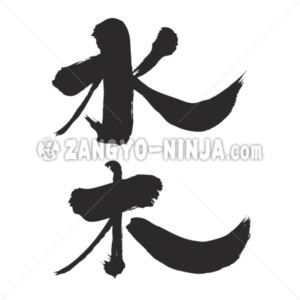



Description for UK
A constitutional monarchy located in the western part of the European continent. Its official name is the United Kingdom of Great Britain and Northern Ireland. It is a multi-ethnic nation composed of people from England, Scotland, Wales, and Northern Ireland.
Natural Features
The northern part of Great Britain is characterized by the Caledonian Mountains (Caledonian Orogeny), while the southwestern part features the Hercynian Mountains (Variscan Orogeny), both of which are folded mountain ranges. The southeastern part is dominated by hilly lowlands. Except for parts of the south, the country has been extensively glaciated, and the west coast of Scotland has many fjords. Despite its high latitude, the Gulf Stream keeps winters mild, resulting in a typical west coast climate. Precipitation is highest on the west coast and in the mountains, and lowest in the southeast.
Economy and Industry
The total working population of the United Kingdom is about 28 million, or half of the total population. Looking at the labor force composition by industry, the primary industry is significantly low (2.1% in 1996), which is a characteristic feature. Additionally, since the late 1950s, immigration from former colonies has increased, with the influx of people from Commonwealth countries surging from 600,000 in 1961 to 2.64 million in 1991, entering the labor market. In the eastern regions with low rainfall, grain farming is practiced, while horticultural agriculture, dairy farming, and extensive sheep farming are carried out in suburban areas and mountainous regions, respectively. However, the country remains highly dependent on food imports from abroad. In the mining sector, the coal industry still employs a relatively large workforce, but it has been in decline since reaching its peak in 1913. Manufacturing is the core of the UK’s industry. The iron and steel industry is concentrated in southern Wales, the northeast coast of England, Sheffield, and Scotland, while non-ferrous metals, such as aluminum, copper, lead, and zinc, are primarily produced in the Midlands region, which accounts for approximately 50% of total production. The machinery industry is an important export industry, specializing in machine tools, construction machinery, industrial engines, and textile machinery. The growth of the electrical machinery and chemical industries is also significant. Shipbuilding is concentrated in the Clyde River basin, Belfast, and the northeast and northwest of England, while automobile production is concentrated around London and the Midlands. Traditional light industries include the wool industry in Yorkshire and the textile industry in Lancashire, but the synthetic fiber industry has also made remarkable progress. Whisky, known worldwide, is a specialty of Scotland and Ireland.
The origin of this kanji
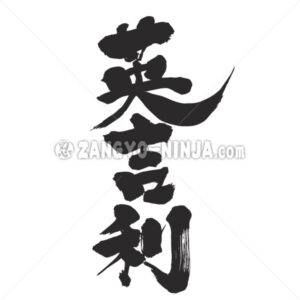
In Japan, it is called “Igirisu” instead of “England.”
Many Japanese people still do not understand that it is a composite ethnic nation.
There are two main theories. During the Warring States period, when trade with Portugal was flourishing, the Portuguese word “Inglez” was introduced to Japan. This was corrupted to ‘Igiri’ or “Iguiri,” and eventually became established as the word “Iguiri.”
Another theory suggests that the Dutch word “Engelsch” is also one of the origins of the word “Britain.” Under Dutch influence, the pronunciation “Egeres” was also used.
In either case, the kanji characters are simply a phonetic representation of the word.