



A general term for mammals of the genus Camelus in the family Camelidae. They stand over two meters tall. They have long necks and legs, and no horns. They have a hump on their back where they store fat to endure food shortages. Their nostrils open and close freely, and their feet have soft … Read More


A generic name for all mammals in the order Primates, excluding the hominids. In zoology, it is the generic term for all primates. They are the second most advanced animals after humans, and many of them are highly intelligent with a well-developed cerebrum, vision (including color vision), and hearing. They have a bare face, … Read More


Description for Toad Generic name for frogs belonging to the amphibian class Anura order Toad family. Also called gama. The most widely distributed species in the world is the Bufo genus, with about 180 species worldwide, excluding Australia. They are generally large, with thick, dry skin. The head is large and has a pair … Read More


Description for That refreshing and pleasant climate of fall as four-letter idioms In autumn, the sky is clear and the weather is pleasant, which means that appetite increases and horses grow fatter. When a migratory high pressure system that grows on the continent gently covers the vicinity of Japan, dry and refreshing air spreads. … Read More


Salmonid fish. It reaches a total length of about 1 meter. The body is a slightly elongated spindle shape. There is a greasy fin. The body color is blue-gray on the back and silvery white on the abdomen, but during the breeding season, the dorsal and lateral parts of the body turn dark green-brown, … Read More




Like snails, terrestrial shellfish. It has lungs and is capable of air breathing. Shellfish are degenerated but definite shellfish. Eating habits vary considerably, from those that eat plant-based foods to those that attack other slugs and earthworms, and those that catch carcasses of animals. Japanese says “Na me ku ji”.


Bovid mammals. Livestock are domesticated goats that live in rocky mountains in West Asia. Similar to sheep, but with long necks and many males and females with horns, males have long-haired tufts on their chin. Generally, the properties are in warm order and form a flock. You can eat foliage and keep it even … Read More


1. There is a fine brown-brown pattern throughout, and the beak is small, but the mouth is large when opened, and has long bristle around it. At night, prey on insects while flying, squeaks with a quick mouth, and stops parallel to the branches. Distributed in southern Asia. 2. A word used mainly in … Read More

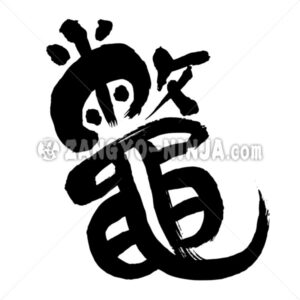
A type of turtle that lives in rivers, lakes, and swamps. It inhabits rivers throughout Japan, except Hokkaido, the Korean Peninsula, China, and the eastern Indochina Peninsula. It has a soft, flat shell about 20-40cm in length. The edible history is old, and it is said that there was even a government office that … Read More


One of the most evolved vertebrates. There is a name for suckling because a female secretes milk from the mammary gland and thereby raises a child. The body is covered with hair, sometimes with scales, and sweat and fat glands are developed. The limbs are usually well developed. Japan call “Ho nyu rui”.


Generic term for primates. Monkeys, including humans. They usually have five fingers on their hands and feet, the first can face the other four to grab things, and most have flat nails. I walk with my feet on the ground to the heel. The eyes are both facing side by side and can be … Read More


In general, they have a slender body suitable for tree life, but some of them that live on the ground are fat because they are fat. The tail is long and covered with bushy hair. Many are diurnal and eat nuts. Japanese says “lis” and read “kuri nezumi” in this Kanji.


Mandock fish. Local names such as ukigi and quinumbo. It reaches 3m in total length. The body is side-folded, and the caudal fin is degenerated in folds and called the helm. Distributed in the warm waters of the world, swim with the sea in the back of the sea. Sometimes I lie down on … Read More


It is a fictional human being other than human beings living in the underground space. It appears in many science fiction works, etc., and also appears in lore, but has not been proven to exist. Furthermore, the people living in the space created in the underground space are not generally referred to as the … Read More