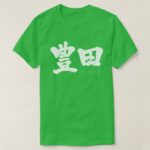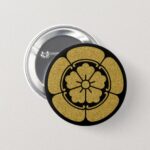


A military commander of the Sengoku and Azuchi periods. The surname of Nobunaga.
Son of Oda Nobuhide. His childhood name was Yoshihōshi. He succeeded to the family headship in 1551. Defeated Imagawa Yoshimoto at the Battle of Okehazama in 1560. Formed an alliance with Matsudaira Motoyasu (Tokugawa Ieyasu) of Mikawa in 1562. As a first step toward unifying the realm, he destroyed the Saito clan of Mino in 1567, renamed Inabayama Castle as Gifu Castle, and entered Kyoto the following year supporting Ashikaga Yoshiaki. However, discord with Yoshiaki led to his expulsion in 1573. Meanwhile, he defeated the Asai and Asakura clans at the Battle of Anegawa (1570), burned down Enryaku-ji Temple (1571), suppressed the Ikko uprising in Nagashima and Kōfuku-ji Temple, and defeated the Takeda army at the Battle of Nagashino in 1575. In 1576, he built Azuchi Castle, solidifying the foundation of Azuchi-Momoyama culture and incorporating Christian elements, advancing the establishment of a unified government. Yet, his achievements remained unfinished when he was forced to commit seppuku at Honno-ji Temple by Akechi Mitsuhide.
Hello, Mr. Oda. This is an explanation of the origin of the surname Oda, which is shared by your ancestors and friends.
The Oda clan traces its ancestry to the wife of Taira no Sukemori, who drowned himself at Dan-no-ura. She fled to Tsuda Manor in Ōmi Province with their orphaned son, Chikamasa. After Chikamasa grew up, he became the adopted son of a priest at the Oda Sword Shrine in Oda Manor, Tsuruga District, Echizen Province, and took the name Oda.
The surname Oda is found nationwide, but the pronunciation “Orita” appears primarily in western Japan, centered around Hyogo Prefecture.
In Japan’s nationwide surname rankings, it is 608th, with approximately 30,000 people bearing the surname Oda.
Explanation of this calligraphy
The left side is hiragana, the center is kanji, and the right side is katakana, all written vertically.