
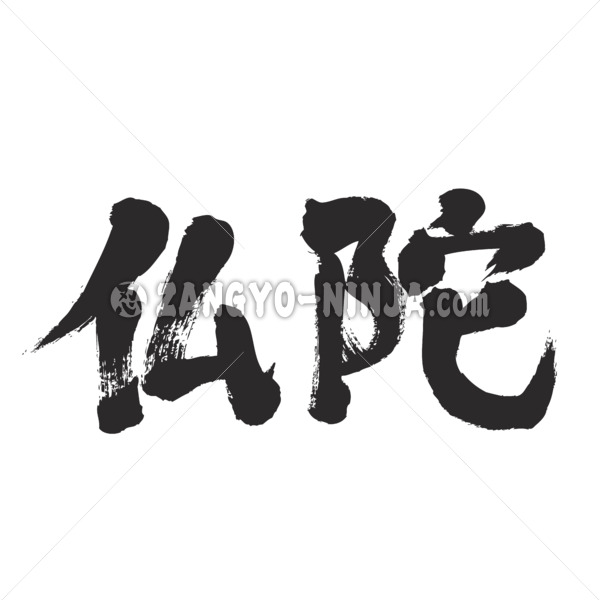

It represents someone who has attained enlightenment.
The term “Buddha” is not a proper noun, but rather means “enlightened one” or “one who has attained enlightenment.” Most people think that Shakyamuni Buddha is the Buddha, but this is not the case.
In Japan, before the Meiji period, the term “Buddha” was not used, and instead, only the single character ‘仏’ (Buddha) was used, which was read as “hotoke.”
The etymology and history of Buddha
The term “Buddha” is a transcription of the Sanskrit word “buddha,” and neither “Buddha” nor ‘dha’ originally had any meaning of their own. The original meaning is “the enlightened one,” or “one who has attained enlightenment.” In India, the term was originally used across various religions, but since Shakyamuni Gautama himself attained enlightenment, he was called Buddha. Additionally, since the most important aspect of Gautama’s teachings was enlightenment, he likely came to exclusively hold the title of Buddha. Thus, it originally represented the personality of the founder of the religion. After his death, the spirit of his teachings was passed down, and he was deified. Later, his compassionate side was particularly emphasized. In Japan, a dualistic coexistence between the ancient gods (Shinto) and the Buddha brought from India was established.