
Home » Places & Landmark » Japan » Shukubo means Staying Overnight at Shrines and Temples in Kanji and Katakana

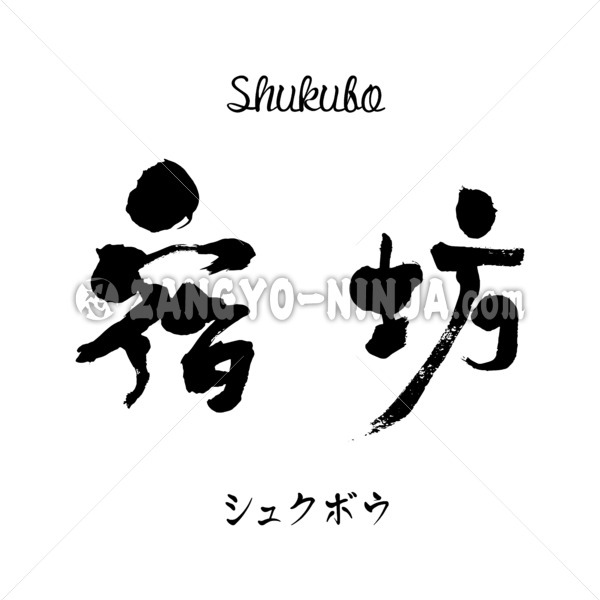
Shukubo means Staying Overnight at Shrines and Temples in Kanji and Katakana

$0.00$1,490.00

600x600
$0.00
1920x1920
$4.80
6000x6000
$9.80
Full
$19.80
Full
$980.00
Full
$1,490.00
Categories: ,

These are lodging facilities located within shrines and temples. Originally intended for monks and worshippers, they are now popular among general tourists as places where they can easily stay overnight and experience shojin ryori (vegetarian Buddhist cuisine) and traditional culture in a unique, out-of-the-ordinary setting.

Many shukubo accept online reservations.

Even the general public can book and stay at them just as they would at a hotel or ryokan while traveling.
The major difference is that you can “experience living traditions and culture firsthand.” The morning after staying at a shukubo, many temples hold morning services (kin’gyō). Activities such as copying sutras, zazen meditation, and listening to talks by monks are experiences unique to staying at a shukubo.

Differences from Hotels and Ryokans

Purpose: Unlike general lodging facilities, which primarily aim to provide comfort, shukubo are places designed to allow guests to experience the culture and spirituality of temples and shrines and to purify both body and mind.
Facilities: While many shukubo have shared restrooms and baths, an increasing number have been renovated to ensure a comfortable stay and are now equipped with amenities such as Wi-Fi.
Etiquette: As temples and shrines are sacred places, curfews may be set early, and guests are expected to behave with discretion.

Technical Details AI Vector, 166.5 KB
, , , ,

People also views for about Shukubo

   
Naruto wrote by vertical in Katakana - Zangyo-Ninja

Naruto wrote by vertical in Katakana

This is an explanation of Naruto in Japan. It’ [...]
vector
FREE~ View detail
Mount Takao in Kanji, Katakana and Hiragana - Zangyo-Ninja

Mount Takao in Kanji, Katakana and Hiragana

A mountain awarded three Michelin stars Mt. Takao i [...]
vector
FREE~ View detail
USA (United States of America) in Kanji - Zangyo-Ninja

USA (United States of America) in Kanji

The United States of America (USA), commonly referr [...]
vector
FREE~ View detail
Matsumoto in Kanji - Zangyo-Ninja

Matsumoto in Kanji

1. It is a city located in the center region of Nag [...]
vector
FREE~ View detail
Taiwan in Kanji - Zangyo-Ninja

Taiwan in Kanji

It is located 150 kilometers southeast of Fujian Pr [...]
vector
FREE~ View detail

Works recommended by creator Aokage

Tanaka in Kanji - Zangyo-Ninja

Tanaka in Kanji

Hello, Mr. Tanaka. This is an explanation of the or [...]
vector
FREE~ View detail
Mizuki in surname Kanji - Zangyo-Ninja

Mizuki in surname Kanji

Hello, Mr. Mizuki. This is an explanation of the or [...]
vector
FREE~ View detail

Coffee in Kanji

It is one of the most popular beverages in the worl [...]
vector
FREE~ View detail
eccentric, unprecedented in Kanji - Zangyo-Ninja

eccentric, unprecedented in Kanji

Doing things that no one has ever done. Breaking th [...]
vector
FREE~ View detail
tough guy in Kanji - Zangyo-Ninja

tough guy in Kanji

The kanji character “猛者” can be roughly translated [...]
vector
FREE~ View detail
Morita in Kanji, Katakana and Hiragana - Zangyo-Ninja

Morita in Kanji, Katakana and Hiragana

Hello, Mr. Morita. This is an explanation of the or [...]
vector
FREE~ View detail
AOKAGE
1040

Aokage

He won several gold and silver awards in Japanese-calligraphy (Shodo). He loves Sushi and Sashimi. Having practiced calligraphy since childhood, his father was qualified as a teacher. Aokage(青景) comes from the blue landscape like the sea, the clear blue sky. And the blue shadow. Shadow means a ninja.

People as smart as you are also looking at