
Which Ueno do you want to know about?
One is Ueno as a place name.
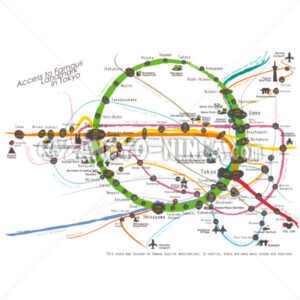
Japan’s most famous Ueno is located in Taito Ward, Tokyo. It’s the subcenter of Ueno, centered around the town name or Ueno Station.
Adjacent to Ueno Station, Ueno Park features art museums, history museums, Shinobazu Pond, temples with five-story pagodas, and Ueno Zoo. Ueno Park is also a popular spot famous for its cherry blossoms. Along the railroad tracks lies the bustling “Ueno Ameyoko Shopping Street,” lined with lively shops where vendors’ unique calls echo, drawing large crowds. Even Japanese people sometimes struggle to understand these calls.
The other is Ueno as a surname.
The most widely accepted theory suggests this surname originated from the topography, meaning “a field with a good view.” It is widely distributed nationwide, particularly common around Moka City in Tochigi Prefecture, Kagoshima City, Kitakyushu City, and Fukuoka City.
Other theories suggest origins from place names. For example, the Ueno clan of Mikawa traces its roots to Ueno in Mikawa Province’s Hekikai District (present-day Ueno, Toyota City, Aichi Prefecture). They were a branch of the Ashikaga clan, descendants of the Seiwa Genji, with Ashikaga Yoshimune adopting the Ueno surname.
Approximately 190,000 people in Japan bear the Ueno surname.
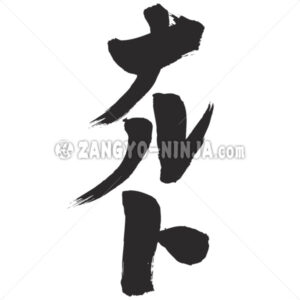
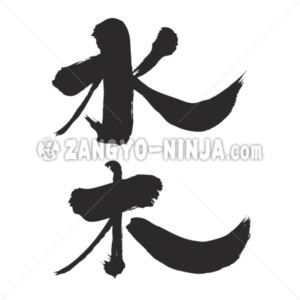
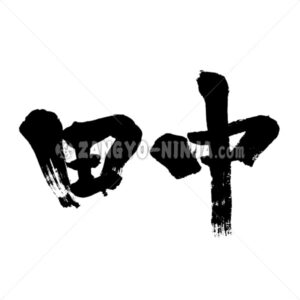
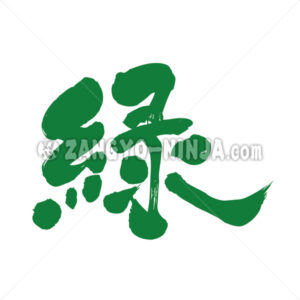
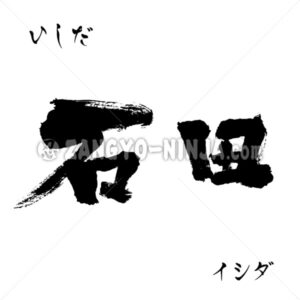
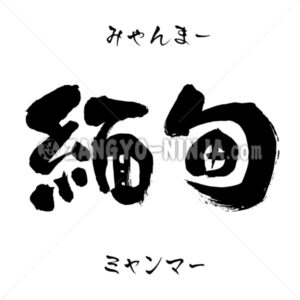
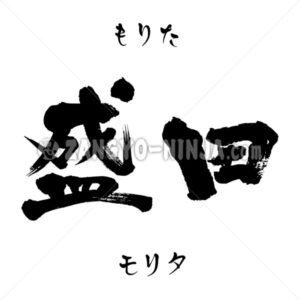
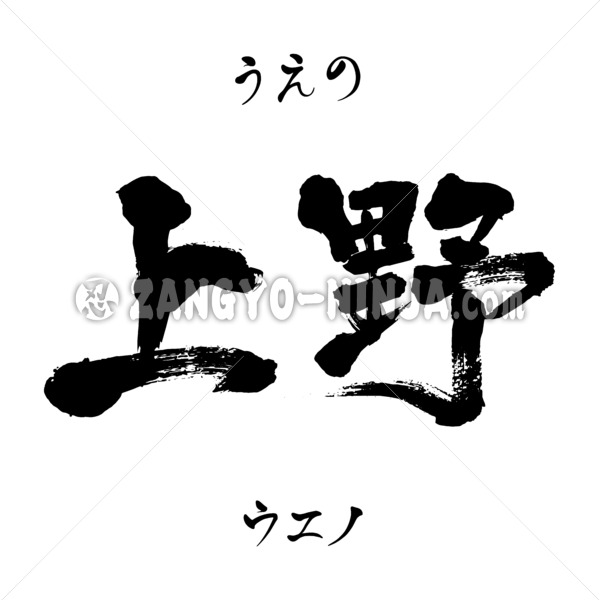
Explanation of this calligraphy
The top row is in hiragana, the middle row in kanji, and the bottom row in katakana, all written horizontally.
The kanji can be read not only as “Ueno” but also as “Uwano, Kamino, Agano, Kozuke, Kono, Ageno, Kamimoro”.