
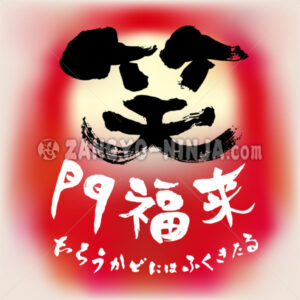
Happiness naturally comes to homes filled with laughter. This phrase originates from the proverb “Wa ra u ka do ni ha fu ku ki ta ru” (laughter brings good fortune), meaning that happiness naturally comes to households where smiles never cease. The hiragana text below this work corresponds to that proverb. Regarding the kanji … Read More


This work contains one heart per language. In 44 languages, the word thank you is formal or polite, or more emphatic than a general thank you, making it a word choice that can be used with family, friends, and others who are not close to you. Kokoro is Japanese for “心”, a word that … Read More

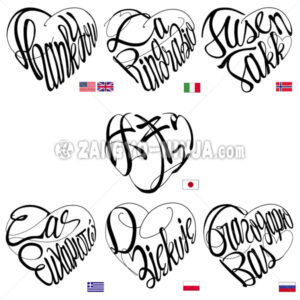
This is a typographic work that expresses the feeling of “Thank you” in the form of English, Italy, Norwegian, Polish, Greek, Russian and Japanese Katakana. The theme is “Heart of Gratitude”. The English version is styled differently The one-line style is Thank you in English. 2-line style Thank you can be found at the … Read More
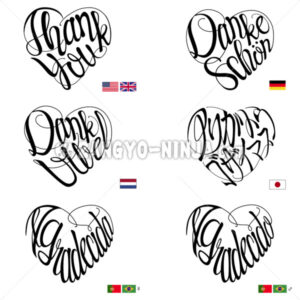
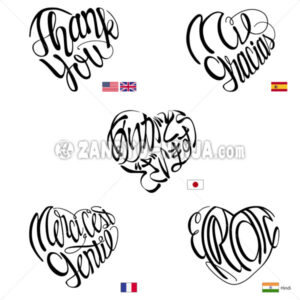
Thank you is expressed in English, Spanish, French, Indian Hindi and Japanese Hiragana as a heart-shaped writing style. And theme is “Heart of Gratitude”. It corresponds to the Japanese honorific of gratitude, “Arigatou Gozaimasu”. The basic hiragana “arigatou” is shown here, but “gozaimasu” is added after it to show respect. This is the current … Read More
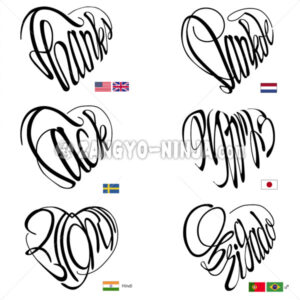
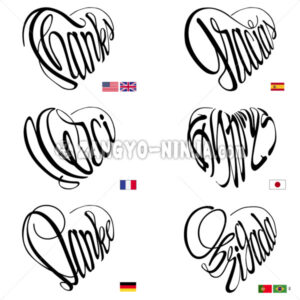
Thanks is expressed in English, Spanish, French, German, Portuguese and Japanese Hiragana as a heart-shaped writing style. And theme is “Heart of Gratitude”. The Japanese phrase “thanks” is written in a basic form. This Japanese phrase “arigatou” is the basic form of the word “thanks”. Although there are ways to write it that include … Read More
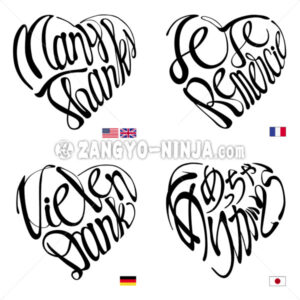
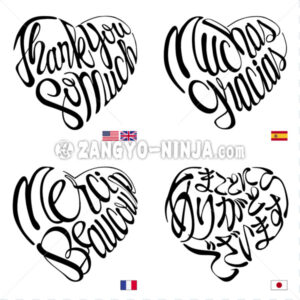
Thank you so much is expressed in English, Spanish, French, and Japanese in a heart-shaped writing style. The heart-shaped expression has many letters, so it is light-weight style and expressed in a 3D style with a bulging heart. And theme is “Heart of Gratitude”. About “Thank you so much” in Japanese The Japanese reading … Read More

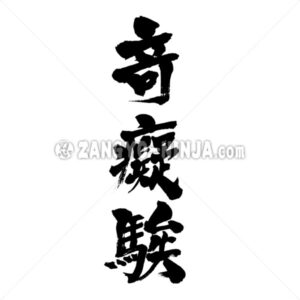
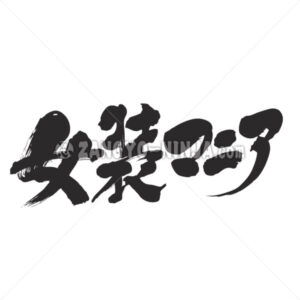
Read as Kichigai, this reading has two meanings. To be in an unusual state of mind, to speak or act in a manner that is not normal. To lose one’s mind. To be abnormally absorbed in one thing. Also, the person. Mania. This is a coined kanji character It reads “Kichigai,” originally written in … Read More
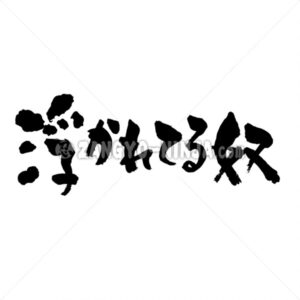
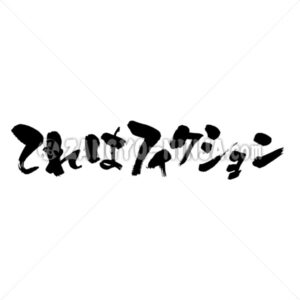
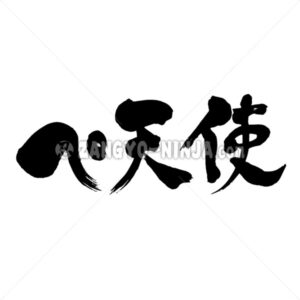
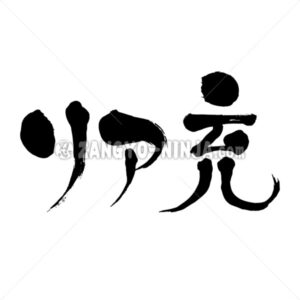
This is a word that originated on the internet. The term itself spread and became widely recognized around 2005 on 2channel, and was originally a neologism coined by those who spent most of their time in online communities to self-deprecatingly express that their real-life lives were not fulfilling. It was originally called “real-life fulfilling … Read More
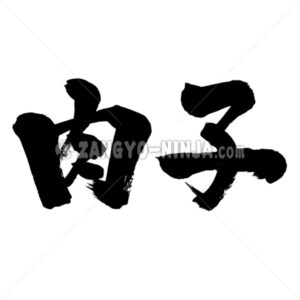
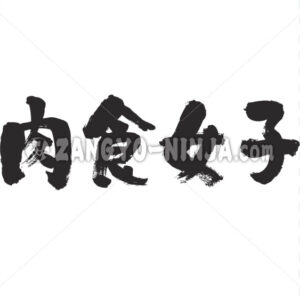
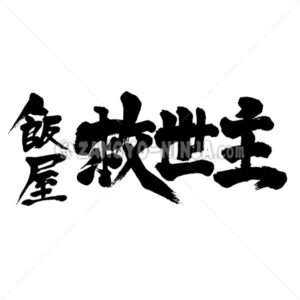
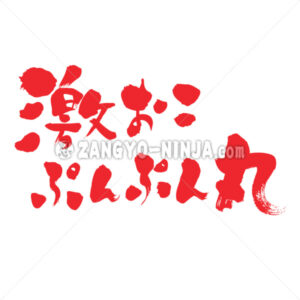
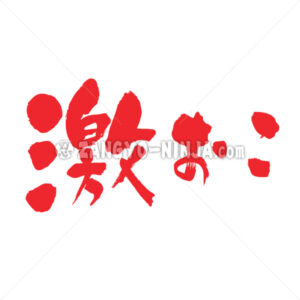
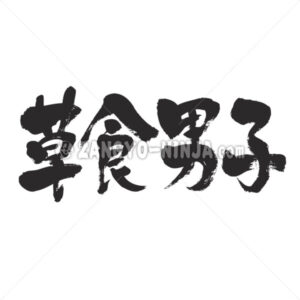
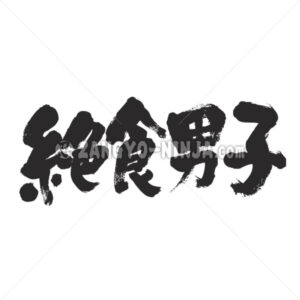
“Herbivorous boy” are men who have a mild character like herbivores. Unlike “carnivorous boy”, there is no way to actively act on the opposite sex. “Carnivorous boy” refers to people who are active in love. Japanese says “So shoku Dan shi” as coined word at recent.